
Short Answer
Definition of Atomic Hydrogen
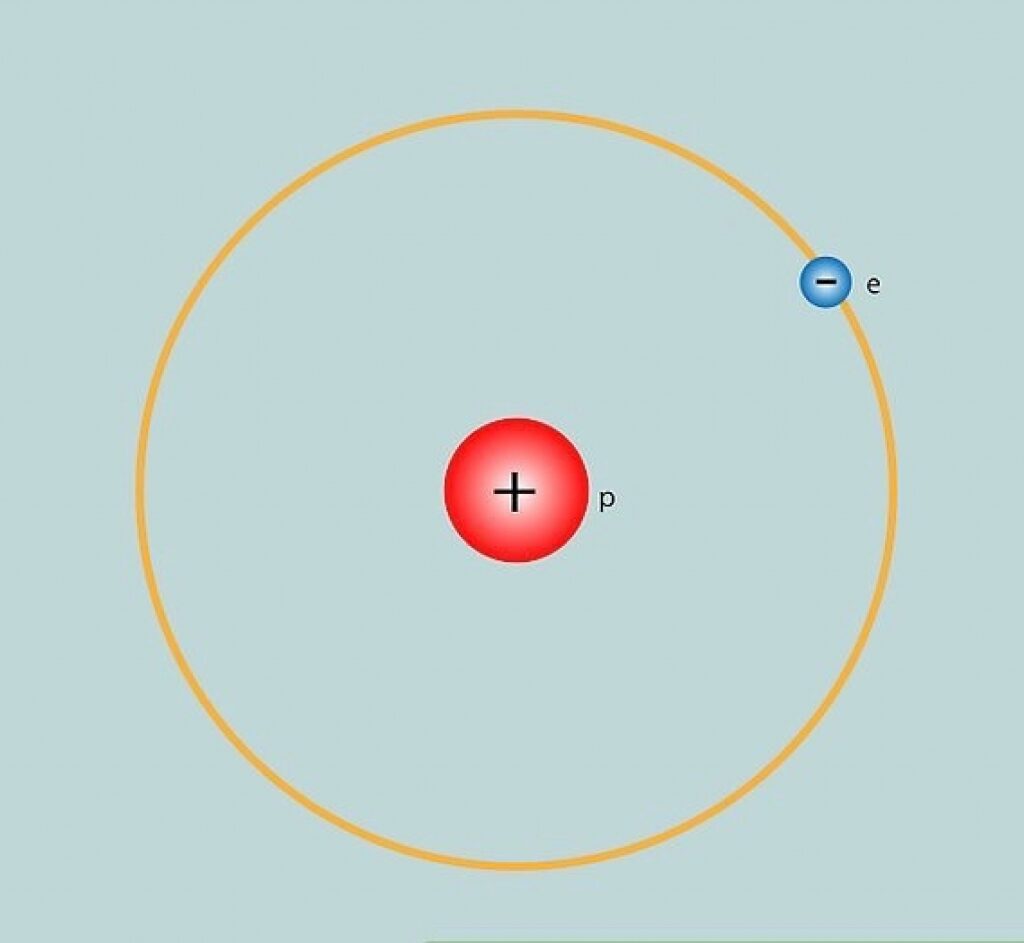
Atomic hydrogen is the simplest atom in the universe, composed of just one proton and one electron. It represents the most fundamental element on the periodic table, with an atomic number of one. Despite its apparent simplicity, atomic hydrogen holds immense significance in both physics and chemistry, serving as a cornerstone for understanding matter at its most basic level.
Origin and Cosmic Significance
The formation of atomic hydrogen dates back to the early moments following the Big Bang. During primordial nucleosynthesis, protons and neutrons combined to form the nuclei of the lightest elements, predominantly hydrogen and helium. As the universe cooled, electrons joined these nuclei during the recombination era, resulting in neutral atomic hydrogen. Today, hydrogen accounts for roughly 75% of the baryonic mass in the cosmos, making it the primary building block of all matter.
Physical and Chemical Properties
Atomic hydrogen is characterized by its high reactivity, readily bonding with other elements to form a wide array of compounds. A prime example is its combination with oxygen to produce water, a molecule essential for life. Hydrogen exists in multiple forms, including molecular hydrogen (H₂), which plays a vital role in numerous chemical reactions and biological processes.
Spectral Characteristics and Astrophysical Applications
In its isolated gaseous state, atomic hydrogen exhibits distinctive spectral lines that are invaluable to scientists studying the universe. These emission and absorption spectra act as unique identifiers, enabling astronomers to detect hydrogen in distant stars and galaxies. By analyzing these spectral fingerprints, astrophysicists gain insights into the composition, structure, and dynamics of celestial bodies, thereby expanding our understanding of the cosmos.
Quantum Mechanical Behavior
Atomic hydrogen is central to quantum mechanics, particularly through the study of electron transitions. When an electron absorbs energy, it moves to a higher energy level; upon returning to its ground state, it emits photons. This process explains the characteristic spectral lines of hydrogen and forms the foundation for many modern technologies, including lasers and semiconductor devices.
Challenges in Stability and Reactivity
Despite its fundamental nature, atomic hydrogen is inherently unstable. It tends to pair up to form diatomic hydrogen (H₂) or react with other elements, posing challenges in controlling it for scientific and industrial purposes. This instability is a significant consideration in emerging technologies such as hydrogen fuel cells, where managing hydrogen’s reactivity is crucial for safe and efficient energy production.
Applications in Material Science and Technology
Beyond its traditional roles, atomic hydrogen is instrumental in advanced research fields like material science. It is utilized in catalytic reactions and surface modification techniques, enabling the development of new materials with customized properties. These innovations have the potential to transform industries ranging from electronics to pharmaceuticals by enhancing material performance at the atomic scale.
Broader Implications and Scientific Inquiry
The study of atomic hydrogen extends far beyond its physical properties, prompting profound questions about the nature of matter and energy. Understanding this fundamental atom enriches our comprehension of the universe’s origins and the forces shaping it. This exploration not only advances scientific knowledge but also invites reflection on humanity’s place within the cosmic order.
Summary: The Importance of Atomic Hydrogen
Atomic hydrogen is much more than a simple element; it is a vital link between the elementary particles and the complex structures of the universe. Its diverse properties, from reactivity to quantum behavior, underpin many scientific disciplines and technological advancements. As research continues to unravel its mysteries, atomic hydrogen remains a key to unlocking deeper insights into the fabric of reality.
FAQ
What is atomic hydrogen?
Atomic hydrogen is the simplest atom in the universe, composed of one proton and one electron.
Why is atomic hydrogen important?
It serves as a cornerstone for understanding matter and plays significant roles in physics and chemistry.
How is atomic hydrogen formed?
It formed during the recombination era after the Big Bang when electrons combined with protons.
What are the applications of atomic hydrogen?
It is used in material science, chemical reactions, and has implications in quantum mechanics.






Leave a Reply