
Short Answer
Definition of an Atom
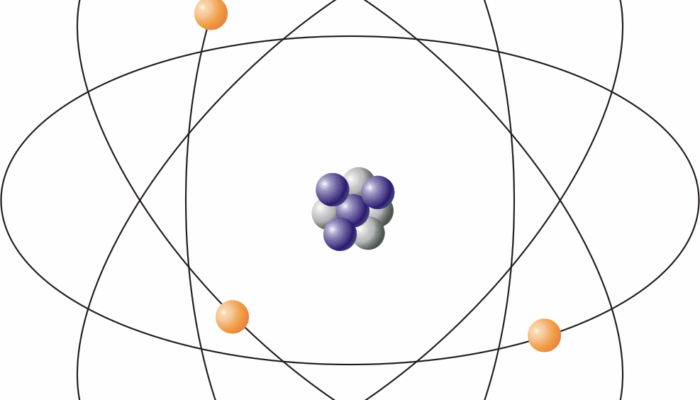
An atom is the fundamental unit of matter, serving as the basic building block from which all substances are formed. It can be envisioned as a tiny system resembling a miniature solar system, where a dense central core is orbited by smaller particles. This microscopic entity embodies not only the essence of physical matter but also the complex forces that govern natural phenomena.
Atomic Structure and Components
The atom consists of three main subatomic particles: protons, neutrons, and electrons. At its core lies the nucleus, a compact region containing protons and neutrons. Protons carry a positive electrical charge and determine the chemical identity of the element, defining its position on the periodic table. Neutrons, which are electrically neutral, contribute to the atom’s mass and provide stability to the nucleus, much like gravity stabilizes celestial bodies.
Surrounding the nucleus is a cloud of electrons, negatively charged particles that move at high velocities. Unlike planets orbiting the sun in fixed paths, electrons exist in probabilistic regions called orbitals, a concept derived from quantum mechanics. This probabilistic nature introduces an element of uncertainty, highlighting the complex and often non-intuitive behavior of particles at the atomic scale.
Electron Configuration and Chemical Behavior
The distribution of electrons across various energy levels or shells plays a crucial role in determining an atom’s chemical properties and reactivity. Atoms tend to seek stable, low-energy configurations, often achieved by forming chemical bonds with other atoms. This process of bonding can be likened to social interactions, where individuals come together to form communities, reflecting the cooperative nature of atomic interactions.
Isotopes: Variations Within Elements
Isotopes are different forms of the same element that share the same number of protons but differ in their neutron count. This variation can be compared to siblings in a family who share genetic traits but possess unique characteristics. Isotopes have significant applications in fields such as medical diagnostics, where radioactive isotopes are used in imaging, and in geology, where isotopic dating helps determine the age of rocks and fossils.
Intrinsic and Extrinsic Atomic Properties
- Intrinsic Properties:
These are inherent to the atom itself, including the atomic number (number of protons), atomic mass (combined mass of protons and neutrons), and electron configuration, which influences chemical behavior. - Extrinsic Properties:
These arise from interactions between atoms and their environment, such as melting and boiling points. These properties depend on the forces between atoms and molecules, which dictate the physical state and characteristics of materials.
Electronegativity and Its Role in Chemical Interactions
Electronegativity measures an atom’s tendency to attract electrons within a chemical bond. Atoms with high electronegativity, like fluorine, strongly pull electrons toward themselves, influencing the formation and nature of molecules. This concept helps explain the diversity of chemical compounds, from simple diatomic molecules like oxygen (O2) to complex organic structures essential for life. Electronegativity reflects the balance of cooperative and competitive forces at the atomic level, analogous to interactions within ecosystems.
Energy Dynamics Within Atoms
Atoms are dynamic entities that constantly vibrate and oscillate, absorbing and releasing energy in various forms. This energetic activity can be compared to musical rhythms, where individual notes combine to create harmony or dissonance. These energy transitions underpin the formation of solid lattices and the behavior of gases, linking theoretical atomic models with observable physical phenomena.
Significance of Atoms in the Universe
The atom represents a profound symbol of the universe’s complexity and elegance. Within its minuscule structure lie the principles that govern matter’s composition and interactions. Understanding atomic structure and behavior provides insight into the fundamental nature of existence, revealing how the smallest components contribute to the vast and intricate tapestry of the cosmos. Each atom tells a unique story, collectively shaping the physical world around us.
FAQ
What are the main components of an atom?
An atom consists of protons, neutrons, and electrons, with protons and neutrons located in the nucleus, and electrons surrounding it.
What is the significance of isotopes?
Isotopes are variations of elements with the same number of protons but different neutron counts, important in fields like medical diagnostics and geology.
How does electronegativity affect chemical interactions?
Electronegativity measures an atom’s ability to attract electrons in a bond, influencing the nature of chemical compounds.





Leave a Reply