
Short Answer
Definition of an Atom
An atom is the fundamental building block of matter, serving as the smallest unit that retains the unique properties of an element. It forms the basis of numerous scientific fields, including chemistry and physics, by providing insight into the composition and behavior of the physical universe.
Atomic Structure and Components
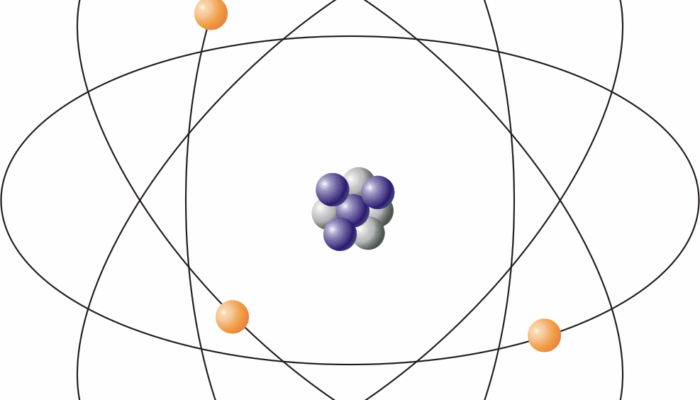
At the heart of an atom lies the nucleus, a dense core composed of protons and neutrons. Surrounding this nucleus are electrons, which move in probabilistic regions known as electron clouds or orbitals. Protons carry a positive electrical charge, neutrons are neutral, and electrons possess a negative charge. These subatomic particles, themselves made up of quarks, interact to maintain the atom’s stability and govern its chemical properties.
Subatomic Particles Explained
- Protons:
Positively charged particles located in the nucleus, determining the atomic number and identity of the element. - Neutrons:
Neutral particles also found in the nucleus, contributing to atomic mass and nuclear stability. - Electrons:
Negatively charged particles orbiting the nucleus, responsible for chemical bonding and electrical conductivity.
Historical Development of Atomic Theory
The concept of the atom dates back to ancient Greece, where philosopher Democritus introduced the idea of indivisible particles called “atomos.” This early notion remained largely philosophical until the 19th century, when John Dalton revived atomic theory through scientific experimentation. Dalton proposed that each element consists of unique atoms that combine in fixed ratios to form compounds, laying the groundwork for modern chemistry.
Subsequent discoveries in the late 19th and early 20th centuries transformed atomic understanding. J.J. Thomson identified the electron, challenging the idea of atoms as indivisible. He proposed the “plum pudding” model, envisioning electrons embedded within a positively charged matrix. Ernest Rutherford’s gold foil experiment later disproved this model by revealing a compact, positively charged nucleus, leading to the nuclear model of the atom.
Advancements in Atomic Models
Niels Bohr refined Rutherford’s nuclear model by introducing quantized electron orbits, explaining the discrete spectral lines emitted by atoms. This model marked a significant shift in atomic theory, though it was later superseded by the quantum mechanical model. The quantum model describes electrons as existing within probabilistic clouds rather than fixed paths, emphasizing the inherent uncertainty in pinpointing their exact locations.
Classification of Atoms and Elements
Atoms are distinguished by their atomic number, which equals the number of protons in the nucleus. This number defines the element and its position in the periodic table. Variations in neutron count produce isotopes-different forms of the same element with unique nuclear properties. The diversity in proton, neutron, and electron numbers results in a vast array of elements and compounds, each with distinct chemical behaviors.
Isotopes and Their Significance
- Isotopes:
Atoms of the same element with identical proton numbers but varying neutron counts, affecting nuclear stability and applications in fields like radiocarbon dating and nuclear medicine.
Chemical Bonding and Atomic Interactions
Atoms interact by forming chemical bonds, which determine the properties of the resulting substances. These bonds include ionic, covalent, and metallic types, each influencing material characteristics. For example, the strong covalent bonds in diamond give it exceptional hardness, whereas the weaker van der Waals forces in graphite allow it to act as a lubricant. Understanding these bonds is crucial in disciplines such as materials science, biochemistry, and pharmacology.
Common Misconceptions About Atoms
Atoms are the smallest particles of matter.
While atoms are the smallest units retaining elemental properties, they are composed of smaller subatomic particles like protons, neutrons, and electrons.
Electrons orbit the nucleus in fixed paths.
Electrons exist in probabilistic clouds, and their exact positions cannot be precisely determined due to quantum uncertainty.
Importance of Atomic Understanding
Grasping atomic structure and behavior is fundamental to science and technology. It underpins the study of chemical reactions, material properties, and biological processes. Advances in atomic theory have propelled innovations in medicine, energy, and nanotechnology, highlighting the atom’s central role in expanding human knowledge and shaping the modern world.
Summary
The atom represents a complex and essential unit of matter, composed of subatomic particles that interact under physical laws to form the diverse elements and compounds observed in nature. From its philosophical origins to its current quantum mechanical description, the atom remains a cornerstone of scientific inquiry, continually inspiring deeper exploration into the fabric of the universe.
FAQ
Is an atom the smallest particle of an element?
No, atoms are the smallest units that retain the properties of an element, but they are made up of smaller subatomic particles such as protons, neutrons, and electrons.
What are the main components of an atom?
An atom consists of a nucleus containing protons and neutrons, surrounded by electrons in probabilistic orbitals.
How do atoms form chemical bonds?
Atoms form chemical bonds such as ionic, covalent, and metallic bonds by interacting through their electrons, which determine the properties of substances.
What is an isotope?
Isotopes are atoms of the same element that have the same number of protons but different numbers of neutrons, affecting nuclear stability and applications.





Leave a Reply