
Short Answer
Understanding Quantum Computing
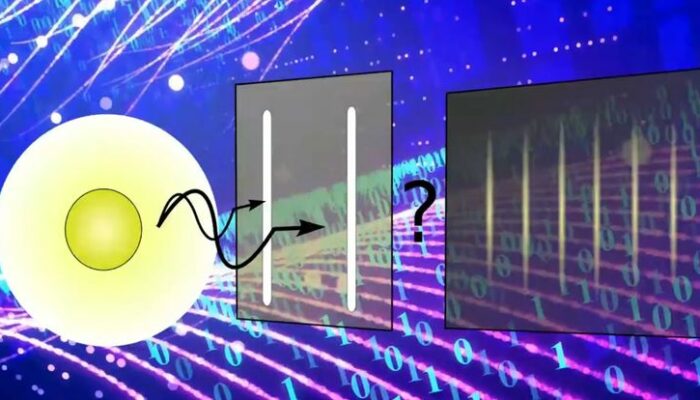
Quantum computing represents a revolutionary shift in the way information is processed, diverging fundamentally from classical computing paradigms. While traditional computers operate using bits that exist strictly as either 0 or 1, quantum computers utilize quantum bits, or qubits, which can simultaneously embody multiple states. This capability arises from the principles of quantum mechanics, particularly superposition and entanglement, which enable quantum systems to perform computations in ways that classical systems cannot.
Core Principles of Quantum Computation
At the heart of quantum computing lies a distinct operational framework. Classical computers rely on binary bits as the smallest units of data, each representing a definite state of 0 or 1. In contrast, qubits exploit superposition, allowing them to exist in a combination of 0 and 1 states simultaneously. This property exponentially increases the computational power for certain algorithms by enabling parallel processing of information.
Entanglement further enhances quantum computation by linking qubits such that the state of one qubit instantaneously affects the state of another, regardless of the distance separating them. This non-local correlation is a cornerstone of quantum advantage, facilitating complex calculations that are infeasible for classical machines.
Quantum Computing Architecture and Hardware
Building a functional quantum computer requires more than advanced algorithms; it demands sophisticated hardware capable of preserving the delicate quantum states of qubits. Maintaining quantum coherence is critical, as environmental interference can cause decoherence, leading to the loss of quantum information. Various physical implementations of qubits have been explored, including trapped ions, superconducting circuits, and topological qubits, each with unique benefits and technical challenges.
The development of quantum hardware is inherently interdisciplinary, combining insights from physics, engineering, and computer science to create systems that can reliably manipulate and measure qubits while minimizing errors.
Quantum Algorithms and Their Impact
Quantum algorithms leverage the unique properties of qubits to solve problems more efficiently than classical algorithms. For example, Shor’s algorithm can factor large numbers exponentially faster than the best-known classical methods, posing significant implications for cryptography and cybersecurity. Similarly, Grover’s algorithm provides a quadratic speedup for searching unsorted databases, offering advantages in optimization and data retrieval tasks.
These algorithmic breakthroughs open new avenues in fields such as logistics, materials science, and artificial intelligence, where complex problem-solving and large-scale data analysis are essential.
Integration with Machine Learning
The convergence of quantum computing and machine learning holds promise for accelerating data processing and enhancing pattern recognition capabilities. Quantum machine learning aims to exploit quantum parallelism to analyze vast and complex datasets more efficiently than classical approaches. This emerging field is poised to redefine traditional machine learning models by introducing quantum-enhanced algorithms that could lead to deeper insights and faster training times.
Challenges and Limitations
- Scalability:
Expanding quantum systems to include a large number of qubits while maintaining coherence remains a significant hurdle. - Error Correction:
Quantum error correction is essential to mitigate the effects of noise and decoherence, but implementing it requires substantial overhead and complexity. - Qubit Stability:
Ensuring qubits remain in their quantum states long enough to perform computations is a persistent technical challenge.
These obstacles highlight the nascent nature of quantum computing technology and the ongoing efforts to transition from experimental prototypes to practical, commercial devices.
Quantum Supremacy and Ethical Considerations
Quantum supremacy refers to the milestone where quantum computers outperform classical counterparts on specific computational tasks. Achieving this benchmark could revolutionize various industries but also raises ethical questions regarding data privacy, security, and the societal impact of such disruptive technology. The potential to break current encryption methods necessitates a reevaluation of cybersecurity frameworks and prompts interdisciplinary dialogue on responsible quantum technology deployment.
Significance and Future Outlook
Quantum computing is more than an innovative computational tool; it embodies humanity’s relentless pursuit of deeper understanding and technological advancement. As research progresses, fostering a comprehensive grasp of quantum principles and their implications will be vital. The evolution of quantum computing promises to reshape scientific inquiry, technological development, and everyday life, challenging existing paradigms and expanding the horizons of what is computationally possible.
FAQ
What is a quantum computer?
A quantum computer is a device that uses quantum mechanics to process information, utilizing qubits that can represent multiple states simultaneously.
What are the advantages of quantum computing?
Quantum computing offers significant advantages in processing speed and efficiency for certain complex problems, particularly in cryptography and data analysis.
What are the challenges facing quantum computing?
The main challenges include maintaining qubit stability, scalability of systems, and the need for effective quantum error correction.






Leave a Reply