
Short Answer
Understanding Practical Alternatives to Quantum Computing
Quantum computing has captured global attention as a groundbreaking innovation poised to transform computational power. Despite its promising theoretical potential, the practical implementation of quantum computers remains challenging. This has led researchers and industry experts to explore more accessible and immediately applicable alternatives. This article examines several viable computing paradigms that offer practical benefits today, complementing or substituting quantum approaches.
Classical Computing: The Established Backbone
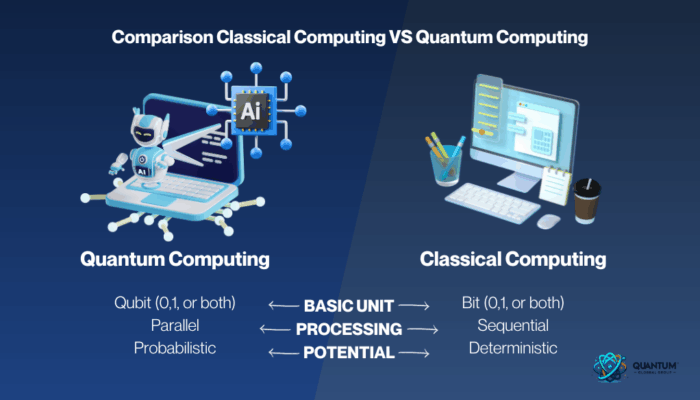
Classical computing remains the cornerstone of modern technology, relying on binary logic with bits represented as zeroes and ones. Continuous advancements in hardware, such as multi-core processors and parallel computing architectures, have significantly enhanced the performance and versatility of classical systems. These improvements enable classical computers to tackle increasingly complex problems efficiently without departing from well-understood computational principles.
- Binary System:
Classical computers operate using bits that represent either 0 or 1, forming the basis of all digital computation. - Hardware Innovations:
Developments in microprocessors, including parallelism and multi-threading, have boosted processing speeds and capabilities. - Algorithmic Optimization:
Sophisticated algorithms leverage these hardware advances to solve complex tasks effectively.
Machine Learning: Data-Driven Computational Intelligence
Machine learning, a subset of artificial intelligence, exemplifies a pragmatic alternative to quantum computing by utilizing large datasets to train algorithms that improve over time. This approach enables systems to make accurate predictions and decisions based on data patterns, with widespread applications across industries such as finance, healthcare, and marketing. Unlike quantum algorithms, which are largely theoretical at this stage, machine learning delivers tangible results in real-world environments.
- Adaptive Algorithms:
Machine learning models evolve by learning from data, enhancing their predictive accuracy. - Cross-Industry Applications:
From fraud detection to medical diagnosis, machine learning is actively transforming multiple sectors. - Immediate Utility:
Unlike emerging quantum methods, machine learning is already integrated into many operational systems.
Optical Computing: Harnessing the Power of Light
Optical computing represents an innovative approach that uses photons instead of electrons to perform computations. By exploiting the inherent speed and parallelism of light, optical systems aim to overcome limitations such as heat generation and processing bottlenecks found in electronic devices. Although still in developmental stages, optical computing holds promise for accelerating data processing and enabling new computational architectures.
- Photon-Based Processing:
Utilizes light particles to transmit and manipulate information at high speeds. - Parallelism:
Photons can process multiple signals simultaneously, enhancing computational throughput. - Reduced Heat Dissipation:
Optical systems generate less heat compared to electronic circuits, improving energy efficiency.
Neuromorphic Computing: Emulating the Human Brain
Neuromorphic computing draws inspiration from the structure and function of biological neural networks. By mimicking neurons and synapses, this technology processes information in a way that resembles human cognition. Neuromorphic systems offer advantages such as low power consumption and adaptive learning capabilities, making them suitable for applications requiring real-time data processing and pattern recognition. As interconnected devices proliferate, neuromorphic computing is poised to become a critical component of efficient computational ecosystems.
- Brain-Inspired Architecture:
Artificial neurons and synapses replicate biological information processing. - Energy Efficiency:
Neuromorphic chips consume significantly less power than traditional processors. - Adaptive Learning:
Systems can modify their behavior based on input, enhancing performance over time.
Hybrid Computing Systems: Bridging Classical and Quantum Worlds
Hybrid computing integrates classical computing techniques with emerging quantum technologies to leverage the strengths of both. These systems combine classical algorithms with quantum processors, such as quantum annealers, to optimize problem-solving efficiency, particularly for complex optimization challenges. This pragmatic approach allows current technologies to be utilized effectively while gradually incorporating quantum advancements.
- Integration of Technologies:
Combines classical and quantum components for enhanced computational power. - Optimization Focus:
Particularly useful for solving complex optimization problems more efficiently. - Incremental Adoption:
Enables gradual transition towards quantum computing without abandoning classical methods.
Cloud Computing: Democratizing Access to Computational Resources
Cloud computing provides a scalable and accessible platform for a wide range of computational tasks by leveraging distributed networks of servers. This model allows users to access substantial processing power and storage without the need for significant infrastructure investment. Cloud services facilitate the deployment of machine learning models, experimentation with optical computing, and even preliminary quantum algorithm testing, making advanced computing capabilities widely available.
- Scalability:
Resources can be dynamically allocated based on demand. - Cost Efficiency:
Reduces the need for expensive hardware investments. - Versatility:
Supports diverse computing paradigms, including AI, optical, and quantum experiments.
Addressing Common Misconceptions About Quantum and Alternative Computing
Quantum computing will immediately replace classical computers.
Quantum computing is still in early development and will likely complement classical systems rather than replace them outright.
Machine learning is a subset of quantum computing.
Machine learning is a classical computing discipline that operates independently of quantum principles.
Optical computing is fully mature and widely available.
Optical computing is an emerging technology still undergoing research and development.
Significance of Practical Alternatives in Computing
While quantum computing holds transformative potential, practical alternatives play a crucial role in addressing current computational demands. Classical computing continues to evolve, machine learning delivers immediate benefits, and emerging technologies like optical and neuromorphic computing offer promising new directions. Hybrid systems and cloud computing further enhance accessibility and efficiency. Together, these approaches ensure a diverse and robust computational landscape that supports innovation and real-world applications.
Conclusion: A Multifaceted Future for Computing
The excitement surrounding quantum computing is justified by its theoretical capabilities, yet it is essential to recognize the substantial progress in alternative computing paradigms. These diverse methods not only fulfill present-day computational needs but also pave the way for a future where multiple technologies coexist and complement each other. Collaborative advancements across these fields will enrich the technological ecosystem, unlocking new possibilities and driving innovation forward.
FAQ
What are the main alternatives to quantum computing?
The main alternatives include classical computing, machine learning, optical computing, neuromorphic computing, hybrid computing systems, and cloud computing.
How does machine learning differ from quantum computing?
Machine learning is a classical computing discipline focused on data-driven algorithms, while quantum computing involves quantum mechanics principles.
Is optical computing widely available?
No, optical computing is still an emerging technology undergoing research and development.






Leave a Reply