
Short Answer
Definition of Hadron Colliders
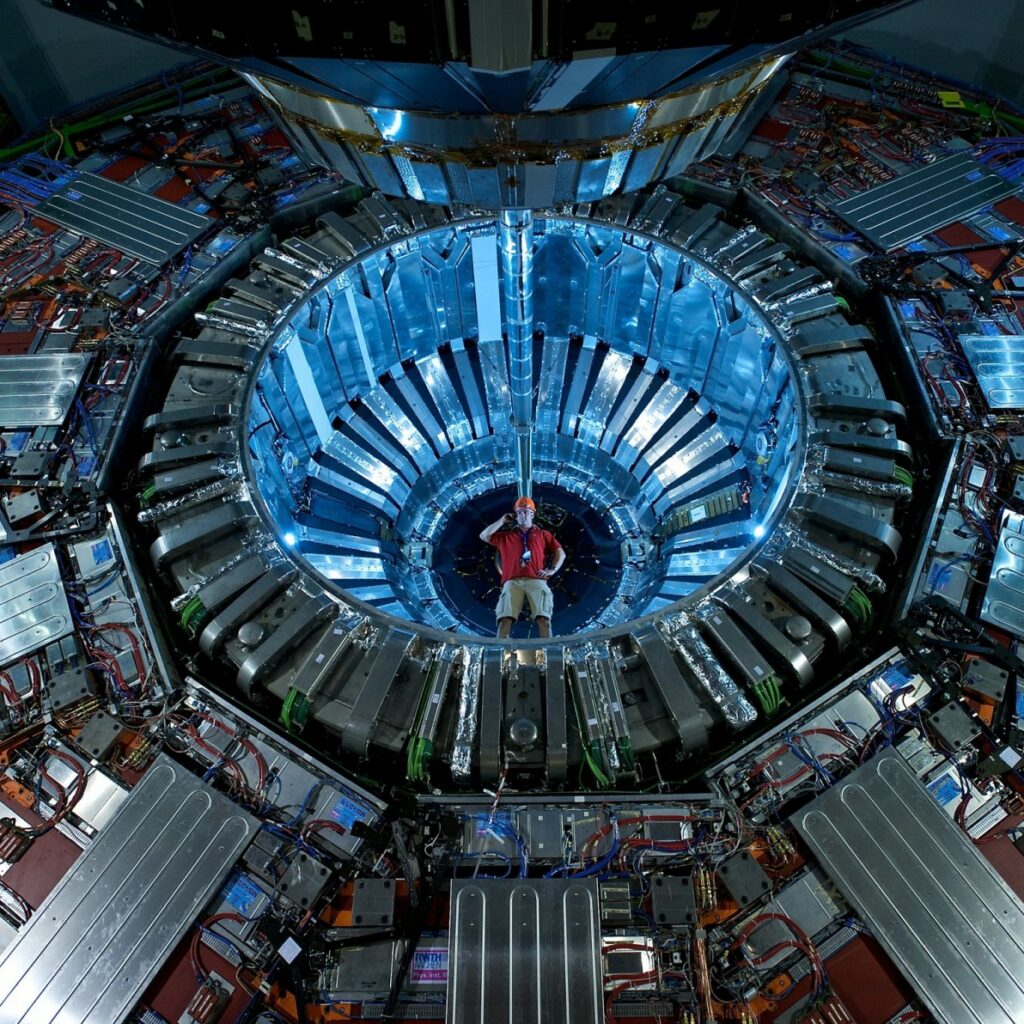
Hadron colliders are advanced scientific instruments designed to investigate the fundamental particles that constitute matter and the forces governing their interactions. These massive machines accelerate charged particles, such as protons and heavy ions, to velocities nearing the speed of light, enabling high-energy collisions that reveal critical information about the universe’s underlying structure.
Fundamental Components and Operation
At the heart of hadron collider technology lies a sophisticated system of accelerators and magnetic fields. Particles are propelled through vacuum tubes to prevent interference from air molecules, guided along precise paths by powerful superconducting magnets. For instance, the Large Hadron Collider (LHC) at CERN, located on the border between France and Switzerland, features a 27-kilometer underground ring equipped with over 1,200 superconducting magnets. This setup allows particles to collide with energies so immense that they mimic conditions just moments after the Big Bang.
Types of Hadron Colliders
- Proton-Proton Colliders:
The most common type, exemplified by the LHC, accelerates protons to extremely high energies to study particle interactions. - Heavy Ion Colliders:
Facilities like the Relativistic Heavy Ion Collider (RHIC) at Brookhaven National Laboratory focus on colliding heavy ions to explore exotic states of matter such as quark-gluon plasma, believed to have existed shortly after the universe’s inception. - Fixed-Target Colliders:
In these setups, accelerated particles collide with stationary targets, offering alternative experimental data and insights.
Scientific Importance and Contributions
Hadron colliders play a crucial role in validating and expanding the Standard Model of particle physics, which describes the known elementary particles and their interactions, including electromagnetic, weak, and strong nuclear forces. By analyzing the results of high-energy collisions, researchers can detect rare and elusive particles that are otherwise difficult to observe. A landmark achievement was the discovery of the Higgs boson at the LHC in 2012, a particle essential for explaining how other particles acquire mass.
Technological Innovations Driven by Hadron Colliders
The operation of hadron colliders demands cutting-edge technology, particularly in data processing and storage. Each collision event generates vast amounts of data-several megabytes per event-necessitating advanced filtering algorithms and high-performance computing systems to extract meaningful information. The collaboration between physicists, engineers, and computer scientists has led to technological breakthroughs with applications beyond particle physics, including improvements in medical imaging, drug development, and materials science.
Global Collaboration and Scientific Unity
Hadron collider projects exemplify international scientific cooperation. The LHC, for example, is the result of a global partnership involving thousands of scientists from diverse countries and cultures. This collective effort highlights how transcending geopolitical boundaries can accelerate scientific progress and foster a shared pursuit of knowledge that benefits humanity worldwide.
Exploring New Frontiers in Physics
Research conducted at hadron colliders continues to push the boundaries of known physics. Scientists are investigating theories beyond the Standard Model, such as supersymmetry, dark matter, and extra spatial dimensions. Discovering supersymmetric particles could revolutionize our understanding of the universe by linking known particles with previously undetected ones, potentially reshaping the fundamental framework of particle physics.
Future Prospects and Next-Generation Colliders
Looking ahead, ambitious projects like the proposed Future Circular Collider (FCC) aim to surpass current energy and luminosity benchmarks, opening new avenues for discovery. These next-generation colliders promise to deepen our understanding of the universe’s most profound mysteries with unprecedented precision and scale.
Summary: The Impact of Hadron Colliders
Hadron colliders represent a remarkable fusion of scientific inquiry and engineering prowess, driving humanity’s quest to comprehend the universe’s most basic elements. Through their complex designs, groundbreaking discoveries, and spirit of international collaboration, these monumental machines not only advance particle physics but also inspire global unity and technological innovation, enriching our grasp of reality itself.
FAQ
What is a hadron collider?
A hadron collider is a scientific instrument that accelerates charged particles to high velocities to study fundamental particles and their interactions.
What is the purpose of hadron colliders?
Hadron colliders are used to investigate the fundamental structure of matter and validate theories in particle physics, including the Standard Model.
What significant discovery was made using the Large Hadron Collider?
The Higgs boson, a particle essential for explaining how other particles acquire mass, was discovered at the Large Hadron Collider in 2012.
How do hadron colliders contribute to technology?
The operation of hadron colliders has led to technological breakthroughs in data processing, medical imaging, and other fields.






Leave a Reply