
Short Answer
Definition of 400G Optical Transceivers
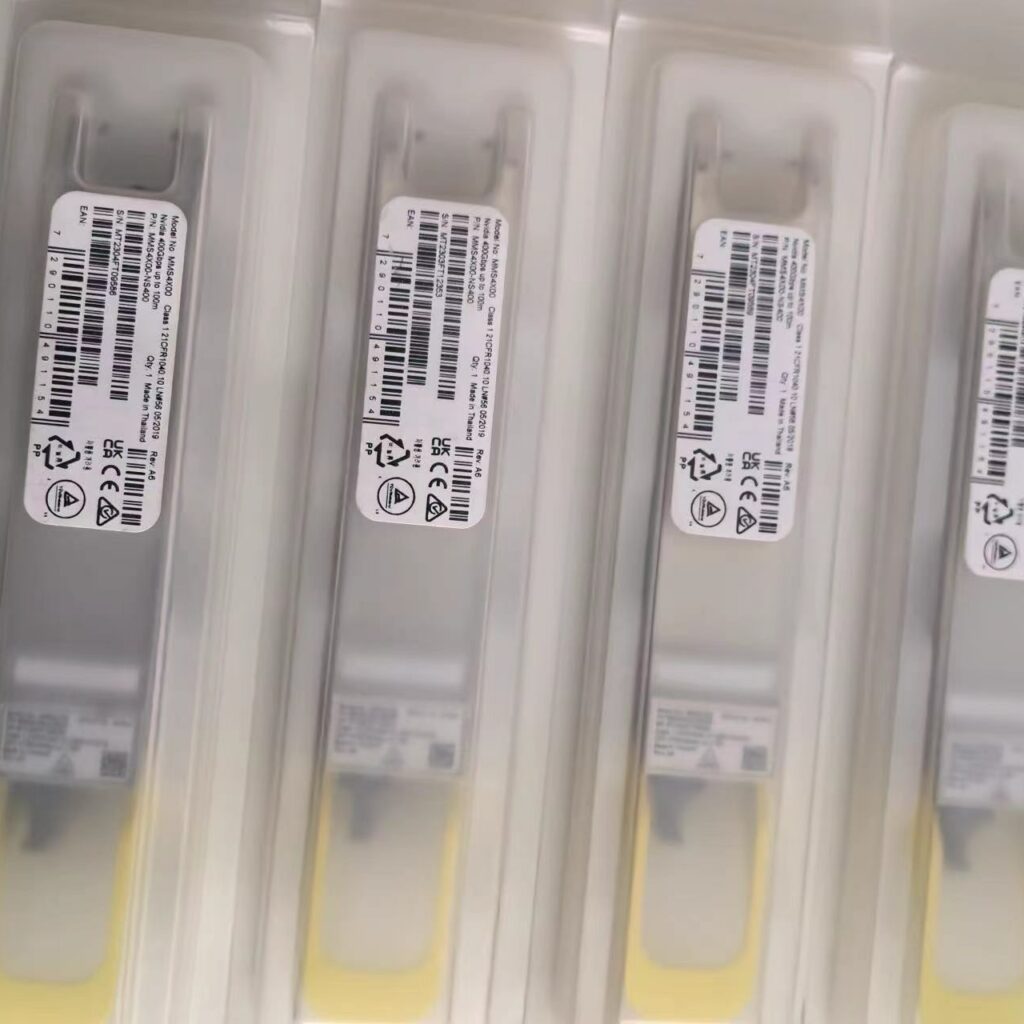
400G optical transceivers are advanced communication devices designed to transmit and receive data at ultra-high speeds of 400 gigabits per second. These components are integral to modern optical networks, enabling the rapid exchange of vast amounts of information across telecommunications systems, data centers, and enterprise infrastructures. By combining transmitter and receiver functionalities into a single module, 400G transceivers facilitate efficient, high-capacity data transfer essential for meeting the escalating bandwidth demands of today’s digital landscape.
Fundamental Architecture and Components
The architecture of a 400G optical transceiver integrates several key elements that work in unison to achieve high-speed data transmission. At its core, the device includes:
- Laser Diode:
Generates the optical signal for data transmission. - Photodetectors:
Capture incoming optical signals and convert them back into electrical signals. - Multiplexers and Demultiplexers:
Separate and combine multiple data channels to optimize bandwidth usage. - Electronic Signal Processing Module:
Employs advanced digital signal processing (DSP) algorithms to enhance signal integrity and extend transmission distances.
Innovations in modulation techniques and multiplexing strategies are pivotal in the design of 400G transceivers, enabling them to deliver superior performance over long-haul optical links.
Modulation Techniques in 400G Transceivers
Choosing the appropriate modulation format is critical for maximizing data throughput and signal quality in 400G optical transceivers. Traditional intensity modulation with direct detection (IM/DD) is increasingly supplemented or replaced by more sophisticated schemes such as:
- Pulse Amplitude Modulation (PAM-4):
This method encodes two bits per symbol, effectively doubling the data rate compared to conventional binary modulation, making it a cornerstone of 400G technology. - Quadrature Amplitude Modulation (QAM):
Often utilized in dense wavelength division multiplexing (DWDM) systems, QAM allows multiple data channels to coexist on a single fiber by varying both amplitude and phase of the optical signal.
Physical Form Factors and Design Considerations
400G optical transceivers come in various physical formats tailored to different network requirements. The most prevalent types include:
- Quad Small Form-factor Pluggable (QSFP28):
Known for its compact size and cost-effectiveness, QSFP28 supports multiple modulation schemes to deliver 400G speeds. - Octal Small Form-factor Pluggable (OSFP):
Offers enhanced thermal management and scalability, positioning it as a future-ready solution capable of supporting upcoming 800G applications.
Thermal performance and power efficiency are critical design factors, as higher data rates generate increased heat and power consumption.
Applications Across Industries
400G optical transceivers are widely deployed in various sectors due to their ability to handle massive data volumes efficiently:
- Data Centers:
Facilitate high-speed interconnections between servers and storage systems, supporting cloud computing, virtualization, and AI workloads. - Telecommunications:
Enable network operators to upgrade infrastructure from 100G to 400G, enhancing backhaul and fronthaul links to meet growing internet bandwidth demands. - Research and Education:
Support large-scale scientific experiments and international collaborations by providing rapid data transfer capabilities essential for fields like particle physics and astrophysics.
Challenges in Implementing 400G Optical Transceivers
Despite their advantages, integrating 400G transceivers presents several challenges:
- Thermal Management:
High data rates increase heat generation, necessitating advanced cooling solutions to maintain device reliability. - Power Consumption:
Efficient power management is essential to reduce operational costs and environmental impact. - Interoperability:
Ensuring compatibility with existing network infrastructure requires careful planning due to rapid technological advancements.
Emerging Trends and Future Outlook
The field of optical communication is rapidly evolving, with 400G transceivers playing a central role in next-generation network architectures. Innovations such as cognitive networking, which intelligently routes data for optimal efficiency, are driving the convergence of telecommunications and computer networking technologies. Additionally, the development of higher-capacity transceivers, like 800G modules, is underway, promising even greater bandwidth capabilities in the near future.
Significance of 400G Optical Transceivers
400G optical transceivers represent a critical advancement in the infrastructure of global digital communication. By significantly boosting network bandwidth and data transmission speeds, they enable the seamless operation of modern technologies including cloud services, AI, and large-scale scientific research. Their deployment is essential for meeting the surging data demands of contemporary society and will continue to influence the evolution of high-speed communication networks worldwide.
FAQ
What is a 400G optical transceiver?
A 400G optical transceiver is a device that combines a transmitter and receiver to transmit data at 400 gigabits per second over optical fiber networks.
How does PAM-4 modulation improve 400G transceiver performance?
PAM-4 encoding allows two bits per symbol, effectively doubling the data rate compared to traditional binary modulation.
What are the differences between QSFP28 and OSFP form factors?
QSFP28 is a compact and cost-effective module, while OSFP offers superior thermal performance and scalability for future higher data rates like 800G.
In which industries are 400G optical transceivers most commonly used?
They are primarily used in telecommunications, cloud data centers, enterprise networks, and scientific research requiring high bandwidth.
What are the main technical challenges in deploying 400G transceivers?
Key challenges include managing heat dissipation, ensuring power efficiency, and maintaining compatibility with existing network infrastructure.





Leave a Reply