
Short Answer
Definition of Temperature Measurement Instruments
Temperature measurement instruments are devices designed to quantify the thermal state of objects or environments. These tools are essential across a broad spectrum of scientific research, industrial processes, and everyday applications. They vary widely in complexity, from basic liquid-in-glass thermometers to advanced electronic sensors, each employing distinct physical principles to determine temperature accurately.
Historical and Traditional Thermometers
Mercury Thermometers
One of the earliest and most iconic temperature measuring devices is the mercury thermometer. It functions based on the principle of thermal expansion: as temperature increases, mercury expands and ascends within a narrow, calibrated glass tube, indicating the temperature on a marked scale. Despite its long-standing use spanning over a century, mercury thermometers have become less common due to the toxic nature of mercury and the environmental risks it poses.
Alcohol Thermometers
To address the hazards associated with mercury, alcohol thermometers were developed as a safer alternative. These instruments use colored ethanol, which also expands with temperature changes, allowing for visible readings. The vibrant coloration enhances readability, while the absence of toxic mercury makes them more environmentally friendly. However, factors such as ambient pressure and the thermal properties of the liquid can influence their precision, reflecting the complex interplay of thermal dynamics involved.
Modern Electronic Temperature Sensors
Thermocouples
Thermocouples represent a significant advancement in temperature measurement technology. They consist of two dissimilar metal wires joined at one end, generating a voltage proportional to the temperature difference between the junction and the reference point. This thermoelectric effect enables precise temperature readings, especially valuable in industrial environments where durability and wide temperature ranges are required.
Resistance Temperature Detectors (RTDs)
RTDs operate on the principle that the electrical resistance of certain metals, commonly platinum, changes predictably with temperature. Known for their high accuracy and stability, RTDs are widely used in laboratory settings and industrial processes demanding exact thermal control. Although they offer superior precision, their complexity and cost can limit their use in some applications.
Thermistors
Thermistors are temperature-sensitive resistors that exhibit significant resistance changes in response to small temperature variations. Their rapid response and high sensitivity make them suitable for applications such as consumer electronics and environmental monitoring. Despite their non-linear response, thermistors remain valuable for precise temperature detection in various fields.
Non-Contact Temperature Measurement Techniques
Infrared Thermometers
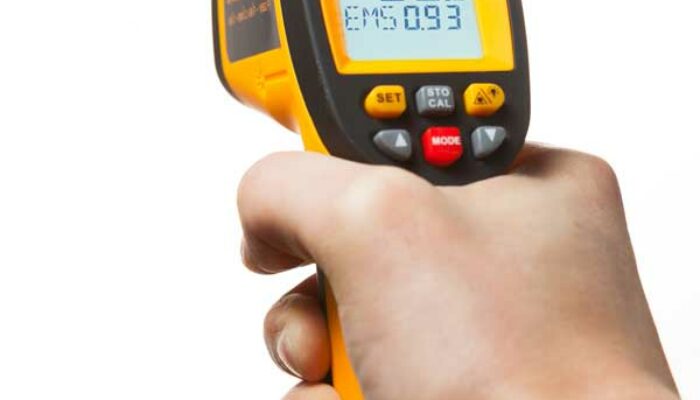
Infrared thermometers enable temperature measurement without physical contact by detecting the infrared radiation emitted by objects. Since all bodies emit radiant energy proportional to their temperature, these devices can quickly and safely measure temperatures in hazardous or inaccessible locations. Their non-invasive nature has made them indispensable in medical diagnostics, such as rapid fever screening.
Thermography and Thermal Imaging
Thermography employs advanced infrared cameras to create visual maps of temperature distribution across surfaces or environments. This technology is extensively used in building inspections, equipment maintenance, and wildlife studies to identify thermal irregularities. By providing a detailed thermal profile, thermography facilitates in-depth analysis of systems ranging from electrical circuits to biological organisms.
Factors Influencing Measurement Accuracy
Accurate temperature measurement depends not only on the instrument but also on external factors and material properties. Key considerations include:
- Emissivity:
The efficiency with which a surface emits thermal radiation varies among materials, affecting infrared-based measurements. Correcting for emissivity is crucial to obtain reliable readings. - Environmental Conditions:
Ambient temperature, humidity, and air pressure can alter sensor performance and measurement outcomes, necessitating careful calibration and instrument selection. - Calibration:
Regular calibration against known standards ensures the precision and reliability of temperature instruments over time.
Technological Innovations and Integration
The evolution of temperature measurement has embraced smart technologies and connectivity. Integration with the Internet of Things (IoT) allows for continuous, real-time temperature monitoring and data logging across diverse sectors. This capability enhances automation and safety in industries such as food storage, aerospace, and healthcare, where precise thermal management is critical.
Why Temperature Measurement Is Crucial
Understanding and accurately measuring temperature is vital for numerous reasons:
- Scientific Research:
Temperature control and measurement underpin experiments and processes in physics, chemistry, and biology. - Industrial Applications:
Precise temperature monitoring ensures product quality, safety, and efficiency in manufacturing and processing. - Health and Safety:
Non-contact thermometers aid in rapid health assessments, while thermal imaging helps detect equipment faults before failures occur. - Environmental Monitoring:
Temperature data contribute to climate studies and ecosystem management.
Summary
The landscape of temperature measurement instruments is a testament to human ingenuity, blending fundamental physics with cutting-edge technology. From the simplicity of liquid thermometers to the sophistication of infrared cameras and IoT-enabled sensors, each device reflects a unique approach to understanding thermal phenomena. As advancements continue, the precision and applications of temperature measurement will expand, deepening our insight into the natural and engineered world.
FAQ
What instrument is commonly used to measure temperature?
Various instruments are used including mercury thermometers, thermocouples, RTDs, thermistors, and infrared thermometers depending on the application.
Why are mercury thermometers less common now?
Mercury thermometers are less common due to the toxic nature of mercury and associated environmental hazards.
How do infrared thermometers measure temperature without contact?
Infrared thermometers detect the infrared radiation emitted by objects, allowing temperature measurement without physical contact.
What factors should be considered to ensure accurate temperature measurement?
Factors include emissivity of the surface, environmental conditions such as humidity and pressure, and regular instrument calibration.


Leave a Reply