
Short Answer
Definition of Quantum Computing
Quantum computing is an emerging field at the intersection of advanced technology and theoretical physics, offering a fundamentally new approach to computation. Unlike classical computers that rely on binary bits, quantum computers use quantum bits or qubits, which can exist in multiple states simultaneously due to the principle of superposition. This unique characteristic enables quantum systems to process and analyze vast amounts of information concurrently, promising transformative impacts across various scientific and industrial sectors.
Fundamental Principles of Quantum Computing
The core distinction between quantum and classical computing lies in their basic units of information and operational mechanisms:
- Classical Bits:
Represent information as either 0 or 1, limiting processing to sequential or parallel binary operations. - Quantum Qubits:
Exploit superposition, allowing qubits to be in multiple states at once, thereby enabling exponential increases in computational power for certain tasks.
Additionally, quantum entanglement-a phenomenon where qubits become interconnected such that the state of one instantly influences another-further enhances the computational capabilities of quantum machines.
Applications in Data Processing and Analysis
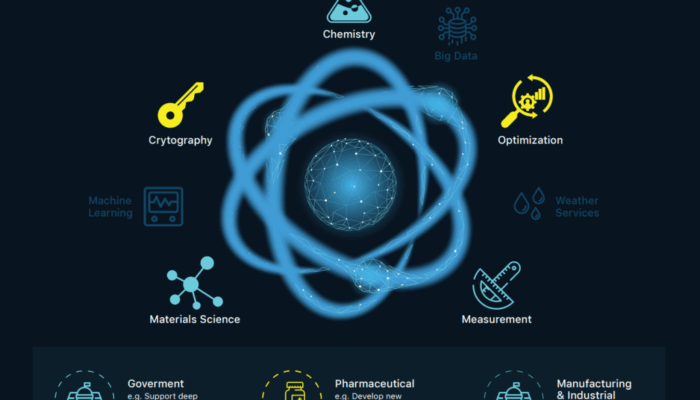
Quantum computing is poised to revolutionize data handling by overcoming limitations faced by classical algorithms when dealing with complex or large-scale datasets. Quantum algorithms such as Grover’s algorithm accelerate unstructured data searches, while Shor’s algorithm efficiently factors large numbers, tasks that are computationally intensive for classical systems.
Industries that depend heavily on big data analytics, including finance and healthcare, could leverage these advancements to enable real-time data interpretation and decision-making, thereby improving operational strategies and outcomes.
Impact on Cryptography and Cybersecurity
The advent of quantum computing presents both challenges and opportunities in the field of cryptography. Many current encryption techniques, such as RSA, rely on the computational difficulty of certain mathematical problems, which quantum algorithms threaten to solve efficiently.
This impending vulnerability has spurred the development of quantum-resistant cryptographic methods designed to secure digital communications against quantum attacks. These advancements are critical for maintaining trust in digital transactions, identity verification, and safeguarding sensitive information in the quantum era.
Enhancements in Artificial Intelligence
Quantum computing holds significant promise for advancing artificial intelligence (AI) by enabling more efficient processing of complex datasets and enhancing machine learning algorithms. Quantum-enhanced AI can simultaneously evaluate multiple scenarios, improving pattern recognition and predictive accuracy.
Potential applications include optimizing supply chain logistics, personalizing medical treatments, and refining predictive models, all of which benefit from the increased computational power and speed offered by quantum systems.
Optimization and Problem-Solving Capabilities
Quantum computers excel at solving intricate optimization problems that are challenging for classical computers. For example, the traveling salesman problem, which involves finding the shortest possible route visiting multiple locations, becomes more manageable with quantum algorithms.
This capability can lead to improved resource allocation, cost reductions, and enhanced operational efficiency across sectors such as logistics, finance, and resource management.
Advancements in Materials Science and Chemistry
Quantum computing enables highly accurate simulations of molecular and atomic interactions, surpassing the approximations often necessary in classical computational chemistry. This precision facilitates the design of new materials with customized properties, including superconductors, catalysts, and nanomaterials.
The integration of quantum computing into materials science could drive breakthroughs in energy storage technologies, catalysis processes, and nanotechnology development.
Accelerating Pharmaceutical Research
In pharmaceutical development, quantum simulations can model complex biological systems that are currently beyond the reach of classical computers. This capability promises to expedite drug discovery, reduce development costs, and shorten the time required to bring new medications to market.
Such advancements have the potential to significantly improve public health outcomes by enabling faster and more effective therapeutic innovations.
Challenges and Ethical Considerations
Despite its vast potential, quantum computing faces significant technical obstacles, including quantum decoherence and the need for robust error correction methods. Overcoming these challenges is essential to fully realize the technology’s capabilities.
Moreover, the ethical implications of quantum computing must be carefully addressed. Issues such as enhanced surveillance, data privacy risks, and the concentration of technological power call for comprehensive governance frameworks and public engagement to ensure responsible development and deployment.
Conclusion: The Future of Quantum Computing
Quantum computing stands on the brink of transforming multiple technological domains by redefining data processing, cryptography, artificial intelligence, and materials science. Its successful integration into society will depend on interdisciplinary collaboration among scientists, engineers, ethicists, and policymakers.
By fostering such cooperation and addressing both technical and ethical challenges, humanity can harness the full potential of quantum computing, ensuring that its benefits are distributed fairly and contribute positively to global progress.
FAQ
What is quantum computing?
Quantum computing is a type of computing that uses quantum bits (qubits) to perform calculations at speeds unattainable by classical computers.
How does quantum computing impact cryptography?
Quantum computing threatens traditional encryption methods but also drives the development of quantum-resistant cryptographic techniques.
What are some applications of quantum computing?
Applications include optimizing logistics, accelerating drug discovery, and enhancing AI algorithms.
What challenges does quantum computing face?
Key challenges include quantum decoherence, error correction, and ethical implications regarding data privacy.






Leave a Reply