
Short Answer
Understanding Quantum Computing
Quantum computing represents a revolutionary approach to processing information, harnessing the unique principles of quantum mechanics to perform calculations far beyond the reach of classical computers. Unlike traditional systems that operate on binary bits-either 0 or 1-quantum computers utilize quantum bits, or qubits, which can exist in multiple states simultaneously due to superposition. Additionally, qubits can become entangled, meaning the state of one qubit can instantly influence another, regardless of distance. These phenomena collectively enable quantum machines to tackle complex problems with unprecedented speed and efficiency.
- Superposition:
A qubit’s ability to be in multiple states at once, allowing parallel computation. - Entanglement:
A quantum connection between qubits that links their states, enhancing computational power.
Fundamental Principles Behind Quantum Computing
At its core, quantum computing leverages the counterintuitive behaviors of particles at the quantum scale. Superposition allows qubits to represent numerous possibilities simultaneously, while entanglement creates correlations that classical bits cannot replicate. These properties exponentially increase the computational capacity, enabling quantum computers to solve certain classes of problems much faster than classical counterparts. This foundational shift paves the way for breakthroughs in various scientific and industrial fields.
Impact on Scientific Research
Quantum computing is poised to transform scientific inquiry by enabling simulations and analyses that were previously unattainable. For example, modeling molecular interactions at the quantum level is a notoriously difficult task for classical supercomputers due to the exponential complexity involved. Quantum computers, however, can simulate these interactions with remarkable precision, accelerating drug discovery and materials science.
This capability could revolutionize personalized medicine by allowing researchers to tailor treatments based on an individual’s genetic profile. Rapid simulation of molecular dynamics will shorten the drug development timeline, potentially leading to faster clinical trials and more effective therapies. In this way, quantum computing acts as a catalyst for a new era of health innovation.
Quantum Computing and Cryptography
The advent of quantum computing presents both challenges and opportunities in the realm of information security. Many current encryption methods, such as RSA and ECC, rely on the difficulty of factoring large numbers or solving discrete logarithms-problems that quantum algorithms like Shor’s algorithm can solve efficiently. This threatens to render existing cryptographic systems obsolete, exposing sensitive data to potential breaches.
In response, the field of post-quantum cryptography is rapidly evolving to develop algorithms resistant to quantum attacks. Over the next decade, a transition is expected where classical encryption methods will gradually be replaced or supplemented by quantum-safe alternatives. This shift will require significant investment and coordination among governments, businesses, and cybersecurity experts to safeguard digital infrastructure.
Industrial Applications and Optimization
Quantum computing’s ability to process and analyze vast datasets with enhanced speed offers transformative potential across multiple industries. In logistics and supply chain management, quantum algorithms can identify optimal routes and resource allocations that classical methods might miss, leading to increased efficiency and reduced waste.
Similarly, the financial sector stands to benefit from quantum-enhanced risk assessment and portfolio optimization. By evaluating countless market scenarios instantaneously, quantum systems can provide more accurate predictions and strategic insights, potentially reshaping investment strategies and risk management practices worldwide.
Ethical and Societal Considerations
Despite its promising advantages, quantum computing raises significant ethical questions that must be addressed proactively. The dual-use nature of this technology means it can be harnessed for both beneficial and harmful purposes. Risks include threats to privacy, the potential for mass surveillance, and misuse by malicious entities.
To navigate these challenges, a collaborative approach involving scientists, ethicists, policymakers, and the public is essential. Establishing transparent governance frameworks, promoting accountability, and encouraging responsible innovation will be critical to ensuring that quantum computing advances align with societal values and contribute positively to humanity.
The Road Ahead: Embracing Quantum Innovation
The forthcoming decade is set to witness quantum computing evolve from a nascent technology into a cornerstone of scientific and industrial progress. Its profound impact will be felt across research, cybersecurity, industry, and ethics. Successfully harnessing this power requires not only technical breakthroughs but also thoughtful stewardship and global cooperation. The choices made today will shape the legacy of the quantum era and determine how this transformative technology benefits future generations.
Frequently Asked Questions (FAQ)
What defines quantum computing?
Quantum computing is a computational paradigm that exploits quantum mechanical effects such as superposition and entanglement to perform operations on data, enabling solutions to problems that are infeasible for classical computers.
In what ways will quantum computing impact cryptography?
Quantum computers can potentially break widely used encryption algorithms by efficiently solving mathematical problems that underpin current cryptographic security, prompting the development of quantum-resistant encryption methods.
Which sectors are expected to gain from quantum computing advancements?
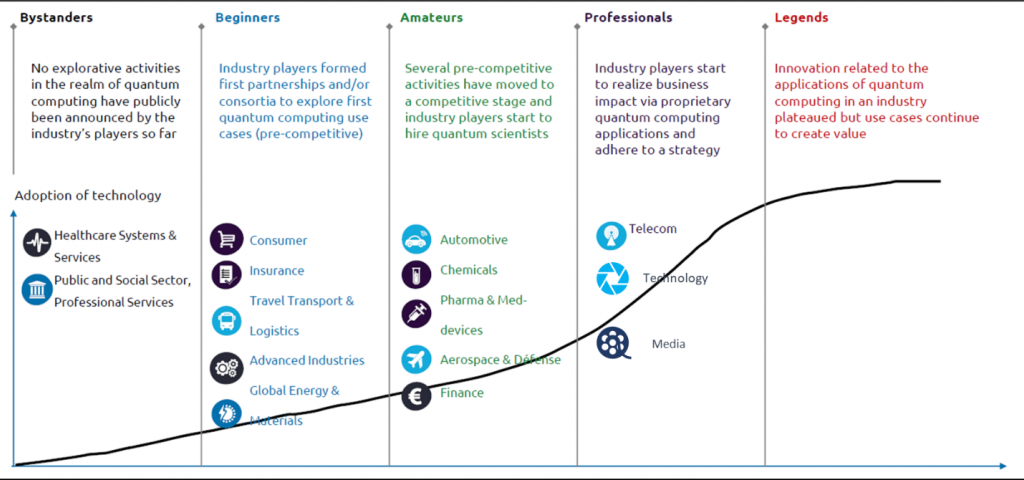
Pharmaceuticals, logistics, finance, manufacturing, and materials science are among the industries likely to benefit through improved drug discovery, optimized supply chains, enhanced financial modeling, and advanced material design.
What ethical challenges does quantum computing present?
Concerns include threats to data privacy, the risk of misuse by malicious actors, and the necessity for responsible governance to ensure the technology is developed and applied ethically.
When might quantum computing become widely impactful?
While still in developmental stages, quantum computing is anticipated to achieve significant practical applications within the next ten years as hardware and algorithms mature.
FAQ
What is quantum computing?
Quantum computing is a type of computation that uses quantum-mechanical phenomena such as superposition and entanglement to perform operations on data, enabling potentially exponential speed-ups for certain complex problems.
How will quantum computing affect cryptography?
Quantum computing threatens current encryption methods by potentially breaking widely used algorithms like RSA using Shor's algorithm, necessitating the development of quantum-resistant cryptography.
What industries will benefit from quantum computing?
Industries such as pharmaceuticals, logistics, finance, and manufacturing are expected to benefit from quantum computing through enhanced drug discovery, optimized supply chains, improved risk assessment, and better resource allocation.
What ethical concerns does quantum computing raise?
Quantum computing raises ethical concerns around privacy, security, potential misuse by malicious actors, and the need for responsible development and governance frameworks.
When is quantum computing expected to have widespread practical impact?
While still emerging, quantum computing is anticipated to make significant practical impacts within the next decade as hardware and algorithms mature.






Leave a Reply