
Short Answer
Definition of Energy Absorption in Particles
Energy absorption by particles refers to the process through which subatomic entities such as electrons, photons, and atoms take in energy from their surroundings, leading to changes in their physical or quantum states. This phenomenon is fundamental to both classical and quantum physics and underpins numerous natural and technological processes.
- Particles involved:
Primarily photons (particles of light), electrons, and atoms are the main participants in energy absorption events. - Energy forms:
Energy absorbed can be electromagnetic (light), thermal, or electrical, each influencing particles differently. - Resulting changes:
Absorption can cause electronic excitations, phase transitions, or increased kinetic energy among particles.
Mechanisms of Particle Energy Absorption
When particles absorb energy, their internal states or motions are altered depending on the type and amount of energy received. For example, photons can transfer energy to electrons within atoms, prompting electrons to jump from lower to higher energy levels. This excitation is a key step in many biological and physical processes.
In quantum systems, electrons occupy discrete energy levels. Absorption occurs only when the incoming energy precisely matches the gap between these levels, a principle known as resonance. This selective absorption governs phenomena such as atomic emission spectra and molecular transitions.
Energy Absorption in Semiconductors
In semiconductor materials, electrons absorb energy from photons, heat, or electric fields, enabling them to move from the valence band to the conduction band. This transition allows electrons to flow freely, creating electrical conductivity. This principle is exploited in devices like solar cells, where sunlight absorption generates usable electric power.
Thermal Energy and Particle Motion
When particles absorb thermal energy, their kinetic energy increases, resulting in more vigorous motion and collisions. This microscopic activity manifests macroscopically as temperature rise and heat conduction, illustrating the link between particle dynamics and thermodynamics.
Energy Absorption and Phase Transitions
Energy uptake by particles can induce phase changes in matter, such as melting or vaporization. As particles absorb sufficient energy, they overcome intermolecular forces that maintain their current state, leading to a reorganization of their structure. For instance, in melting, atoms in a solid lattice gain enough kinetic energy to move freely, transitioning into a liquid state.
This process is critical in understanding material properties, climate phenomena, and thermodynamic principles.
Quantum Perspective on Energy Absorption
Quantum mechanics reveals that energy absorption is quantized, meaning electrons can only absorb energy amounts that correspond exactly to the difference between allowed energy states. This quantization explains why atoms and molecules absorb specific wavelengths of light, producing characteristic absorption spectra.
The resonance condition ensures that only photons with energies matching these gaps can be absorbed, highlighting the precision and symmetry inherent in particle interactions.
Real-World Applications and Examples
- Photosynthesis:
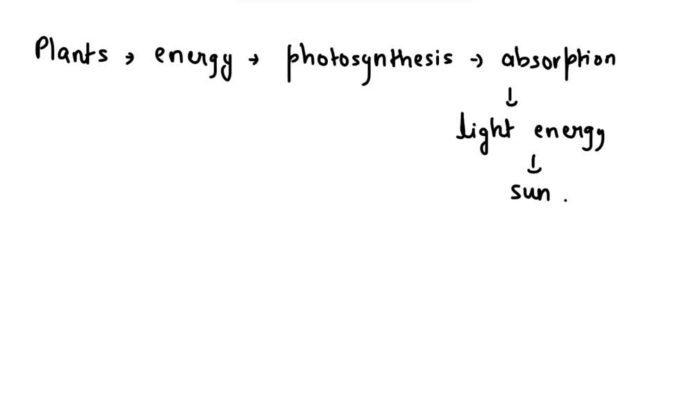
Plants absorb light energy via photons, exciting electrons that drive the conversion of carbon dioxide and water into glucose and oxygen, sustaining life on Earth. - Solar Cells:
Semiconductor materials absorb sunlight, elevating electrons to conduction bands and generating electricity. - Vision:
Photons absorbed by retinal molecules in the eye trigger electronic transitions that initiate the visual process. - Phase Changes:
Ice melting into water involves energy absorption by water molecules, enabling the transition from solid to liquid.
Common Misconceptions About Energy Absorption
Particles can absorb any amount of energy.
Energy absorption is quantized; particles absorb energy only in specific amounts matching energy level differences.
Energy absorption always leads to permanent changes.
Many energy absorption events are reversible, such as electrons returning to ground states and emitting photons.
Thermal energy absorption only increases temperature.
Thermal energy can also induce phase transitions without changing temperature, such as during melting or boiling.
Significance of Energy Absorption in Science and Technology
The ability of particles to absorb energy is central to understanding and harnessing natural phenomena and technological innovations. It explains fundamental processes in physics, chemistry, and biology, from atomic spectra to metabolic pathways. Technologically, it underlies the operation of devices like solar panels, lasers, and sensors, making it indispensable in energy conversion and information technologies.
Moreover, energy absorption principles inform climate science, material engineering, and medical diagnostics, demonstrating their broad impact on both scientific inquiry and everyday life.
Summary
Energy absorption by particles is a multifaceted process involving the uptake of energy that triggers changes at atomic and molecular levels. Whether through electronic excitations, thermal motion, or phase transitions, this phenomenon bridges microscopic quantum events and macroscopic physical changes. Understanding these interactions enriches our comprehension of the natural world and empowers advancements across diverse scientific and technological fields.





Leave a Reply