
Short Answer
Definition of Dark Energy and Its Cosmic Role
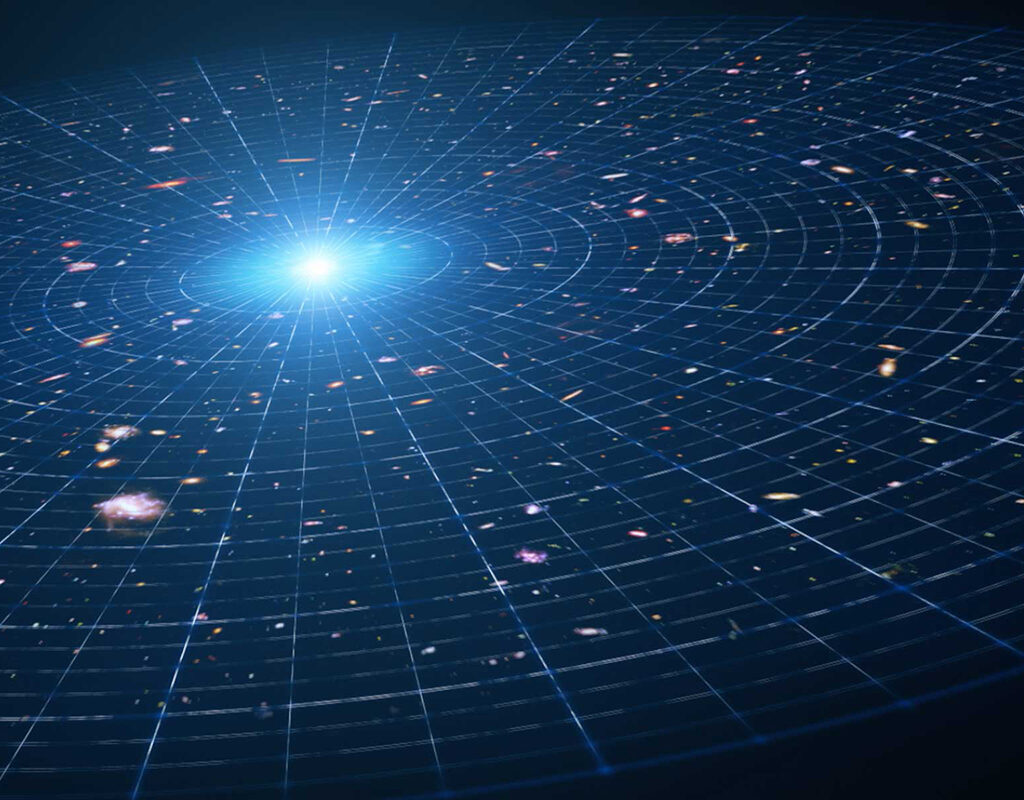
Dark energy is a mysterious and invisible force that permeates the universe, accounting for roughly 68% of its total energy content. Unlike ordinary matter or dark matter, dark energy does not emit, absorb, or reflect light, making it undetectable by conventional means. Its primary significance lies in its ability to drive the accelerated expansion of the cosmos, influencing the large-scale structure and distribution of galaxies across vast distances.
- Nature:
An unknown form of energy with negative pressure that counteracts gravity. - Prevalence:
Constitutes the majority of the universe’s energy budget. - Effect:
Responsible for the observed acceleration in cosmic expansion.
Mechanism of Dark Energy in Cosmic Expansion
Dark energy functions as a repulsive force that opposes the gravitational attraction between matter. This opposition manifests as an accelerating expansion of spacetime itself, a phenomenon first identified through observations of distant galaxies’ redshifts in the early 20th century. As the universe expands, dark energy’s influence grows stronger relative to matter, pushing galaxies apart and stretching the cosmic fabric at an increasing rate.
Impact on Galactic Distribution and Motion
On the grandest scales, dark energy shapes the spatial arrangement and dynamics of galaxies. While gravity attempts to draw matter together into clusters and superclusters, dark energy exerts an outward pressure that gradually dominates, causing galaxies to recede from one another more rapidly over time. This ongoing tension between gravitational attraction and dark energy’s expansion results in a dynamic cosmic landscape where the large-scale structure evolves continuously.
Local Effects on Individual Galaxies and Clusters
Within gravitationally bound systems such as galaxy clusters, dark energy’s influence is comparatively minor. The internal cohesion of galaxies-comprising stars, planets, and interstellar matter-remains intact, unaffected by the universe’s expansion. However, on the scale of galaxy clusters and beyond, dark energy limits the growth and merging of these massive structures by accelerating galaxies away from each other, eventually isolating clusters as distinct “islands” in an ever-expanding void.
Influence on Galactic Growth and Star Formation
Galaxies increase in size and complexity by merging with neighbors and accreting gas and dark matter. Dark energy’s acceleration of cosmic expansion widens the distances between galaxies, reducing the inflow of fresh material necessary for star formation. This gradual reduction in available gas leads to a decline in star formation rates over billions of years, affecting the evolutionary pathways of galaxies.
Dynamic Nature and Theoretical Variations of Dark Energy
Some cosmological models suggest that dark energy may not be a constant force but could vary over time. If dark energy’s properties change, it might induce complex effects on galaxy formation, morphology, and stellar populations. Variations could alter the rate of cosmic expansion, influencing when and how galaxies merge or interact, thereby adding layers of complexity to the universe’s evolution.
Long-Term Cosmic Consequences
The persistent acceleration driven by dark energy has profound implications for the ultimate fate of galaxies and the universe itself. If this expansion continues unchecked, it could lead to scenarios such as the “Big Freeze” or “Heat Death,” where galaxies become isolated, star formation ceases, and the cosmos grows increasingly cold and dark. Alternative theories propose different outcomes, including possible reversals of expansion or other exotic fates, depending on the fundamental physics governing dark energy.
Observational Evidence and Research Methods
Astronomers employ a variety of observational techniques to study dark energy’s influence on galaxies and cosmic expansion. These include measuring galactic redshifts, analyzing large-scale structure surveys, observing supernova brightness, and examining the cosmic microwave background radiation. By integrating these data, scientists can better understand the balance between dark energy and matter, and how this interplay shapes the universe’s evolution.
Significance of Dark Energy in Cosmology and Astrophysics
Dark energy is a cornerstone concept in modern cosmology, fundamentally altering our comprehension of the universe’s structure, dynamics, and destiny. Its role in accelerating cosmic expansion affects galaxy distribution, star formation, and the growth of large-scale structures, making it essential for explaining observations that cannot be accounted for by gravity alone. Continued research into dark energy promises to deepen our understanding of the cosmos and the forces that govern it.
FAQ
What is dark energy?
Dark energy is a mysterious form of energy that permeates the universe and is responsible for its accelerated expansion.
How does dark energy affect galaxies?
Dark energy causes galaxies to recede from one another, influencing their distribution and dynamics on a cosmic scale.
What are the long-term effects of dark energy?
If dark energy continues to drive cosmic expansion, it could lead to scenarios like the Big Freeze, where galaxies become isolated and star formation ceases.

Leave a Reply