
Short Answer
Definition of the Higgs Boson
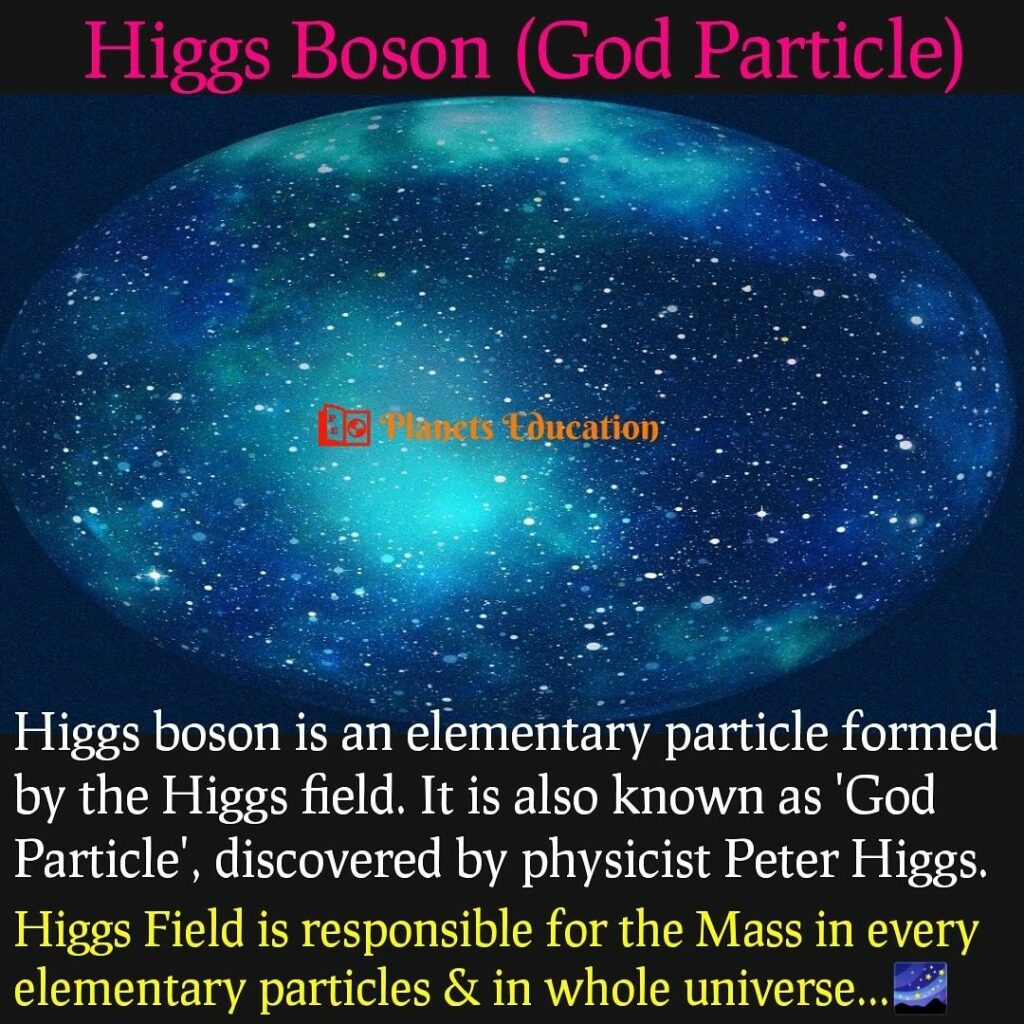
The Higgs boson is a fundamental particle associated with the Higgs field, a quantum field that permeates all of space. Often referred to as the “God particle,” this nickname reflects its pivotal role in particle physics, particularly within the framework of the Standard Model. The discovery of the Higgs boson in 2012 at CERN’s Large Hadron Collider (LHC) was a landmark achievement, confirming the mechanism by which particles acquire mass and deepening our understanding of the universe’s fundamental structure.
The Higgs Field and Mass Generation
At the heart of the Higgs boson’s significance lies the Higgs field, an invisible quantum field that exists throughout the cosmos. Unlike a passive backdrop, this field actively endows elementary particles with mass through a process known as spontaneous symmetry breaking. Without this interaction, particles would remain massless, and the universe would lack the complex matter structures essential for atoms, molecules, and life itself.
- Higgs Mechanism:
Particles gain mass by interacting with the Higgs field, which acts like a medium creating resistance, similar to moving through a viscous substance. - Mass as an Emergent Property:
Contrary to classical views, mass is not an inherent attribute of particles but arises from their coupling to the Higgs field.
Symmetry and Its Breaking in Physics
Symmetry principles are foundational in physics, indicating that physical laws remain unchanged under certain transformations. The Higgs boson is intimately connected to the concept of symmetry breaking, where the perfect symmetry of the early universe is disrupted, allowing particles to acquire mass. This phenomenon explains why the universe exhibits the diversity of particles and forces observed today.
- Role of Symmetry:
Symmetry ensures uniformity in physical laws, but the presence of mass indicates that this symmetry is not absolute. - Broken Symmetry:
The Higgs boson represents the manifestation of this broken symmetry, enabling the differentiation of particles by mass.
Mechanism of the Higgs Boson
The Higgs boson emerges as a quantum excitation of the Higgs field. When particles move through this field, they interact with it, acquiring mass in the process. This interaction can be visualized as particles experiencing a form of drag, which imparts inertia and mass. The discovery of the Higgs boson provided direct evidence for this mechanism, validating decades of theoretical predictions.
Mathematical Framework
The Higgs mechanism is mathematically described within the Standard Model using spontaneous symmetry breaking of the electroweak gauge symmetry. The key elements include:
- Higgs Field (Φ):
A complex scalar field responsible for symmetry breaking. - Potential Energy (V(Φ)):
Characterized by a “Mexican hat” potential, leading to a nonzero vacuum expectation value (VEV) of the field. - Mass Generation Formula:
Particle masses arise from coupling constants (g) and the VEV (v) of the Higgs field, expressed as m = gv/√2.
Implications Beyond the Standard Model
The Higgs boson’s discovery has opened new avenues for exploring physics beyond the Standard Model. Its properties raise questions about the existence of additional Higgs-like particles and their potential connections to dark matter and dark energy, which constitute the majority of the universe’s mass-energy content but remain poorly understood.
- Extended Higgs Sectors:
Theories propose multiple Higgs bosons or related particles that could explain phenomena not accounted for by the Standard Model. - Dark Matter Connections:
Some hypotheses suggest interactions between the Higgs field and dark matter candidates, offering a pathway to uncovering the nature of dark matter.
Experimental Verification and Challenges
The path from theoretical prediction to experimental confirmation of the Higgs boson was marked by intense scientific effort and technological innovation. The LHC’s high-energy collisions enabled physicists to detect the Higgs boson’s fleeting signals, confirming the Standard Model’s accuracy while also highlighting the challenges of probing such fundamental particles.
- Large Hadron Collider:
The world’s most powerful particle accelerator, instrumental in producing and detecting the Higgs boson. - Precision and Energy Requirements:
Detecting the Higgs boson required unprecedented energy levels and sophisticated detectors to observe its rare decay patterns.
Public Perception and Science Communication
The Higgs boson’s popular nickname, the “God particle,” has contributed to both fascination and misunderstanding among the general public. This highlights the importance of clear and accurate science communication to bridge the gap between complex theoretical physics and public comprehension.
- Myth vs. Reality:
The nickname can exaggerate the particle’s role, leading to misconceptions about its nature and significance. - Educational Outreach:
Effective communication is essential to foster appreciation of the Higgs boson’s true scientific value and inspire future generations.
Ongoing Research and Future Directions
Research continues to delve deeper into the properties of the Higgs boson and its implications for unresolved questions in physics, such as the hierarchy problem, which concerns the vast difference between the Higgs boson’s mass and the gravitational scale. Advances in particle detection and accelerator technology promise to expand our understanding of the universe’s fundamental workings.
Significance of the Higgs Boson
The Higgs boson represents a monumental convergence of theoretical insight, experimental prowess, and human curiosity. It not only elucidates why particles possess mass but also challenges and enriches our understanding of the universe’s fundamental laws. Its discovery underscores the dynamic interplay between abstract theory and empirical evidence, inspiring ongoing exploration into the deepest mysteries of existence.
FAQ
What is the Higgs boson?
The Higgs boson is a fundamental particle associated with the Higgs field responsible for giving mass to other elementary particles.
Why is the Higgs boson called the God particle?
The nickname 'God particle' highlights its crucial role in particle physics, though it can cause misunderstandings about its nature.
How was the Higgs boson discovered?
It was discovered in 2012 at CERN’s Large Hadron Collider through high-energy collisions that detected its predicted signals.
What does the Higgs boson tell us about the universe?
It explains how particles acquire mass and deepens our understanding of the universe's fundamental structure.
What are the future research directions regarding the Higgs boson?
Research is ongoing to explore extended Higgs sectors, connections to dark matter, and unresolved physics phenomena.





Leave a Reply