
Short Answer
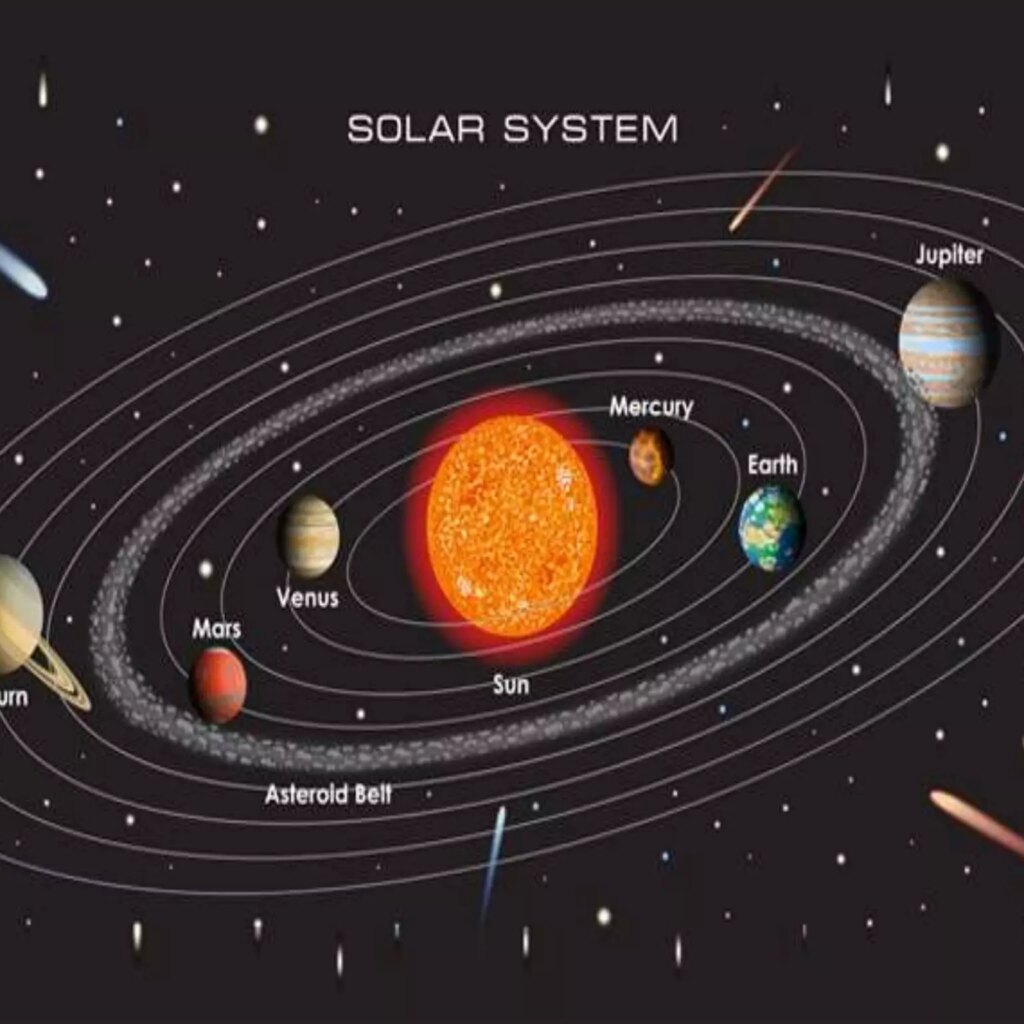
Definition of Gravity in the Solar System
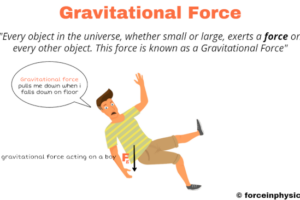
Gravity is a fundamental force of attraction that exists between any two objects possessing mass. Although it is the weakest among the four fundamental forces-electromagnetic, strong nuclear, weak nuclear, and gravitational-it dominates on astronomical scales. This invisible force is responsible for the motion and interaction of celestial bodies, from planets and moons to comets and asteroids, orchestrating the complex dynamics of our solar system.
- Universal Attraction:
Gravity acts between all masses, regardless of size or distance. - Dominance in Space:
Despite its relative weakness, gravity governs the large-scale structure and behavior of the cosmos.
Fundamental Principles Governing Gravity
The gravitational force between two objects depends on their masses and the distance separating them. This relationship is quantitatively described by Newton’s law of universal gravitation, which states that the force is directly proportional to the product of the masses and inversely proportional to the square of the distance between them. This inverse-square law explains why planets closer to the Sun orbit faster than those farther away.
Newton’s Law of Universal Gravitation
The formula for gravitational force is:
F = G × (m1 × m2) / r2
- F: Gravitational force between two objects
- G: Gravitational constant (6.67430 × 10⁻¹¹ N·m²/kg²)
- m1, m2: Masses of the two objects
- r: Distance between the centers of the two masses
The Sun: The Central Gravitational Anchor
At the heart of our solar system lies the Sun, a colossal mass approximately 1.989 × 1030 kilograms, accounting for over 99.8% of the solar system’s total mass. This immense mass creates a powerful gravitational well that governs the orbits of all planets, asteroids, and comets. The Sun’s gravity acts like an anchor, holding the solar system together and shaping the paths of celestial bodies within its reach.
Complex Gravitational Interactions Among Planets
Gravity within the solar system is not a simple one-to-one interaction but a complex network of overlapping gravitational fields. For example, Jupiter, the largest planet with a mass over 300 times that of Earth, exerts a significant gravitational influence that extends far beyond its immediate surroundings. This influence helps protect the inner solar system by deflecting or capturing asteroids and comets, acting as a cosmic shield.
Einstein’s General Relativity: A Modern Perspective on Gravity
While Newton’s laws provide an excellent approximation of gravitational forces, Albert Einstein’s theory of general relativity offers a deeper understanding. According to Einstein, gravity is not just a force but a manifestation of the curvature of spacetime caused by mass and energy. Massive objects like the Sun distort the fabric of spacetime, causing other bodies to follow curved trajectories around them.
- Spacetime Curvature:
Mass bends spacetime, influencing the motion of nearby objects. - Rubber Sheet Analogy:
Imagine a heavy ball placed on a stretched rubber sheet causing it to dip; smaller balls rolling nearby will spiral inward, mimicking gravitational orbits.
This framework explains phenomena that Newtonian gravity cannot, such as the precise precession of Mercury’s orbit, and continues to inspire research into the fundamental nature of gravity.
Gravity’s Role in Planetary Characteristics and Environmental Effects
Gravity shapes not only the orbits of planets but also their physical properties and environments. Earth’s gravitational pull retains its atmosphere, enabling life to thrive. The interplay between Earth’s gravity and the Moon’s smaller gravitational field generates tides, a rhythmic movement of ocean waters essential to many ecological processes.
Smaller bodies like asteroids and dwarf planets have weaker gravitational fields due to their lower masses, which affects their ability to hold atmospheres or maintain spherical shapes. Their irregular forms and surface features often result from impacts rather than internal gravitational shaping.
Gravity and the Formation of the Solar System
Gravity played a crucial role in the birth of the solar system. In the primordial nebular disk of gas and dust, slight variations in density allowed gravity to pull matter together, forming larger clumps. This accretion process eventually led to the creation of planets, moons, and other celestial bodies. Without gravity’s cohesive force, matter would remain dispersed, preventing the formation of structured systems.
Challenges and Mysteries: Dark Matter and Gravity
On cosmic scales beyond the solar system, gravity’s behavior presents puzzles such as the influence of dark matter-an invisible substance believed to make up a significant portion of the universe’s mass. Although dark matter’s effects are negligible within our solar system, its gravitational impact on galaxies and clusters challenges current models and suggests that our understanding of gravity may still be incomplete.
Why Understanding Gravity Is Essential
Gravity is the fundamental architect of cosmic order, governing the motion of planets, shaping environments, and influencing the very fabric of spacetime. Its study is vital for comprehending the universe’s structure, predicting celestial events, and exploring the origins of planetary systems. As science advances, uncovering the nuances of gravity promises to deepen our knowledge of the cosmos and inspire future discoveries.
Common Misconceptions About Gravity
Gravity is a force that only acts on Earth.
Gravity is a universal force acting between all masses, everywhere in the universe.
Gravity is the strongest force in nature.
Gravity is the weakest of the four fundamental forces but dominates at large scales due to its infinite range and cumulative effect.
Gravity pulls objects downward only.
Gravity attracts objects toward each other, and the direction depends on the relative positions of the masses involved.
Real-World Examples of Gravity’s Influence
- Planetary Orbits:
Earth’s consistent orbit around the Sun is maintained by the Sun’s gravitational pull. - Tides:
The gravitational interaction between Earth and the Moon causes ocean tides. - Space Missions:
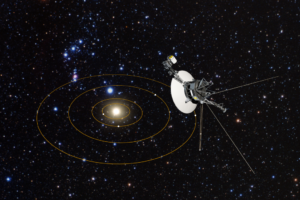
Spacecraft trajectories are planned using gravitational assists from planets to conserve fuel and reach distant targets.
FAQ
What is gravity?
Gravity is a force of attraction that exists between any two objects with mass.
How does gravity affect planets?
Gravity governs the orbits and physical properties of planets, influencing their atmospheres and environmental conditions.
What is the role of the Sun in gravitational interactions?
The Sun's massive gravitational force anchors the solar system and shapes the orbits of planets and other celestial bodies.
Leave a Reply