
Short Answer
Definition of Plasma and Gravity in Cosmic Context
Plasma, often described as the fourth state of matter, is a highly ionized gas consisting of free electrons and ions. Unlike solids, liquids, or gases, plasma exhibits collective electromagnetic behavior due to its charged particles. It is the predominant form of visible matter in the universe, found in environments ranging from the Sun’s corona to the vast interstellar medium. Gravity, on the other hand, is the fundamental force responsible for the attraction between masses, shaping the large-scale structure of the cosmos by influencing the motion of planets, stars, and galaxies.
- Plasma:
An electrically conductive state of matter composed of charged particles that respond collectively to electromagnetic fields. - Gravity:
A universal force of attraction between masses that governs the motion and structure of celestial bodies and cosmic matter.
Interplay Between Gravity and Plasma
While electromagnetic forces primarily dictate the local behavior of plasma, gravity exerts a significant influence on plasma dynamics at larger scales and in specific astrophysical environments. The interaction between these two forces is complex, with gravity shaping the overall distribution and motion of plasma clouds, while electromagnetic fields govern the detailed particle interactions within those clouds.
Gravity’s Role in Stellar and Galactic Plasmas
Within stars, gravity compresses plasma to extreme densities and temperatures, initiating nuclear fusion reactions that power stellar luminosity. This gravitational compression not only confines plasma but also indirectly influences its electromagnetic properties through changes in temperature and pressure. On a grander scale, gravity guides the formation and evolution of galaxies by controlling the movement and aggregation of plasma filaments and clouds in interstellar and intergalactic space, effectively sculpting the cosmic web.
Localized Effects in Planetary Magnetospheres
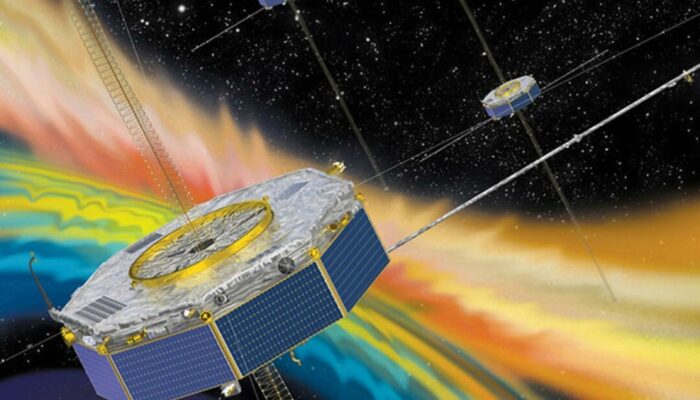
In planetary environments such as Earth’s magnetosphere, gravity plays a subtler but essential role. The magnetosphere acts as a magnetic shield, interacting with charged particles from the solar wind to produce plasma waves and phenomena like auroras. Although electromagnetic forces dominate these interactions, gravity maintains the planet’s atmosphere and influences the configuration of magnetic fields, thereby setting the conditions necessary for such plasma behaviors.
Plasma Dynamics in Extreme Gravitational Fields
Near compact objects like black holes and neutron stars, gravity’s impact on plasma becomes dramatically pronounced. The intense gravitational fields warp spacetime and compress plasma in accretion disks, causing it to heat to extreme temperatures and emit radiation across the electromagnetic spectrum. Gravity governs the density gradients, angular momentum transfer, and magnetic field structures within these plasmas, driving energetic phenomena such as relativistic jets that extend over vast cosmic distances.
Mechanisms of Gravity’s Influence on Plasma
Although electromagnetic forces dominate at the particle level within plasma, gravity’s cumulative effect over large masses and distances cannot be overlooked. In quasi-neutral plasma environments, individual charged particles respond primarily to electromagnetic fields, but the collective mass of plasma clouds generates gravitational fields that interact with spacetime curvature. This dual influence is essential for understanding plasma behavior in astrophysical contexts.
Impact on Plasma Waves and Instabilities
Plasma supports various wave modes and instabilities-such as Alfvén waves, magnetosonic waves, and plasma oscillations-that are fundamentally electromagnetic. However, gravitational fields can indirectly affect these phenomena by altering plasma density, temperature, and magnetic field configurations. These changes influence wave propagation, energy transfer, and the development of instabilities, highlighting the subtle but important role of gravity in plasma dynamics.
Mathematical Framework: Magnetohydrodynamics and Gravity
The study of plasma under the influence of gravity is often framed within magnetohydrodynamics (MHD), which combines fluid dynamics with electromagnetic theory, and incorporates gravitational forces. The fundamental MHD equations include terms for mass density (ρ), velocity (v), magnetic field (B), pressure (p), and gravitational potential (Φ):
- Continuity equation:
∂ρ/∂t + ∇·(ρv) = 0 - Momentum equation:
ρ(∂v/∂t + v·∇v) = -∇p + J × B + ρ∇Φ - Induction equation:
∂B/∂t = ∇ × (v × B) – ∇ × (η∇ × B)
Here, J represents the current density, and η is the magnetic diffusivity. The gravitational potential Φ accounts for the influence of gravity on plasma motion, linking plasma physics with gravitational dynamics.
Real-World Examples of Gravity-Plasma Interactions
- Solar Corona and Solar Wind:
Gravity confines the Sun’s plasma atmosphere, while electromagnetic forces drive solar flares and coronal mass ejections. - Earth’s Magnetosphere:
Gravity maintains atmospheric retention and magnetic field structure, enabling plasma interactions that produce auroras. - Accretion Disks Around Black Holes:
Extreme gravity compresses plasma, leading to high-energy emissions and relativistic jets. - Intergalactic Medium:
Gravity shapes the distribution of diffuse plasma filaments that form the cosmic web.
Common Misconceptions About Gravity and Plasma
Gravity is negligible in plasma dynamics because electromagnetic forces are stronger.
While electromagnetic forces dominate locally, gravity’s cumulative effect over large scales significantly influences plasma distribution and motion.
Plasma behavior can be fully understood without considering gravity.
Gravity is essential for explaining large-scale plasma structures and phenomena in astrophysical environments.
Significance of Gravity’s Influence on Plasma
Understanding how gravity interacts with plasma is vital for comprehending the formation and evolution of cosmic structures, from stars to galaxies. This knowledge informs astrophysical theories and practical applications such as space weather forecasting, satellite protection, and the development of plasma propulsion technologies for space exploration. The synergy between gravitational and electromagnetic forces enriches our grasp of the universe’s complexity and guides ongoing scientific inquiry.
FAQ
How does gravity affect plasma in space?
Gravity influences plasma dynamics by shaping its distribution and motion, particularly in large-scale cosmic structures.
What role does gravity play in the formation of stars?
Gravity compresses plasma within stars, leading to nuclear fusion and the production of energy.

Leave a Reply