
Short Answer
Understanding Gravity: A Fundamental Force of Nature
Gravity is the invisible influence that continuously pulls every object, from the smallest grain of sand to the largest star, toward one another. This force is responsible for the structure and behavior of the universe, governing the motion of planets, moons, and galaxies alike. Despite its omnipresence, gravity remains one of the most profound and intriguing phenomena in physics, inviting ongoing exploration and deeper understanding.
Definition and Historical Perspective
At its core, gravity is the attraction between masses. This concept was first rigorously formulated by Sir Isaac Newton in the 17th century through his law of universal gravitation. Newton’s law states that every mass exerts a force of attraction on every other mass, with the strength of this force proportional to the product of their masses and inversely proportional to the square of the distance separating them.
- Newton’s Law of Universal Gravitation:
This classical theory provided a mathematical framework to predict planetary orbits and explain everyday phenomena such as objects falling to the ground. - Limitations:
While Newton’s law accurately describes gravitational interactions, it does not explain the underlying cause of gravity or how this force propagates through space.
Gravity as the Curvature of Spacetime
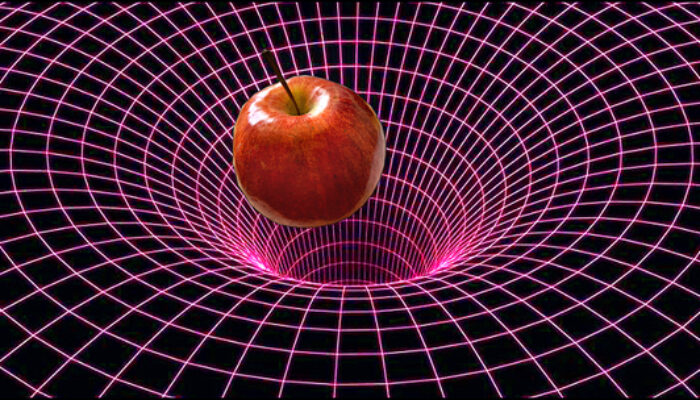
The 20th century brought a revolutionary shift in understanding gravity through Albert Einstein’s general theory of relativity. Instead of viewing gravity as a force acting at a distance, Einstein proposed that gravity arises from the warping of spacetime caused by mass and energy. Imagine placing a heavy ball on a stretched rubber sheet; the sheet bends, and smaller objects roll toward the dip. Similarly, massive objects curve the fabric of spacetime, guiding the motion of other bodies along these curved paths.
- Geodesics:
Objects move along the straightest possible paths, called geodesics, within curved spacetime, which we perceive as gravitational attraction. - Gravitational Time Dilation:
Time itself slows down in stronger gravitational fields, a phenomenon confirmed by experiments and essential for technologies like GPS. - Gravitational Waves:
Ripples in spacetime generated by massive cosmic events, such as merging black holes, were predicted by general relativity and directly detected in recent years.
Mathematical Description of Gravity
Newton’s law of universal gravitation is expressed as:
F = G * (m₁ * m₂) / r²
- F: Gravitational force between two masses
- G: Gravitational constant, a fixed value determining the strength of gravity
- m₁, m₂: Masses of the two objects
- r: Distance between the centers of the two masses
Einstein’s general relativity, however, uses the Einstein field equations to describe how matter and energy influence spacetime curvature, a far more complex mathematical framework beyond Newton’s formula.
Quantum Challenges and Theoretical Advances
While general relativity excels at explaining gravity on large scales, it does not reconcile easily with quantum mechanics, which governs the subatomic world. Unlike the electromagnetic, strong, and weak forces, gravity has resisted incorporation into the quantum framework.
- Graviton Hypothesis:
Physicists propose the graviton, a hypothetical quantum particle that would mediate gravitational interactions, but it remains undetected. - Quantum Gravity Theories:
Approaches such as string theory, loop quantum gravity, and emergent gravity attempt to unify gravity with quantum mechanics, offering new perspectives on its fundamental nature.
Gravity’s Role in the Cosmos
Gravity is the architect of the universe’s large-scale structure. It drives the formation of galaxies by pulling matter together and governs the dynamics of galaxy clusters through the gravitational influence of dark matter. Moreover, gravity interacts intriguingly with dark energy, the mysterious force accelerating the universe’s expansion.
- Cosmic Structure Formation:
Gravity causes matter to coalesce into stars, planets, and galaxies, shaping the universe’s visible architecture. - Dark Matter and Dark Energy:
These enigmatic components influence gravitational behavior on cosmic scales, posing ongoing puzzles for scientists.
Emergent Gravity: A New Paradigm
Some contemporary theories suggest gravity might not be a fundamental force but an emergent phenomenon arising from deeper microscopic processes. Analogous to how temperature emerges from molecular motion, gravity could result from the collective behavior of quantum information and entropy at a fundamental level.
Gravity’s Impact on Earth and Life
Beyond cosmic scales, gravity profoundly affects life on Earth. It governs ocean tides, influences atmospheric retention, and enables the formation of planets capable of supporting life. This force is essential for maintaining the conditions that allow ecosystems to thrive.
Common Misconceptions About Gravity
Gravity is simply a force pulling objects downward.
Gravity is the manifestation of curved spacetime guiding the motion of objects, not just a force acting in one direction.
Gravity works instantly across space.
Changes in gravitational fields propagate at the speed of light, as evidenced by the detection of gravitational waves.
Gravity is fully explained by Newton’s laws.
Newton’s laws describe gravitational effects but do not explain its origin or behavior in extreme conditions, which general relativity addresses.
Why Understanding Gravity Is Crucial
Gravity is central to both our everyday experience and the grand cosmic order. It enables the existence of planets, stars, and galaxies, influences time itself, and challenges physicists to unify the laws of nature. Studying gravity not only deepens our comprehension of the universe but also drives technological advancements and inspires philosophical reflection on the nature of reality.
Summary
Gravity is a fundamental interaction arising from the interplay of mass, energy, and the geometry of spacetime. From Newton’s classical description to Einstein’s geometric interpretation and ongoing quantum investigations, gravity remains a dynamic field of study. Its influence spans from the smallest scales of life on Earth to the vast expanses of the cosmos, making it a cornerstone of both scientific inquiry and human experience.
FAQ
What is gravity?
Gravity is the force that pulls objects toward each other, affecting everything from falling apples to the orbits of planets.
How does gravity work?
Gravity works through the attraction between masses, influenced by the curvature of spacetime as described by general relativity.
What are gravitational waves?
Gravitational waves are ripples in spacetime caused by massive cosmic events, predicted by Einstein's theory and confirmed by experiments.


Leave a Reply