
Short Answer
Understanding Gravity: The Fundamental Force of the Universe
Gravity is the unseen force that governs the motion of celestial bodies and keeps us anchored to the Earth. It acts as the fundamental link connecting galaxies, stars, planets, and the very structure of spacetime itself. Despite its omnipresence and critical role in shaping the cosmos, humanity’s ability to manipulate gravity remains rudimentary, comparable to a novice sailor navigating an ocean of enigmas with an incomplete map. The journey toward mastering this elusive force is intertwined with groundbreaking scientific discoveries, speculative technologies, and the frontiers of theoretical physics.
Conceptualizing Gravity: From Classical Views to Modern Physics
Visualize gravity as a vast, flowing river coursing through the universe’s landscape. For centuries, humans have observed its effects, cautiously experimenting to understand its nature. The aspiration to control gravity-redirecting its flow or harnessing its power-has long inspired inventors, scientists, and storytellers. Achieving such control could revolutionize transportation, energy production, and many other fields, transforming science fiction into reality.
Einstein’s General Theory of Relativity
At the core of our understanding of gravity lies Albert Einstein’s general theory of relativity, which redefined gravity not as a conventional force but as the warping of spacetime caused by mass and energy. This paradigm shift provided profound insights but also made gravity more abstract and challenging to manipulate. Unlike electromagnetic forces, gravity is incredibly weak and only becomes significant on astronomical scales, complicating efforts to control it.
The Quest for Quantum Gravity
Advances in quantum mechanics have opened new avenues for exploring gravity. The pursuit of a quantum theory of gravity, which would unify general relativity with quantum principles, is considered one of modern physics’ greatest challenges. Such a theory could potentially enable manipulation of gravitational fields similarly to how electromagnetic waves are controlled today. Theoretical frameworks like string theory and loop quantum gravity offer promising models, but experimental validation remains elusive, keeping practical gravity control beyond our current reach.
Experimental Advances and Emerging Technologies
Recent progress in experimental physics has begun to shed light on gravity’s mysteries. The detection of gravitational waves-ripples in spacetime generated by massive cosmic events-by observatories such as LIGO and Virgo has confirmed Einstein’s predictions and opened a new window into the gravitational universe. While these discoveries do not yet allow direct control of gravity, they pave the way for technologies capable of detecting and possibly influencing localized gravitational phenomena.
Interplay Between Gravity and Electromagnetism
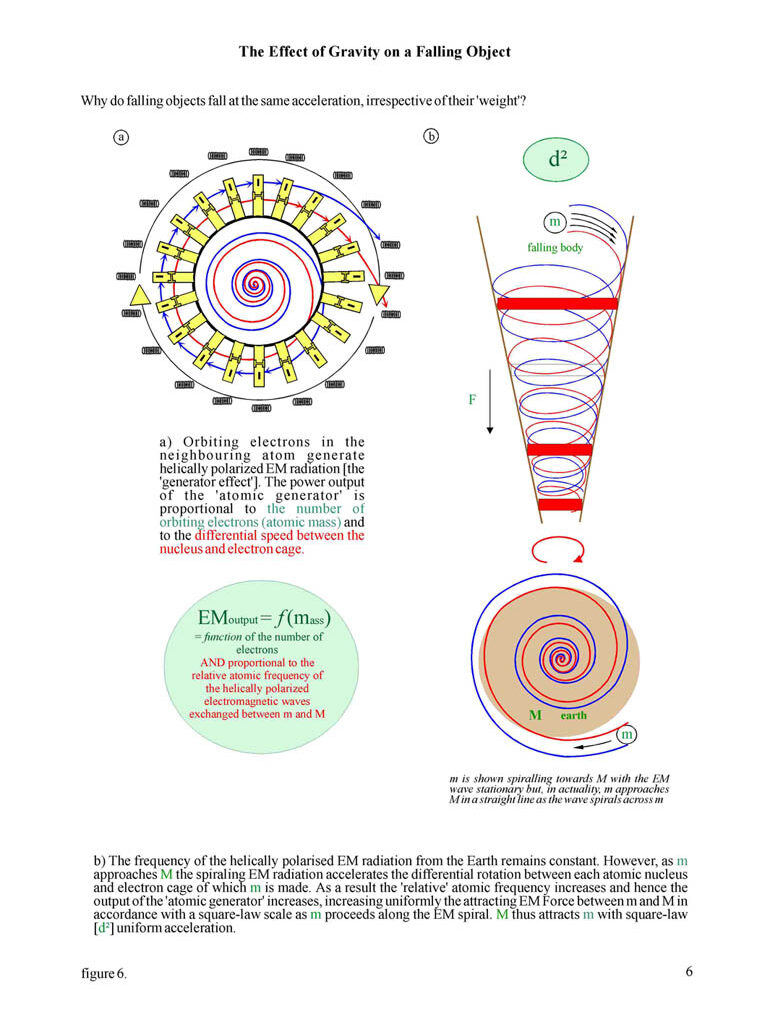
One intriguing area of research involves the relationship between gravity and electromagnetic forces. Experiments with superconductors, electromagnetic fields, and rotating masses have hinted at gravity-like effects influenced by electromagnetic interactions. Although these findings are controversial and require further verification, they suggest a potential mechanism for indirectly affecting gravitational fields.
The Concept of Anti-Gravity
The idea of “anti-gravity” embodies the dream of neutralizing or reversing gravitational attraction. While current physics does not rule out exotic matter or hypothetical particles-such as gravitons or manifestations of dark energy-that could enable antigravitational effects, these remain speculative. Advanced propulsion concepts, including quantum vacuum manipulation and warp field theories, rely on these possibilities but await significant breakthroughs to become feasible.
Challenges in Engineering Gravity Control
Engineering practical methods to manipulate gravity faces formidable obstacles. Gravity’s universal and unshieldable nature means it permeates all matter simultaneously, unlike electromagnetic fields that can be focused or blocked. Creating localized gravitational fields demands energy densities and precision far beyond current technological capabilities. Concepts involving miniature black holes or exotic matter present engineering challenges of immense complexity.
Potential Impact and Future Prospects
The allure of gravity control lies in its transformative potential rather than immediate application. Overcoming gravitational constraints could revolutionize transportation, architecture, energy systems, and even human biology. Envision floating cities free from structural weight limitations or interstellar voyages unhindered by gravitational forces. These visions inspire ongoing scientific inquiry and motivate researchers to delve deeper into the enigmatic relationship between mass and spacetime.
Interdisciplinary Research and Technological Synergies
Funding agencies and visionary institutions increasingly support interdisciplinary research aimed at exploring the quantum-gravity interface. Emerging fields such as quantum sensing, nanotechnology, and advanced materials science are expected to contribute incremental advances toward gravitational control. The integration of AI-driven simulations with ultra-precise instrumentation accelerates experimental validation, gradually transforming theoretical dreams into tangible possibilities. However, mastering gravity will require not only technological innovation but also new theoretical frameworks and mathematical languages.
Summary: The Ongoing Journey to Harness Gravity
The pursuit of gravity control reflects humanity’s broader ambition to evolve from passive observers to active manipulators of nature’s fundamental forces. Standing at the threshold of profound theoretical insights and experimental breakthroughs, we continue to explore the depths of gravitational phenomena. Although true mastery over gravity remains distant, the ongoing unraveling of its secrets promises revolutionary technological advancements and a deeper understanding of the universe.
Much like the myth of Prometheus bringing fire to humanity, harnessing gravity demands boldness, creativity, and relentless curiosity. Until that day arrives, gravity remains the silent conductor of the cosmic symphony, inviting us to listen, learn, and perhaps one day, lead.
FAQ
What is the significance of Einstein's theory in understanding gravity?
Einstein's general theory of relativity redefined gravity as the warping of spacetime, providing profound insights into the nature of gravitational forces.
What are some challenges to controlling gravity?
Challenges include gravity's universal nature, the need for immense energy densities, and the complexity of engineering solutions.

Leave a Reply