
Short Answer
Definition of Time, Space, and Gravity
Time, space, and gravity are fundamental components that constitute the very framework of our universe. Each plays a distinct yet interconnected role in shaping reality as we perceive it.
- Time:
An intangible continuum that measures the progression of events, enabling the concept of change and causality. - Space:
The three-dimensional expanse that provides the setting for all matter and energy, defining distances and spatial relationships. - Gravity:
A fundamental interaction that causes masses to attract one another, influencing the structure and dynamics of cosmic bodies.
Interrelation of Time, Space, and Gravity
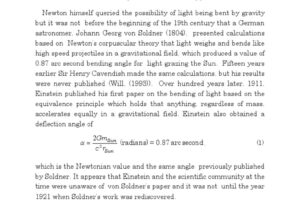
Rather than existing as isolated phenomena, time, space, and gravity are deeply intertwined. Einstein’s theory of general relativity revolutionized our understanding by merging time and space into a unified four-dimensional continuum called spacetime. Gravity, in this framework, is not a traditional force but the effect of spacetime curvature caused by mass and energy. This interdependence means that changes in one aspect inherently affect the others, creating a dynamic cosmic interplay.
The Origin of the Universe and the Emergence of Cosmic Elements
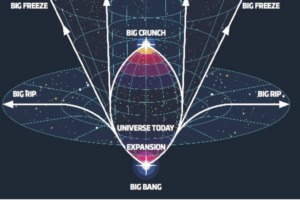
The question of which came first-time, space, or gravity-leads us to the origins of the universe itself. The Big Bang, occurring roughly 13.8 billion years ago, marks the inception of the observable cosmos. At this singular event, time and space are believed to have simultaneously emerged, as the expansion of the universe signifies the birth and continuous stretching of space. The concept of “before” the Big Bang is problematic because time itself began at this point.
Gravity’s role in these earliest moments is more complex. The extreme conditions immediately following the Big Bang challenge classical physics, suggesting that quantum gravity effects dominated. These effects, still not fully understood, imply that gravity, space, and time may have originated together in a unified quantum state, making it difficult to assign precedence to any single element.
Quantum Cosmology and Theoretical Perspectives
Modern theoretical frameworks such as loop quantum gravity and string theory propose that spacetime may have a discrete or multidimensional structure at the smallest scales. These models suggest a pre-Big Bang phase where conventional notions of time, space, and gravity do not apply. Instead, a pre-geometric state governed by unknown principles might have existed, further complicating the question of which element came first.
Philosophical Implications of the Cosmic Triad
The interplay of time, space, and gravity invites profound philosophical reflection. Time, as a measure of change, cannot exist without events; space, as a container, is meaningless without temporal progression; and gravity presupposes the presence of mass-energy within spatial dimensions. Together, they form an ontological triad-each defining and sustaining the others in a continuous, inseparable relationship.
Why Understanding Their Origins Matters
Determining the sequence or simultaneity of time, space, and gravity’s emergence is not merely an abstract pursuit. It has significant implications for cosmology, astrophysics, and the quest for a unified physical theory. Insights into their origins influence how scientists model the universe’s evolution, interpret astronomical observations, and attempt to reconcile quantum mechanics with general relativity.
Common Misconceptions
Time existed before the Big Bang.
According to current cosmological models, time itself began at the Big Bang, making the concept of “before” meaningless in this context.
Gravity is a force acting independently of space and time.
Gravity is understood as the curvature of spacetime caused by mass and energy, inseparable from the fabric of space and time.
Space is an empty void that exists independently.
Space is part of the spacetime continuum and is dynamically linked to time and gravity.
Real-World Examples Illustrating the Concepts
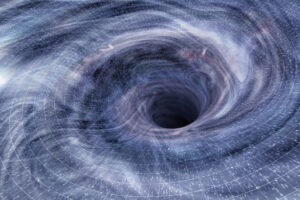
Practical manifestations of the relationship between time, space, and gravity can be observed in phenomena such as gravitational time dilation near massive objects like black holes, where time slows relative to distant observers. The expansion of the universe demonstrates the continuous stretching of space over time, influenced by gravitational interactions on cosmic scales.
Conclusion: Embracing the Mystery
The inquiry into whether time, space, or gravity came first transcends simple cause-and-effect reasoning. Current scientific understanding leans toward their simultaneous emergence as facets of a unified cosmic entity. This perspective challenges traditional linear thinking and highlights the profound interconnectedness at the heart of reality. Ultimately, the value lies not only in seeking definitive answers but in the ongoing exploration that deepens our appreciation of the universe’s intricate tapestry.
FAQ
What came first: time, space, or gravity?
Current understanding suggests that time, space, and gravity emerged simultaneously during the Big Bang.
How does gravity affect time and space?
Gravity curves spacetime, affecting how time is experienced near massive objects.
Leave a Reply