
Short Answer
Definition of Measuring Cylinders
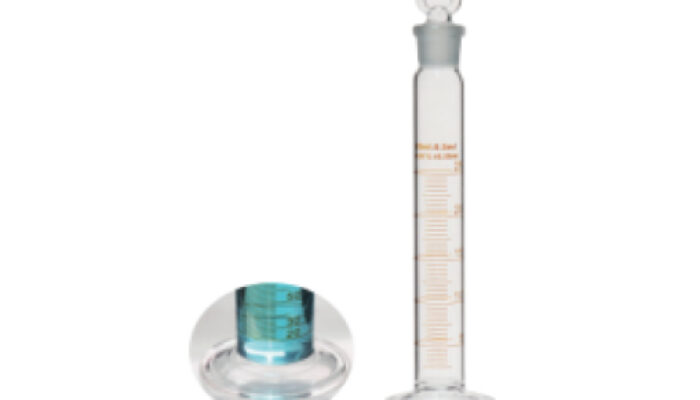
Measuring cylinders are essential laboratory tools designed to accurately quantify the volume of liquids. Characterized by their tall, cylindrical shape and graduated markings, these instruments provide precise volume measurements crucial for scientific experiments and various practical applications. Their versatility spans multiple fields, including chemistry, biology, engineering, and even culinary arts, highlighting their indispensable role in both research and industry.
Design and Structural Features
The design of measuring cylinders is carefully crafted to optimize both functionality and safety. Typically made from glass or durable plastic, these cylinders feature a wide base to enhance stability and prevent tipping, which is especially important when handling hazardous or valuable liquids. Their narrow, elongated form facilitates controlled pouring, while the clearly visible graduated scales allow for easy and accurate volume readings. This ergonomic design balances aesthetic appeal with practical utility, making the measuring cylinder a reliable and user-friendly instrument.
Principles of Operation
Measuring cylinders operate on the principle of volume displacement, where the liquid level corresponds to a specific volume indicated by the graduated markings. Accurate measurement depends on reading the meniscus-the curved surface of the liquid-at eye level to avoid parallax error, an optical distortion that can lead to inaccurate readings. Proper technique involves aligning the observer’s eye with the lowest point of the meniscus to ensure precision.
Applications Across Scientific Disciplines
Chemistry
In chemical laboratories, measuring cylinders are fundamental for preparing solutions with exact concentrations. Precise volume measurements ensure that reagents combine in correct proportions, facilitating predictable chemical reactions and reproducible results. Without such accuracy, experimental outcomes could become unreliable, undermining the scientific method.
Biology and Biochemistry
Biological sciences utilize measuring cylinders for tasks such as creating dilution series, which are essential for determining concentrations of substances in microbiology and biochemistry. Accurate volume measurement allows researchers to replicate biological conditions in vitro, providing insights into cellular processes and organism behavior.
Engineering
In engineering fields like fluid mechanics and hydraulics, measuring cylinders assist in quantifying fluid volumes for system design and analysis. Whether calculating drainage capacities or designing piping networks, precise volume measurements are critical to ensuring system efficiency and safety. The cylinders’ resistance to chemical corrosion and temperature variations further supports their use in demanding engineering environments.
Culinary Arts
Beyond the laboratory, measuring cylinders find a place in the culinary world, where chefs rely on them to measure liquid ingredients with scientific accuracy. This precision helps in crafting sauces, emulsions, and infusions, where exact proportions can significantly influence flavor and texture, bridging the gap between culinary creativity and scientific exactitude.
Maintenance and Best Practices
To maintain the reliability of measuring cylinders, regular calibration against known standards is essential. This process ensures that the graduated markings remain accurate over time, preserving the integrity of measurements. Users must also be mindful of reading techniques, such as avoiding parallax error by viewing the meniscus at eye level, to achieve consistent and precise results.
Common Misconceptions
Measuring cylinders provide perfectly exact measurements without error.
While measuring cylinders are precise, factors like parallax error and improper calibration can affect accuracy. Proper technique and regular calibration are necessary to minimize errors.
All measuring cylinders are suitable for any type of liquid.
Material compatibility is important; some cylinders may react with certain chemicals or degrade under extreme temperatures, so selecting the appropriate type is crucial.
Why Measuring Cylinders Are Important
Measuring cylinders are vital instruments that underpin the accuracy and reliability of liquid volume measurements across numerous fields. Their role in ensuring precise quantification supports scientific discovery, industrial processes, and even culinary innovation. By enabling meticulous control over liquid volumes, measuring cylinders contribute to the advancement of knowledge and the refinement of techniques, making them indispensable tools in both professional and everyday contexts.
FAQ
What is a measuring cylinder?
A measuring cylinder is a laboratory instrument used to accurately measure the volume of liquids.
What materials are measuring cylinders made from?
They are typically made from glass or durable plastic.
How do you read a measuring cylinder accurately?
To read accurately, align your eye with the lowest point of the meniscus at eye level.




Leave a Reply