

Short Answer
Definition of Protons and Neutrons
Atoms, the fundamental units of matter, are composed of smaller particles known as subatomic particles. Among these, protons and neutrons are two essential constituents found in the nucleus of every atom. These particles play a critical role in defining the properties and behavior of elements.
- Protons:
Positively charged particles that determine the atomic number and identity of an element. - Neutrons:
Electrically neutral particles that contribute to nuclear stability and isotopic variation.
Characteristics of Protons
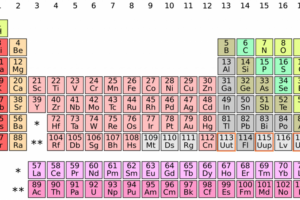
Protons, symbolized as ‘p’, carry a positive electric charge of +1 elementary charge. The number of protons in an atom’s nucleus establishes its atomic number, which uniquely identifies the element. For example, hydrogen has one proton, whereas helium contains two, distinguishing these elements fundamentally.
With a mass of approximately 1.67 × 10⁻²⁷ kilograms, protons are about 1836 times heavier than electrons. They reside within the nucleus and are bound together by the strong nuclear force, a powerful interaction that surpasses the electromagnetic force responsible for electron orbitals. Protons also contribute significantly to the overall atomic mass, influencing isotopic forms and chemical properties.
Role and Properties of Neutrons
Neutrons, denoted by ‘n’, are neutral particles with a mass close to that of protons (around 1.675 × 10⁻²⁷ kilograms). Unlike protons, neutrons carry no electric charge, but their presence is crucial for the stability of most atomic nuclei. While hydrogen is an exception with only a proton, heavier elements require neutrons to counterbalance the repulsive forces between positively charged protons.
Neutrons contribute to the nuclear strong force that holds the nucleus intact. The ratio of neutrons to protons is a key factor in nuclear stability, influencing processes such as nuclear fusion in stars and the natural radioactivity of certain isotopes. Variations in neutron numbers give rise to isotopes, which exhibit different nuclear properties despite having the same number of protons.
Interaction Between Protons and Neutrons
Protons and neutrons coexist in the atomic nucleus, forming a compact core surrounded by electrons in defined energy levels. The strong nuclear force binds these nucleons together, overcoming the electromagnetic repulsion between protons. This force weakens with distance, so a sufficient number of neutrons is necessary to maintain nuclear cohesion, especially in atoms with higher atomic numbers.
As elements increase in atomic number, the neutron count typically rises to stabilize the nucleus, resulting in multiple isotopes for many elements. Despite these variations, the proton number remains constant, preserving the element’s identity.
Isotopes and Their Significance
Differences in neutron numbers among atoms of the same element produce isotopes, which can have distinct physical and chemical characteristics. Stable isotopes are widely used in fields such as medicine, geology, and energy production, while unstable isotopes are important in radiometric dating and nuclear medicine.
For instance, carbon primarily exists as Carbon-12, with six protons and six neutrons, but also as Carbon-14, which has six protons and eight neutrons. The additional neutrons in Carbon-14 make it radioactive, a property exploited in archaeological dating and biochemical research.
Impact on Atomic Theory and Quantum Physics
The discovery and study of protons and neutrons have been pivotal in advancing atomic theory and the development of quantum mechanics. Understanding the forces and particles within the nucleus has led to insights into the fundamental nature of matter.
Quantum chromodynamics explains the interactions of quarks, the elementary constituents of protons and neutrons, governed by the strong force. Modern particle accelerators, such as the Large Hadron Collider, continue to explore these subatomic realms, enhancing our knowledge of the universe.
Additionally, technologies like nuclear magnetic resonance (NMR) and magnetic resonance imaging (MRI) utilize nuclear properties to revolutionize medical diagnostics, demonstrating the practical applications of nuclear physics.
Common Misconceptions About Protons and Neutrons
Protons and neutrons have the same charge.
Protons carry a positive charge, while neutrons are electrically neutral.
The number of neutrons defines the element.
The element is defined by its proton count; neutrons vary to form isotopes.
Electrons are heavier than protons.
Protons are approximately 1836 times more massive than electrons.
Importance of Protons and Neutrons in Science and Daily Life
Protons and neutrons are fundamental to the structure and identity of matter, influencing chemical reactions, nuclear stability, and the formation of elements in stars. Their study underpins numerous scientific disciplines, from chemistry and physics to medicine and environmental science.
Applications such as nuclear energy, medical imaging, and radiometric dating rely on the properties of these particles, highlighting their significance beyond theoretical science into practical, everyday technologies.
Summary
In essence, protons and neutrons form the core of atomic structure, defining elemental identity and nuclear stability. Their dynamic interplay shapes the diversity of matter and fuels processes from stellar nucleosynthesis to modern technological innovations. A deep understanding of these particles enriches our comprehension of the natural world and drives progress across multiple scientific fields.
FAQ
What are protons?
Protons are positively charged subatomic particles found in the nucleus of an atom, determining the atomic number and identity of an element.
What role do neutrons play in an atom?
Neutrons are neutral particles that contribute to the stability of the atomic nucleus and can vary in number to form isotopes.
How do protons and neutrons interact?
Protons and neutrons are bound together in the nucleus by the strong nuclear force, which overcomes the electromagnetic repulsion between protons.





Leave a Reply