

Short Answer
Definition of Instrumentation Engineering
Instrumentation Engineering is a specialized branch of engineering focused on the design, development, and management of systems used for measurement, control, and automation in industrial and technological processes. It combines knowledge from electrical, mechanical, chemical engineering, and computer science to create reliable and efficient systems that monitor and regulate various parameters within complex operations.
Core Concepts and Foundations
The discipline begins with a thorough understanding of fundamental principles, including key terminology such as measurement accuracy, calibration, and error analysis. Central to this foundation are the components like sensors, transducers, and actuators, which serve as the building blocks of instrumentation systems. Mastery of how these elements function and interact is essential for designing effective instrumentation solutions.
Sensors and Transducers: The Interface with the Physical World
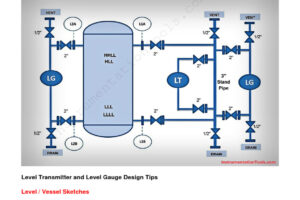
Sensors and transducers are critical devices that convert physical phenomena into measurable signals. This category includes a wide array of instruments such as temperature sensors, pressure sensors, flowmeters, and level detectors. Each type is characterized by its operational principles, performance attributes, and typical applications. The distinction between analog and digital sensors is also significant, influencing how data is captured and processed in instrumentation systems.
Signal Conditioning Techniques
Raw signals obtained from sensors often require modification before they can be accurately interpreted. Signal conditioning encompasses processes like amplification, filtering, and electrical isolation to enhance signal quality. Additionally, noise reduction methods are vital to minimize interference and ensure the precision and dependability of measurements, especially in environments with high electromagnetic disturbances.
Data Acquisition Systems: Capturing and Managing Information
Data acquisition involves the collection, processing, and storage of data from instrumentation devices. This area covers both the hardware components-such as analog-to-digital converters and multiplexers-and software systems that analyze and archive data. Various system architectures, including centralized, decentralized, and distributed models, are employed depending on the complexity and scale of the application. Communication protocols play a key role in facilitating seamless data exchange between devices within these networks.
Control Systems in Instrumentation
Control systems are integral to automation, enabling processes to maintain desired operational states. Instrumentation engineering explores both open-loop and closed-loop control mechanisms, with a strong focus on feedback systems. The Proportional-Integral-Derivative (PID) controller is a fundamental control strategy widely used to regulate system behavior, ensuring stability and optimal performance through precise tuning and adjustment.
Industrial Automation Technologies
Industrial automation leverages instrumentation to improve manufacturing efficiency, safety, and consistency. Key technologies include Programmable Logic Controllers (PLCs), which execute control algorithms; Human-Machine Interfaces (HMIs), which provide operators with system visualization and control; and Supervisory Control and Data Acquisition (SCADA) systems, which oversee large-scale process monitoring and control. These components work together to streamline industrial operations.
Calibration: Ensuring Measurement Accuracy
Calibration is the process of verifying and adjusting instruments to maintain measurement accuracy and reliability. It involves comparing instrument outputs against known standards and making necessary corrections. Traceability to national and international standards is a critical aspect, ensuring that measurements are consistent and recognized globally. Proper calibration practices are essential for maintaining instrument integrity over time and complying with industry regulations.
Applications Across Diverse Industries
Instrumentation engineering finds applications in numerous sectors such as manufacturing, chemical processing, aerospace, automotive, and pharmaceuticals. Each industry utilizes instrumentation to monitor and control specific processes like chemical reactions, temperature management, and quality control. Real-world case studies demonstrate how instrumentation enhances operational efficiency, safety, and product quality in these varied environments.
Advancements and Emerging Trends
The field is rapidly evolving with the integration of cutting-edge technologies. Innovations such as the Internet of Things (IoT), wireless sensor networks, and machine learning algorithms for predictive maintenance are transforming traditional instrumentation systems. These advancements enable smarter, more connected, and real-time analytical capabilities, driving the future of process automation and control.
Ethics and Professional Responsibilities
Ethical considerations are paramount in the practice of instrumentation engineering. Professionals must adhere to safety standards, regulatory requirements, and social responsibilities to ensure the well-being of users and the environment. This includes designing systems that are safe, reliable, and compliant with legal frameworks, as well as addressing ethical dilemmas that may arise during the lifecycle of instrumentation projects.
Significance of Instrumentation Engineering
Instrumentation engineering plays a crucial role in modern science and industry by enabling precise measurement and control of complex processes. Its applications enhance productivity, safety, and quality across a wide range of fields, making it indispensable for technological advancement and operational excellence in today’s automated world.
FAQ
What is Instrumentation Engineering?
Instrumentation Engineering is a branch of engineering focused on designing and maintaining systems for measuring, controlling, and automating industrial processes.
What are common types of sensors used in Instrumentation Engineering?
Common sensors include temperature sensors, pressure sensors, flowmeters, and level sensors, each with specific working principles and applications.
Why is signal conditioning necessary?
Signal conditioning improves raw sensor data quality by amplification, filtering, and noise reduction, making it suitable for processing.
How do control systems function in Instrumentation Engineering?
Control systems use feedback mechanisms like PID controllers to maintain desired process conditions through open-loop or closed-loop strategies.
What ethical considerations are important in Instrumentation Engineering?
Engineers must adhere to safety standards, regulatory compliance, and social responsibilities to ensure ethical design and operation of instrumentation systems.


Leave a Reply