
Short Answer
Definition of Noise Measuring Instruments
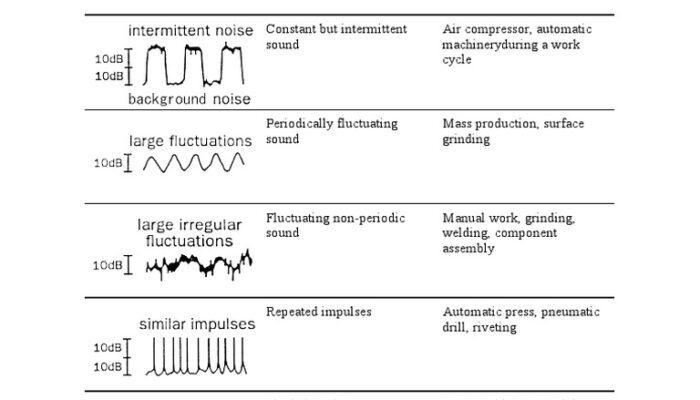
Noise measuring instruments are specialized devices designed to quantify and analyze sound levels in various environments. These tools are essential for assessing acoustic conditions, monitoring noise pollution, and ensuring compliance with regulatory standards. By capturing sound data, they provide valuable insights into the impact of noise on human health, industrial operations, and ecological systems.
- Purpose:
To measure sound intensity, frequency, and exposure over time. - Applications:
Environmental monitoring, occupational safety, engineering, and research. - Measurement Units:
Typically expressed in decibels (dB), reflecting sound pressure levels.
Types of Noise Measuring Instruments and Their Functions
Sound Level Meters (SLMs)
Sound level meters are among the most commonly used devices for measuring sound pressure levels. They utilize sensitive microphones to detect fluctuations in air pressure caused by sound waves. These meters are calibrated to approximate the human ear’s response, often employing A-weighting filters to focus on frequencies most audible to humans. SLMs come in various forms, from portable handheld units ideal for fieldwork to fixed installations used for continuous monitoring. They play a critical role in ensuring that noise emissions comply with legal limits, particularly in industrial and urban settings.
Integrating Sound Level Meters (ISLMs)
Integrating sound level meters build upon the capabilities of standard SLMs by aggregating sound data over extended periods. This cumulative measurement allows for a detailed analysis of noise exposure, especially in environments where sound levels fluctuate significantly, such as construction sites or busy city areas. The time-weighted data collected by ISLMs is invaluable for long-term health studies and environmental impact assessments, providing a comprehensive picture of auditory exposure.
Octave Band Analyzers
Octave band analyzers specialize in breaking down complex noise into its constituent frequency bands. By filtering sound into discrete octave ranges, these instruments help identify dominant frequencies within a noise source. This frequency-specific information is crucial for applications like industrial noise control, architectural acoustics, and environmental noise regulation. Understanding the frequency composition aids in designing effective soundproofing solutions and informs policy decisions aimed at mitigating noise disturbances.
Noise Dosimeters
Noise dosimeters are portable devices worn by individuals to monitor their personal noise exposure throughout a work shift. These instruments continuously record sound levels, calculating the cumulative dose of noise a person experiences. This data is particularly important in occupational health, where prolonged exposure to high noise levels can lead to hearing loss. By tracking individual exposure, dosimeters enable employers to implement protective measures and comply with workplace safety regulations.
Fourier Transform Analyzers
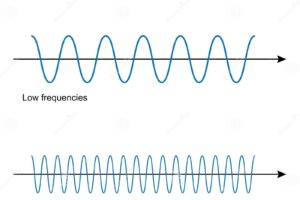
Fourier transform analyzers employ advanced mathematical techniques to convert sound signals from the time domain into the frequency domain. This transformation reveals the harmonic structure and complex interactions within noise, which are often hidden in raw sound data. Such detailed frequency analysis is essential in research and engineering contexts, facilitating the development of noise reduction technologies and enhancing the understanding of acoustic phenomena.
Acoustic Cameras
Acoustic cameras combine arrays of microphones with imaging technology to create visual maps of sound sources. Unlike traditional meters that provide numerical data, these devices offer spatial representations of noise, showing where sound originates and how it propagates. Acoustic cameras are widely used in industrial diagnostics, automotive noise evaluation, and environmental studies, enabling precise identification and mitigation of problematic noise sources.
Personal Noise Monitors
Personal noise monitors are compact, user-friendly devices designed for everyday use by individuals. Often compatible with smartphones, these monitors allow users to measure ambient noise levels in their surroundings. By providing real-time feedback, they empower people to make informed decisions about their auditory environment, promoting awareness of noise pollution and encouraging protective behaviors to safeguard hearing health.
How Noise Measuring Instruments Operate
Most noise measuring devices function by detecting variations in air pressure caused by sound waves through sensitive microphones. These signals are then processed electronically to quantify sound intensity, frequency, and duration. Advanced instruments apply filters and mathematical algorithms, such as A-weighting or Fourier transforms, to tailor measurements to human hearing sensitivity or to analyze complex sound patterns. Data can be recorded instantaneously or integrated over time to assess cumulative exposure.
Mathematical Principles Behind Noise Measurement
Sound pressure level (SPL) is commonly calculated using the formula:
SPL (dB) = 20 × log10 (p / p0)
- p: Measured sound pressure (in pascals)
- p0: Reference sound pressure, typically 20 micropascals (threshold of human hearing)
Integrating sound level meters use time-weighted averaging to compute equivalent continuous sound levels (Leq), representing the constant sound level that would deliver the same acoustic energy over a given period. Fourier transform analyzers apply the Fourier transform equation to decompose signals into frequency components:
F(ω) = ∫ f(t) e-iωt dt
- F(ω): Frequency domain representation
- f(t): Time domain signal
- ω: Angular frequency
Practical Applications of Noise Measuring Instruments
These instruments are indispensable across various sectors:
- Occupational Safety:
Monitoring worker noise exposure to prevent hearing damage. - Environmental Protection:
Assessing and managing noise pollution in urban and natural settings. - Industrial Compliance:
Ensuring machinery and processes meet noise regulations. - Architectural Design:
Optimizing building acoustics and soundproofing. - Research and Development:
Studying acoustic phenomena and developing noise control technologies.
Common Misunderstandings About Noise Measurement
- Misconception: All noise measuring devices provide the same data.
Correction: Different instruments measure various aspects of sound, such as intensity, frequency, or exposure duration, and are suited for specific applications. - Misconception: Higher decibel readings always mean more harmful noise.
Correction: The impact of noise depends on frequency, duration, and individual sensitivity, not just intensity. - Misconception: Personal noise monitors are less accurate than professional equipment.
Correction: While professional devices offer higher precision, modern personal monitors provide reliable data for everyday use and awareness.
Significance of Noise Measurement in Modern Society
Accurate noise measurement is vital for protecting public health, preserving environmental quality, and enhancing workplace safety. By quantifying sound levels and analyzing their characteristics, these instruments enable informed decision-making to mitigate noise pollution’s adverse effects. Advances in noise measurement technology contribute to improved urban planning, better industrial practices, and heightened individual awareness, ultimately fostering healthier and more sustainable living environments.
FAQ
What are noise measuring instruments used for?
They are used to quantify, analyze, and monitor sound levels and frequency content in various environments to manage noise pollution and protect hearing.
How do noise dosimeters help protect workers?
By continuously measuring a worker's noise exposure during their shift, they help identify risks and inform protective measures to prevent hearing damage.
What technology does a Fourier transform analyzer use?
It uses mathematical algorithms to convert time-domain sound signals into frequency-domain data for detailed acoustic analysis.
Can personal noise monitors be used by the general public?
Yes, they are compact, often smartphone-compatible devices that allow individuals to assess ambient noise levels for health awareness.
Why is frequency analysis important in noise measurement?
Because different frequencies can have varying impacts on human health, comfort, and equipment performance, analyzing frequency components helps in targeted noise control.

Leave a Reply