
Short Answer
Definition of Biomedical Instrumentation
Biomedical instrumentation is a multidisciplinary field that merges engineering, technology, and healthcare to develop devices and systems aimed at improving medical diagnosis, treatment, and patient care. It involves designing and implementing tools that measure, monitor, and analyze physiological data, thereby enhancing the understanding and management of human health.
- Interdisciplinary Nature:
Combines principles from electronics, mechanics, computer science, and biology to create medical devices. - Purpose:
Facilitates accurate health monitoring, diagnostics, therapeutic interventions, and rehabilitation.
Key Areas of Biomedical Instrumentation
Wearable Health Monitoring Devices
Wearable technology in healthcare extends beyond simple activity tracking to sophisticated monitoring of vital physiological parameters. These devices continuously capture data such as heart rate, blood pressure, and oxygen saturation, playing a crucial role in managing chronic illnesses.
- Technologies Used:
Sensors like photoplethysmography (PPG) and electrocardiograms (ECG) enable real-time physiological data acquisition. - Advancements:
Miniaturization and enhanced battery efficiency have improved usability, encouraging proactive health management and self-awareness.
Biomedical Imaging Technologies
Imaging modalities such as Magnetic Resonance Imaging (MRI) and Positron Emission Tomography (PET) have transformed diagnostic medicine by providing detailed internal views of the body. Recent innovations focus on improving image clarity while reducing patient exposure to harmful radiation.
- Algorithmic Enhancements:
Advanced computational methods enhance image resolution and diagnostic accuracy. - Artificial Intelligence Integration:
AI assists in rapid identification of complex conditions like tumors and neurological disorders. - Ethical Considerations:
Balancing technological progress with patient safety remains a priority.
Targeted Drug Delivery Systems
Leveraging nanotechnology, targeted drug delivery projects aim to optimize therapeutic efficacy by directing medication precisely to affected areas, minimizing side effects and improving patient outcomes.
- Pharmacokinetic Principles:
Understanding drug absorption, distribution, metabolism, and excretion guides system design. - Nanoparticle Engineering:
Responsive nanoparticles release drugs triggered by specific physiological conditions. - Real-Time Monitoring:
Integration with biosensors allows dynamic tracking of drug delivery and therapeutic response.
Rehabilitation and Assistive Technologies
Robotic-assisted devices, including exoskeletons, represent a significant advancement in aiding individuals with mobility impairments. These systems enhance independence and quality of life through sophisticated interaction between human movement and machine control.
- Core Components:
Use of servo motors and sensors to detect and support user motion. - Socio-Economic Impact:
Facilitates physical rehabilitation and psychological empowerment by restoring autonomy.
Biosensors in Chronic Disease Management
Biosensors, such as continuous glucose monitors (CGMs), exemplify the fusion of biochemical analysis and engineering to provide real-time health data critical for managing chronic diseases like diabetes.
- Electrochemical Sensing:
Enables accurate measurement of glucose levels in interstitial fluid. - Patient Empowerment:
Facilitates adherence to treatment regimens and reduces disease management burdens.
Telemedicine and Remote Monitoring
Biomedical instrumentation has been pivotal in advancing telemedicine, especially highlighted during the COVID-19 pandemic. Remote monitoring devices and mobile health applications enable continuous patient care beyond traditional clinical settings.
- Technological Components:
Incorporate wireless communication, sensors, and diagnostic tools for remote health assessment. - Healthcare Delivery Shift:
Promotes patient-centric models by connecting patients and providers regardless of location.
Genomic Instrumentation and Gene Editing
Projects involving genomic tools, particularly CRISPR technology, have opened new frontiers in gene editing, offering potential cures for genetic disorders while raising important ethical questions.
- Precision Gene Editing:
Enables targeted modification of DNA sequences with high accuracy. - Ethical Challenges:
Necessitates careful consideration of moral implications and societal impact.
How Biomedical Instrumentation Advances Healthcare
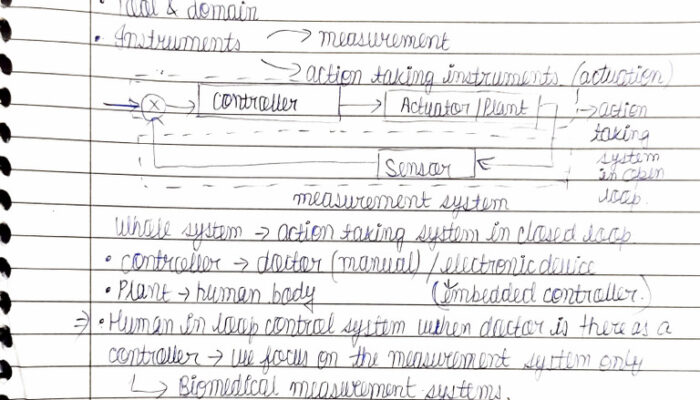
Biomedical instrumentation functions by integrating sensors, data acquisition systems, and analytical software to monitor physiological parameters, assist in diagnostics, and deliver therapies. These systems convert biological signals into electrical signals, which are then processed to provide meaningful health information.
- Signal Detection:
Sensors detect biophysical or biochemical signals from the body. - Data Processing:
Signals are amplified, filtered, and digitized for analysis. - Output and Feedback:
Processed data informs clinical decisions or triggers therapeutic actions.
Mathematical and Technical Foundations
Biomedical instrumentation relies on various mathematical models and formulas to interpret physiological data accurately. For example, in photoplethysmography (PPG), the Beer-Lambert law describes light absorption in tissues:
A = ε × c × l
- A: Absorbance of light
- ε: Molar absorptivity coefficient
- c: Concentration of the absorbing substance
- l: Path length of light through the tissue
Similarly, electrocardiogram (ECG) signals are analyzed using Fourier transforms to identify frequency components related to cardiac activity.
Practical Applications in Everyday Life
Biomedical instrumentation projects have tangible impacts on daily healthcare and patient well-being:
- Wearable Devices:
Fitness trackers and smartwatches monitor heart rate and activity levels. - Imaging Tools:
MRI and PET scans assist in early disease detection and treatment planning. - Drug Delivery:
Nanoparticle-based therapies target cancer cells with minimal side effects. - Rehabilitation Robotics:
Exoskeletons help stroke survivors regain mobility. - Remote Health Monitoring:
Telemedicine devices enable chronic disease management from home.
Common Misunderstandings About Biomedical Instrumentation
- Misconception: Wearable health devices only track fitness.
Correction: They also monitor critical physiological parameters essential for managing chronic diseases. - Misconception: Biomedical imaging always exposes patients to harmful radiation.
Correction: Techniques like MRI use non-ionizing radiation, and advancements aim to minimize exposure in other modalities. - Misconception: Gene editing is universally accepted and risk-free.
Correction: Ethical concerns and potential unintended consequences require cautious application and regulation.
Significance of Biomedical Instrumentation
The field of biomedical instrumentation is vital for advancing medical science and improving patient outcomes. By enabling precise monitoring, accurate diagnostics, and targeted therapies, it enhances healthcare quality and accessibility. Moreover, it fosters innovation that addresses complex health challenges, supports personalized medicine, and promotes patient autonomy. As technology continues to evolve, biomedical instrumentation remains a cornerstone in the pursuit of better health and well-being worldwide.
FAQ
What is biomedical instrumentation?
Biomedical instrumentation involves designing and using devices that measure, monitor, and help treat medical and physiological conditions.
What are examples of biomedical instrumentation projects?
Examples include wearable health monitors, MRI and PET imaging technologies, nanoparticle drug delivery systems, robotic exoskeletons, continuous glucose monitors, telemedicine devices, and gene editing tools.
How do wearable health monitoring devices improve patient care?
They provide continuous real-time data on vital signs, enabling early detection of health issues and better management of chronic diseases.
What ethical concerns arise with genomic instrumentation?
Ethical concerns include the implications of gene editing on human genetics, potential misuse, and the societal impact of altering genetic material.
Why is telemedicine important in biomedical instrumentation?
Telemedicine devices facilitate remote patient monitoring and care, increasing access to healthcare services, especially important during pandemics and in remote locations.


Leave a Reply