

Short Answer
Understanding High-Performance Computing (HPC)
High-performance computing (HPC) forms the backbone of contemporary scientific research and technological innovation. It is deeply embedded across a wide array of fields, ranging from quantum physics to environmental simulations. The evolution of HPC is marked by emerging trends that blend traditional computational techniques with groundbreaking advancements, signaling a transformative era in computational power and capability.
Definition and Significance of Exascale Computing
Exascale computing represents a monumental leap in HPC, defined by systems capable of executing at least one exaFLOP-equivalent to 1018 floating-point operations per second. This level of performance is akin to a computational alchemist’s tool, converting vast and complex data into meaningful results with extraordinary precision and speed.
- Unprecedented Computational Power:
Exascale machines enable simulations and analyses that were previously unattainable, pushing the boundaries of scientific discovery. - Global Investment and Competition:
Nations such as the United States, China, and the European Union are heavily investing in exascale technology, reshaping the global HPC landscape.
Architectural Innovations: The Rise of Heterogeneous Computing
The architecture of HPC systems is undergoing a significant transformation, moving away from reliance solely on central processing units (CPUs) toward heterogeneous computing environments. These systems integrate multiple types of processors, including graphical processing units (GPUs) and specialized accelerators like tensor processing units (TPUs), creating a versatile and powerful computational ecosystem.
- Synergistic Processing:
Combining different processors allows HPC systems to handle diverse workloads more efficiently, much like an orchestra blending various instruments to produce harmonious music. - Enhanced Application Support:
This architecture supports a wide range of applications, from artificial intelligence and deep learning to large-scale data analytics.
Quantum Computing: A New Frontier in HPC
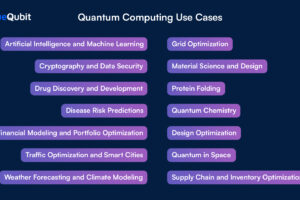
Quantum computing introduces a revolutionary paradigm by utilizing quantum bits, or qubits, which exploit principles such as superposition and entanglement. Although still in developmental stages, quantum computing promises to solve certain complex problems at speeds unattainable by classical computers, potentially transforming fields like drug discovery and optimization.
- Quantum Advantage:
The ability to process multiple states simultaneously offers exponential speed-ups for specific computational tasks. - Challenges and Potential:
While practical quantum computers are nascent, ongoing research suggests profound implications for the future of HPC.
Data-Centric Computing: Prioritizing Data Proximity and Efficiency
In today’s data-driven world, HPC is shifting focus from raw processing power to data-centric architectures. This approach emphasizes minimizing data movement by optimizing data locality and transfer efficiency, addressing the challenges posed by ever-growing datasets.
- Data Gravity Concept:
Larger datasets tend to attract more applications and services, necessitating closer integration of storage and processing. - Performance Gains:
By reducing latency and improving data throughput, data-centric designs enhance overall HPC system responsiveness.
Software Ecosystems and HPC Scalability
As HPC systems grow in complexity and scale, the role of sophisticated software frameworks becomes increasingly critical. Future HPC environments will rely heavily on advanced software paradigms such as containerization, microservices, and orchestration tools to maximize hardware utilization and streamline development.
- Modular Software Design:
Containerization and microservices enable flexible, scalable, and maintainable HPC applications. - Improved Resource Management:
Orchestration technologies facilitate efficient allocation and coordination of diverse computing resources.
Collaborative Innovation Across Scientific Disciplines
Interdisciplinary collaboration is becoming a hallmark of HPC progress. By bringing together experts from academia, industry, and government, HPC projects foster the exchange of ideas and methodologies, accelerating breakthroughs in complex problem-solving.
- Cross-Disciplinary Synergy:
Collaborative efforts resemble a rich anthology of knowledge, where diverse perspectives enhance collective understanding. - Addressing Global Challenges:
Joint HPC initiatives are pivotal in tackling issues such as climate change, healthcare, and security.
Sustainability in High-Performance Computing
With the escalating energy demands of HPC systems, sustainability has emerged as a critical concern. Future HPC infrastructures are increasingly designed to incorporate energy-efficient technologies and renewable energy sources, aiming to reduce environmental impact while maintaining performance.
- Energy-Aware Computing:
Techniques that optimize power consumption help lower operational costs and carbon footprints. - Alignment with Global Goals:
Sustainable HPC supports broader environmental objectives, fostering responsible technological advancement.
Artificial Intelligence Integration in HPC
The fusion of artificial intelligence (AI) with HPC frameworks is revolutionizing system management and performance optimization. AI-driven algorithms enable predictive maintenance, dynamic resource allocation, and operational efficiency improvements.
- Predictive Analytics:
AI can foresee potential system failures, allowing preemptive interventions. - Resource Optimization:
Intelligent scheduling and workload management enhance HPC agility and throughput.
Why High-Performance Computing is Crucial
HPC is indispensable for advancing scientific knowledge, driving technological innovation, and solving complex real-world problems. Its continuous evolution empowers researchers and industries to explore new frontiers, from understanding the universe’s fundamental laws to developing sustainable solutions for global challenges.
Frequently Asked Questions (FAQ)
What defines exascale computing in HPC?
Exascale computing refers to HPC systems capable of performing at least one exaFLOP, or 1018 floating-point operations per second, enabling highly detailed and large-scale scientific simulations.
How does heterogeneous computing enhance HPC performance?
By integrating CPUs, GPUs, and specialized processors like TPUs, heterogeneous computing optimizes workload distribution and boosts computational efficiency across various applications, including AI and big data analytics.
What is the significance of quantum computing in HPC’s future?
Quantum computing leverages qubits and quantum phenomena such as superposition and entanglement to solve certain complex problems much faster than classical computers, potentially revolutionizing HPC capabilities.
Why is sustainability a key focus in HPC development?
Due to the high energy consumption of HPC systems, adopting energy-efficient designs and renewable energy sources is essential to minimize environmental impact and reduce operational expenses.
In what ways is artificial intelligence integrated into HPC?
AI enhances HPC by predicting system failures, optimizing resource use, and streamlining operations, thereby improving system reliability and performance.
FAQ
What is exascale computing in HPC?
Exascale computing refers to HPC systems capable of performing at least one exaFLOP, or 10^18 floating-point operations per second, enabling unprecedented computational power for complex scientific simulations.
How does heterogeneous computing improve HPC performance?
Heterogeneous computing combines CPUs, GPUs, and specialized processors like TPUs to optimize workloads and enhance computational efficiency across diverse applications such as deep learning and data analytics.
What role does quantum computing play in the future of HPC?
Quantum computing introduces qubits that leverage superposition and entanglement, promising to solve specific complex problems much faster than classical computers, potentially revolutionizing HPC applications.
Why is sustainability important in HPC?
As HPC systems consume significant energy, adopting energy-efficient designs and renewable energy sources is critical to reduce environmental impact and operational costs while aligning with global sustainability goals.
How is artificial intelligence integrated into HPC?
AI algorithms in HPC help predict system failures, optimize resource allocation, and streamline operations, enhancing agility and performance of high-performance computing resources.


Leave a Reply