
Short Answer
Definition of the Big Bang
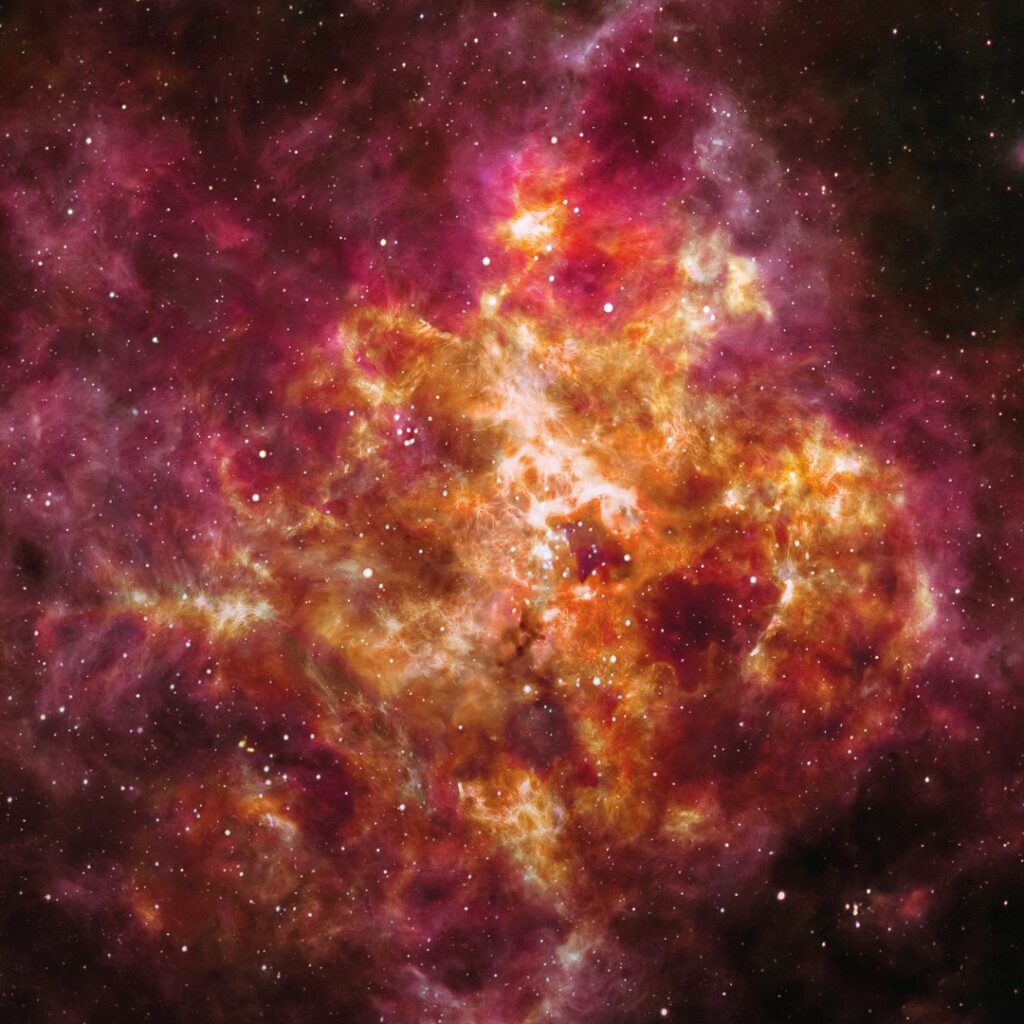
The term “Big Bang” often conjures the image of a massive explosion scattering matter into empty space. However, this popular notion is a simplification that misrepresents the true nature of the event. In modern cosmology, the Big Bang is better understood not as a conventional explosion but as the rapid expansion of space itself, marking the origin of the universe’s fabric. This distinction is crucial for accurately grasping how the universe began and evolved.
Understanding Explosions vs. Cosmic Expansion
Typical explosions involve energy and matter bursting outward into an already existing space, such as fireworks lighting up the sky or volcanic eruptions sending ash into the atmosphere. These events have a clear center and expand into a surrounding void. In contrast, the Big Bang did not occur at a specific location within space; rather, it happened simultaneously everywhere. There was no external space into which the universe expanded-space itself was stretching and growing.
Einstein’s General Relativity and the Nature of Spacetime
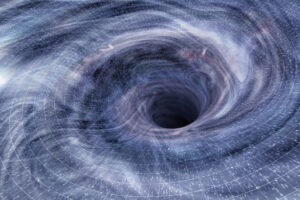
Albert Einstein’s general theory of relativity revolutionized our understanding by describing gravity as the curvature of spacetime, a unified continuum of space and time. This framework reveals that space is not a static backdrop but a dynamic entity capable of expansion and deformation. The Big Bang represents a sudden and rapid enlargement of spacetime itself, carrying matter and energy along as it grows. Instead of matter moving through space, space itself is expanding.
Evidence Supporting the Expanding Universe Model
Observations of distant galaxies show that they are moving away from us in all directions, a phenomenon known as cosmological redshift. This effect occurs because the wavelengths of light traveling through expanding space are stretched, shifting them toward the red end of the spectrum. These findings support the model of an expanding universe first proposed by Georges Lemaître and others in the early 20th century. The Big Bang is thus understood as the initial condition of space and time, the starting point from which everything emerged.
Formation of Cosmic Structures
The expansion of the universe set the stage for the formation of the complex structures we observe today. Minute fluctuations in the early universe’s density led to the coalescence of galaxies. Stars ignited from collapsing clouds of gas, and planets formed around these stellar bodies. However, the earliest moments-known as the Planck epoch-remain beyond the reach of current scientific instruments and theories. Models like cosmic inflation propose a brief period of extremely rapid expansion immediately after the Big Bang, smoothing out irregularities and shaping the large-scale structure of the cosmos.
Philosophical and Theoretical Implications
The reinterpretation of the Big Bang raises profound questions: What initiated the expansion of spacetime? Did anything exist before this event, or does time itself begin at the Big Bang? Hypotheses such as the multiverse suggest our universe is one of many, each with its own origin event. Other theories propose a cyclical universe that undergoes endless phases of expansion and contraction. These ideas challenge traditional notions of causality and time, blending scientific inquiry with philosophical reflection.
Conceptualizing “Before” the Big Bang
If time originated with the Big Bang, asking what happened “before” it may be meaningless, similar to questioning what lies north of the North Pole. This challenges classical cause-and-effect thinking and invites a reconsideration of temporal concepts. The Big Bang thus serves as a bridge between empirical science and metaphysical exploration, highlighting the limits of human intuition when confronting cosmic origins.
The Big Bang’s Impact on Human Understanding
Reframing the Big Bang from a violent explosion to a graceful expansion transforms our narrative about the universe’s beginnings. It portrays the cosmos as a self-contained, evolving system governed by precise physical laws rather than a chaotic blast. This perspective inspires awe and a deeper appreciation for the universe’s complexity and elegance, emphasizing its continuous unfolding over billions of years.
Summary: The Big Bang as a Cosmic Transformation
In essence, the Big Bang signifies a profound transformation from an incomprehensible singularity to the vast, intricate universe we inhabit. It is not an explosion in space but an expansion of space itself, a process that defies simple analogies and challenges our intuitive understanding. Embracing this concept allows us to engage with the cosmos on its own terms, appreciating the ongoing evolution of the universe’s structure and the mysteries that remain to be uncovered.
Continuing Exploration and Future Insights
As scientific research advances, our comprehension of the Big Bang and the universe’s origins continues to deepen. The concept of expansion rather than explosion opens the door to more nuanced and accurate cosmological models. The Big Bang remains a starting point-a gateway to an ever-expanding cosmic story that invites ongoing discovery and wonder.
FAQ
What is the Big Bang?
The Big Bang is the event that marks the origin of the universe, characterized by the rapid expansion of space.
How does the Big Bang differ from an explosion?
Unlike a traditional explosion, which occurs at a specific point in space, the Big Bang happened simultaneously everywhere, expanding space itself.
What evidence supports the Big Bang theory?
Evidence includes the observed redshift of distant galaxies, indicating that the universe is expanding.
Leave a Reply