
Short Answer
Definition of Dark Energy
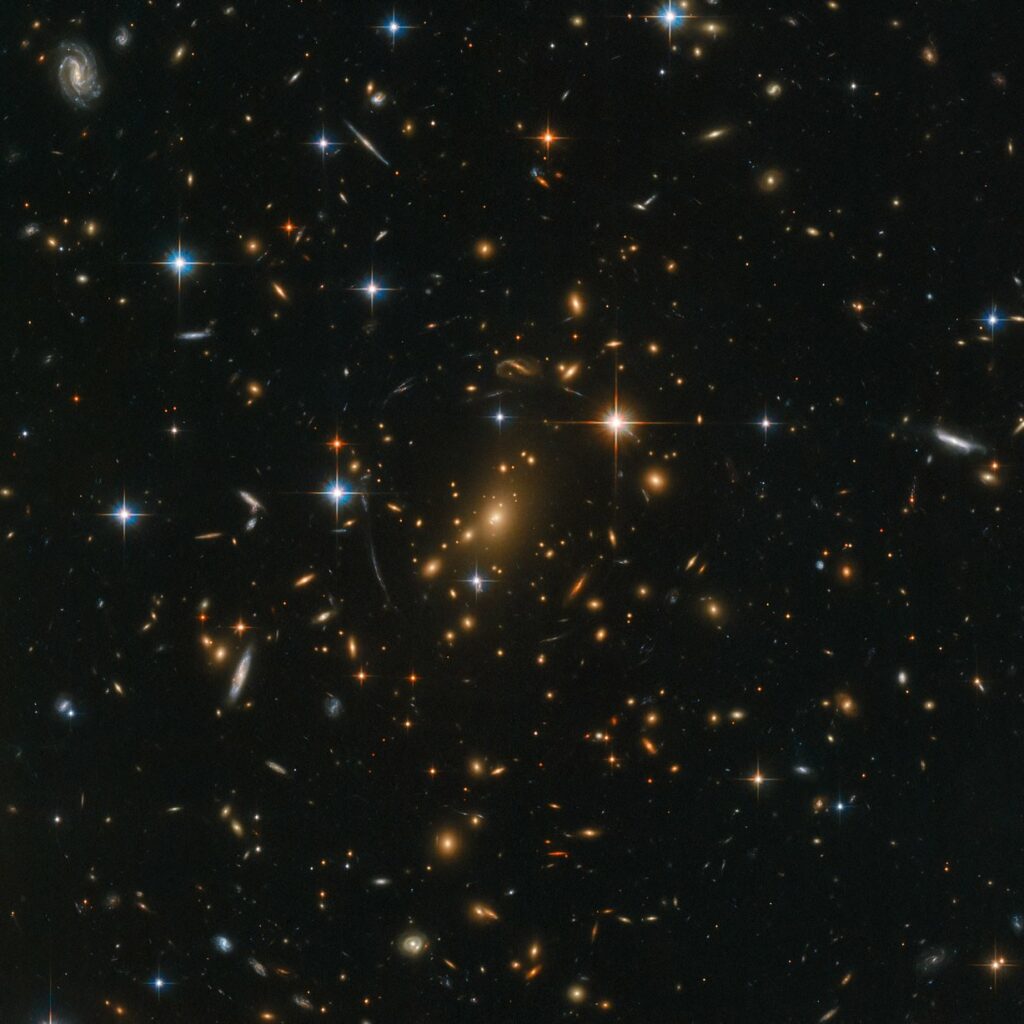
Dark energy is a mysterious and pervasive force believed to fill the vast expanses of the universe, driving its accelerated expansion. Unlike ordinary matter and energy, which attract through gravity, dark energy exerts a repulsive effect, pushing space itself outward. This enigmatic component is estimated to constitute about 68% of the total energy density of the cosmos, making it the dominant influence on the universe’s large-scale dynamics.
Historical Discovery and Observational Evidence
The concept of dark energy emerged from groundbreaking astronomical observations in the late 1990s. Two independent research teams studying distant Type Ia supernovae found that galaxies are not only moving away from us but doing so at an increasing rate. This acceleration contradicted the long-held expectation that gravitational attraction would slow cosmic expansion over time.
Further evidence supporting dark energy comes from measurements of the cosmic microwave background radiation-the residual heat from the Big Bang-which provides insights into the universe’s geometry and composition. Large-scale galaxy surveys also reveal subtle patterns consistent with the influence of dark energy, reinforcing its role as a fundamental cosmic component.
Physical Characteristics and Theoretical Interpretations
Dark energy differs fundamentally from conventional matter and energy. While matter clumps together under gravity to form stars and galaxies, dark energy appears to generate a form of negative pressure, effectively producing an anti-gravitational effect that accelerates the expansion of space-time. This property challenges traditional physics and requires new theoretical frameworks.
- Cosmological Constant (Λ):
Originally introduced by Albert Einstein, the cosmological constant represents a uniform, unchanging energy density permeating all of space. It is the simplest model explaining dark energy’s effects. - Dynamic Models (Quintessence):
These propose that dark energy evolves over time, influenced by unknown fields or particles, offering a more complex and variable explanation.
Mechanisms Behind Cosmic Acceleration
The accelerated expansion of the universe is driven by the repulsive force attributed to dark energy. This force counteracts gravity on cosmological scales, causing galaxies to recede from each other at an increasing velocity. The mechanism is often described in terms of negative pressure within the framework of general relativity, where dark energy’s influence modifies the dynamics of space-time itself.
Mathematical Framework and Formulas
The cosmological constant Λ is incorporated into Einstein’s field equations of general relativity as an additional term:
Gμν + Λgμν = (8πG/c⁴) Tμν
- Gμν: Einstein tensor describing the curvature of space-time.
- Λ: Cosmological constant representing dark energy density.
- gμν: Metric tensor defining the geometry of space-time.
- Tμν: Energy-momentum tensor of matter and radiation.
This equation shows how dark energy, through Λ, influences the curvature and expansion of the universe.
Current and Future Research Endeavors
To unravel the nature of dark energy, scientists are deploying advanced observational tools and experiments. Space missions like the Euclid Space Telescope and ground-based observatories such as the Vera C. Rubin Observatory aim to map the universe’s expansion history with unprecedented accuracy. These projects seek to distinguish between a static cosmological constant and dynamic dark energy models.
Simultaneously, quantum physics experiments investigate whether vacuum energy-tiny fluctuations in quantum fields-could be the source of dark energy. This research attempts to bridge the gap between cosmology and quantum mechanics, two domains that have historically been difficult to reconcile.
Alternative Theories and Scientific Debate
Despite strong evidence, some scientists remain skeptical about dark energy’s existence. Alternative explanations include modifications to gravity, such as theories involving extra dimensions or changes to Newtonian dynamics, which could account for cosmic acceleration without invoking dark energy. However, these hypotheses currently lack comprehensive empirical validation and remain areas of active investigation.
Implications for the Universe and Philosophy
The presence of dark energy profoundly affects our understanding of the universe’s fate. Instead of slowing down or collapsing, the cosmos may continue expanding indefinitely, leading to a cold, dilute, and increasingly empty future. This scenario influences galaxy formation, cosmic structure evolution, and the ultimate destiny of all matter.
Beyond physics, dark energy raises deep philosophical questions about the nature of reality. It challenges whether the universe’s properties are fixed or mutable and invites speculation about the existence of multiple universes with varying dark energy levels, some conducive to life and others destined for collapse. These reflections highlight the intersection of empirical science and metaphysical inquiry.
Significance and Continuing Quest
Dark energy stands as one of the most profound mysteries in modern science, symbolizing both the limits of current knowledge and the potential for revolutionary discoveries. Its study not only advances cosmology but also inspires a broader quest to comprehend existence itself. As observational techniques improve and theoretical models evolve, dark energy will remain a central focus, driving scientific exploration and philosophical contemplation alike.
FAQ
What is dark energy?
Dark energy is a mysterious force believed to be responsible for the accelerated expansion of the universe.
How does dark energy affect the universe?
It drives the accelerated expansion, influencing the ultimate fate of the universe.

Leave a Reply