
Short Answer
Definition of Fiber Optic Splices
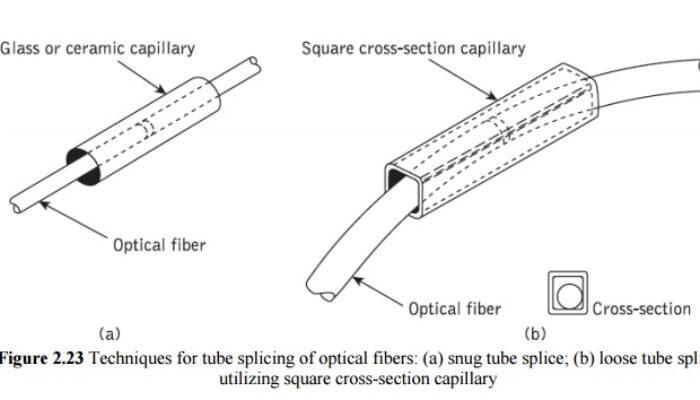
Fiber optic splices are critical junctions where two optical fibers are joined to enable continuous light transmission. These connections are essential for maintaining signal quality in fiber optic communication systems, which rely on light traveling through glass or plastic fibers to transmit data at high speeds over long distances.
- Straight (0-degree) Splice:
The traditional method where fibers are aligned end-to-end in a straight line, ensuring direct light passage. - Angled (45-degree) Splice:
An innovative approach where fibers are joined at a 45-degree angle, designed to reduce signal reflection and improve transmission efficiency.
Principles Behind 45-Degree Fiber Splices
The 45-degree splice introduces an angled interface between fiber ends, altering how light propagates through the junction. This configuration leverages the principles of refraction, governed by Snell’s Law, to redirect reflected light away from the fiber core, thereby minimizing signal loss caused by back reflections. By changing the geometry of the splice, the angled joint can enhance the optical performance compared to conventional straight splices.
Advantages of 45-Degree Fiber Splices
Several benefits arise from employing 45-degree splices in fiber optic networks:
- Reduction of Signal Reflection:
The angled interface deflects reflected light away from the core, preserving signal integrity and reducing degradation caused by back reflections. - Improved Mechanical Durability:
The unique geometry can provide enhanced resistance to environmental stresses such as vibration, temperature changes, and physical handling, extending the lifespan of fiber connections. - Enhanced Performance in Challenging Environments:
Particularly useful in outdoor or industrial settings where fibers are exposed to harsh conditions, the 45-degree splice can maintain connection reliability better than traditional splices.
Technical and Practical Challenges
Despite its potential benefits, the 45-degree splice presents several obstacles that impact its widespread adoption:
- Complexity of Execution:
Achieving a precise 45-degree angle requires specialized equipment and skilled technicians, increasing the difficulty and time needed for installation. - Higher Initial Costs:
The need for custom cleaving tools and advanced machinery raises upfront expenses, which may not be feasible for all organizations. - Compatibility Issues:
Integrating 45-degree splices into existing networks designed around straight splices can pose logistical challenges, potentially complicating maintenance and upgrades.
Operational Considerations and Decision Factors
Choosing between 45-degree and traditional splices depends on balancing performance gains against practical constraints:
- Application Requirements:
High-fidelity applications such as scientific research or financial trading may justify the added complexity and cost for improved signal quality. - Budget and Resource Availability:
Projects with limited funding or tight timelines might favor conventional splices due to their simplicity and lower cost. - Infrastructure Compatibility:
The existing network design and equipment compatibility influence whether adopting angled splices is practical or beneficial.
Real-World Applications of 45-Degree Splices
In practice, 45-degree splices find their niche in environments where signal integrity and durability are paramount. Examples include:
- Outdoor Fiber Installations:
Networks exposed to weather and mechanical stress benefit from the enhanced robustness of angled splices. - Industrial Communication Systems:
Facilities with high vibration or temperature fluctuations utilize 45-degree splices to maintain reliable data transmission. - High-Precision Data Networks:
Sectors requiring minimal signal loss, such as research laboratories and financial institutions, may implement these splices to optimize performance.
Common Misconceptions About 45-Degree Fiber Splices
45-degree splices always outperform straight splices.
While they reduce reflection losses, their benefits depend on specific use cases and may not justify the added complexity in all scenarios.
Implementing 45-degree splices is straightforward.
These splices require precise angle control and specialized tools, making them more challenging to execute than traditional splices.
Significance in Fiber Optic Technology
The exploration of 45-degree fiber splices highlights the ongoing quest to enhance data transmission quality and network reliability. By addressing signal reflection and mechanical durability, these splices contribute to the advancement of fiber optic communications. Their adoption reflects a broader trend in telecommunications: balancing innovative engineering solutions with practical deployment considerations to meet diverse operational demands.
FAQ
What is a 45-degree fiber splice?
A 45-degree fiber splice is a method of joining two optical fibers at a 45-degree angle to reduce signal reflection and improve transmission efficiency.
What are the advantages of using 45-degree splices?
They offer reduced signal reflection, improved mechanical durability, and better performance in harsh environments.
What are the challenges associated with 45-degree splices?
Challenges include the complexity of installation, higher initial costs, and compatibility issues with existing networks.





Leave a Reply