
Short Answer
Definition of Cold Dark Matter
Cold dark matter (CDM) refers to a form of matter that does not emit, absorb, or reflect light, making it invisible to electromagnetic observations. It is non-baryonic, meaning it is not composed of the ordinary particles that make up stars, planets, and living beings. CDM interacts predominantly through gravity and is hypothesized to constitute a significant fraction of the universe’s total mass.
- Non-luminous nature:
CDM cannot be detected directly via electromagnetic radiation, distinguishing it from ordinary matter. - Cold characteristic:
The term “cold” indicates that these particles move at relatively slow speeds compared to the speed of light, allowing them to clump together and form structures. - Role in cosmology:
CDM is fundamental in explaining the formation and evolution of large-scale cosmic structures such as galaxies and galaxy clusters.
Background and Origin of the Cold Dark Matter Hypothesis
The cold dark matter concept emerged to resolve inconsistencies between observed galactic rotation curves and predictions based solely on visible matter using Newtonian gravity and general relativity. Galaxies rotate at speeds that suggest the presence of additional unseen mass exerting gravitational influence. This discrepancy led scientists to propose the existence of CDM as a dominant mass component that shapes cosmic structure.
Recent Galaxy Survey and Its Implications
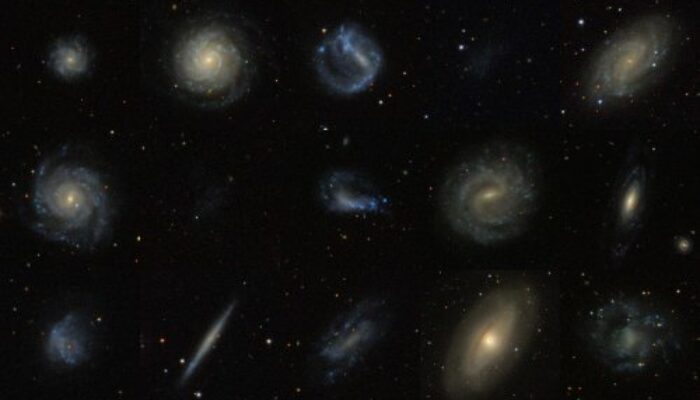
A recent comprehensive galaxy survey utilized cutting-edge observational methods to chart the spatial distribution of galaxies across immense cosmic distances. The survey aimed to refine constraints on dark matter properties by analyzing galaxy clustering patterns. Unexpectedly, the data revealed anomalies in galaxy clustering that diverged from the predictions of the standard CDM model, prompting a reassessment of its universal applicability.
- Galaxy clustering deviations:
The observed patterns of galaxy groupings did not fully align with those forecasted by CDM simulations. - Mass distribution discrepancies:
Certain galaxy clusters exhibited mass distributions inconsistent with CDM expectations, suggesting more complex underlying physics.
Alternative Dark Matter Models
In light of these findings, alternative frameworks such as warm dark matter (WDM) have gained attention. WDM posits particles with moderate thermal velocities, contrasting with the near-zero velocities of CDM particles. This difference could explain some of the observed galactic structures and alleviate tensions present in the CDM paradigm.
- Warm dark matter:
Particles in WDM models move faster than CDM particles, potentially smoothing out small-scale structures and better matching observations. - Implications for structure formation:
WDM may lead to different hierarchical growth patterns of cosmic structures compared to CDM.
Cosmic Evolution and Structure Formation
The CDM framework envisions a hierarchical assembly of cosmic structures, where small-scale objects merge over time to form larger entities like galaxies and clusters. However, the recent survey indicates that some anticipated structures are either less prominent or missing altogether, challenging assumptions about initial cosmic conditions and particle physics beyond the Standard Model.
Interconnection Between Dark Matter and Dark Energy
Dark energy, the mysterious force driving the accelerated expansion of the universe, remains poorly understood in its relationship with dark matter. The survey’s results hint that variations in dark matter properties might influence cosmic acceleration dynamics, suggesting a more intricate interaction between these two components than previously thought.
Modified Gravity Theories and Their Relevance
Modified Newtonian Dynamics (MOND) offers an alternative explanation for galactic rotation curves by altering Newton’s laws at very low accelerations, eliminating the need for dark matter. The recent survey findings have revitalized discussions about MOND and other modified gravity theories, as some data suggest deviations from standard gravitational behavior under specific conditions.
Scientific Evaluation and Future Directions
The astrophysics community must rigorously analyze these provocative findings through empirical scrutiny. While alternative models like WDM and MOND present intriguing possibilities, they require validation through stringent observational tests. The scientific method demands hypotheses that are falsifiable and grounded in new data, fostering robust phenomenological investigations.
Looking ahead, enhanced observational campaigns and sophisticated simulations will be crucial for clarifying the nature of dark matter. Advances in telescope technology and data analysis will enable more precise mapping of cosmic structures, facilitating interdisciplinary collaboration to build a comprehensive understanding of dark matter’s role in the universe.
Significance of the Cold Dark Matter Debate
The recent galaxy survey has challenged the long-standing dominance of the cold dark matter model, prompting a critical reevaluation of foundational cosmological principles. This ongoing debate exemplifies the iterative nature of scientific progress, where established theories are continuously tested and refined. The outcome has profound implications not only for astrophysics but also for our broader comprehension of fundamental forces and the universe’s evolution.
FAQ
What is cold dark matter?
Cold dark matter (CDM) is a form of matter that does not emit, absorb, or reflect light, making it invisible to electromagnetic observations, and is believed to constitute a significant fraction of the universe’s total mass.
What were the findings of the recent galaxy survey?
The survey revealed anomalies in galaxy clustering patterns that diverged from the predictions of the standard cold dark matter model, suggesting potential discrepancies in mass distribution.
What are alternative dark matter models?
Models such as warm dark matter (WDM) propose particles with moderate thermal velocities, which could explain some galactic structures better than cold dark matter.
How does dark matter relate to dark energy?
Dark energy is the force driving the accelerated expansion of the universe, and variations in dark matter properties might influence cosmic acceleration dynamics.



Leave a Reply