PhD Diaries: What’s the Hardest Physics Doctorate Out There?

PhD candidates in physics often find themselves amidst an enigmatic labyrinth of knowledge, grappling with complex theories and challenging experiments. This unique pursuit of understanding the fundamental laws of the universe raises an intriguing question: which type of physics doctorate is deemed the most arduous? The difficulty inherent in various specializations can be as diverse […]

Read More →

Does clinical psychology require physics?

Clinical psychology, a discipline that seeks to understand and treat mental health disorders, often appears to occupy a realm far removed from the rigorous precision of physics. However, an intricate relationship can be discerned between these seemingly disparate fields, prompting a reevaluation of their interconnectedness. As we delve into this provocative inquiry, we can illuminate […]

Read More →

Bubbles Burst in the Hospital: When Physics Meets Medicine

In the serene environment of hospitals, where the gravity of life and death plays out in solemn tales, an unexpected parallel exists between the realms of physics and medicine: the phenomenon of bubbles. Although they may seem trivial, bubbles represent a profound intersection of physical principles and biological implications. The exploration of bubbles, particularly in […]

Read More →

Is Medical Physics considered a branch of Biophysics?

Medical physics and biophysics are two intricate fields that often intersect yet maintain distinct identities within the broad scope of applied sciences. This article seeks to address the question of whether medical physics is considered a branch of biophysics by delineating the fundamental principles, applications, and intersections of these disciplines. At its core, medical physics […]

Read More →

Do you need physics for quantum computing?

In an era characterized by rapid technological advancement, quantum computing emerges as a potential game-changer, promising to transcend the limitations of classical computation. Consider this playful question: do you need to be a physicist to engage with, understand, or even innovate in the realm of quantum computing? While the answer may seem straightforward at first […]

Read More →

Does light have molecules?

Light, the ever-elusive medium that fills our universe, prompts profound inquiries into its nature and behavior. A frequent question arises: does light have molecules? To unravel this query, we must delve into the fundamental characteristics of light and its classification within the realms of physics and chemistry. Understanding the interplay between light and matter illuminates […]

Read More →

What Is Quantum Field Theory and Why Do Physicists Worship It?

Quantum Field Theory (QFT) stands as one of the most pivotal paradigms in modern physics, artfully bridging the domains of quantum mechanics and special relativity. Physicists from various disciplines regard QFT with a quasi-reverential awe, not merely due to its unparalleled success in predicting experimental outcomes but also owing to its philosophical profundity. This article […]

Read More →

Top 10 Science Stories: Astronomy and Physics Take the Lead

The cosmos, an unfathomable expanse teeming with mysteries, has always beckoned humanity to ponder its intricate fabric. This inclination toward celestial phenomena has cultivated a landscape where astronomy and physics intertwine, revealing the awe-inspiring narratives that stretch the confines of human understanding. In the realm where our finest telescopes gaze deeply into the cosmos, and […]

Read More →

Condensed Matter Physics: Where Theory Meets the Tangible World

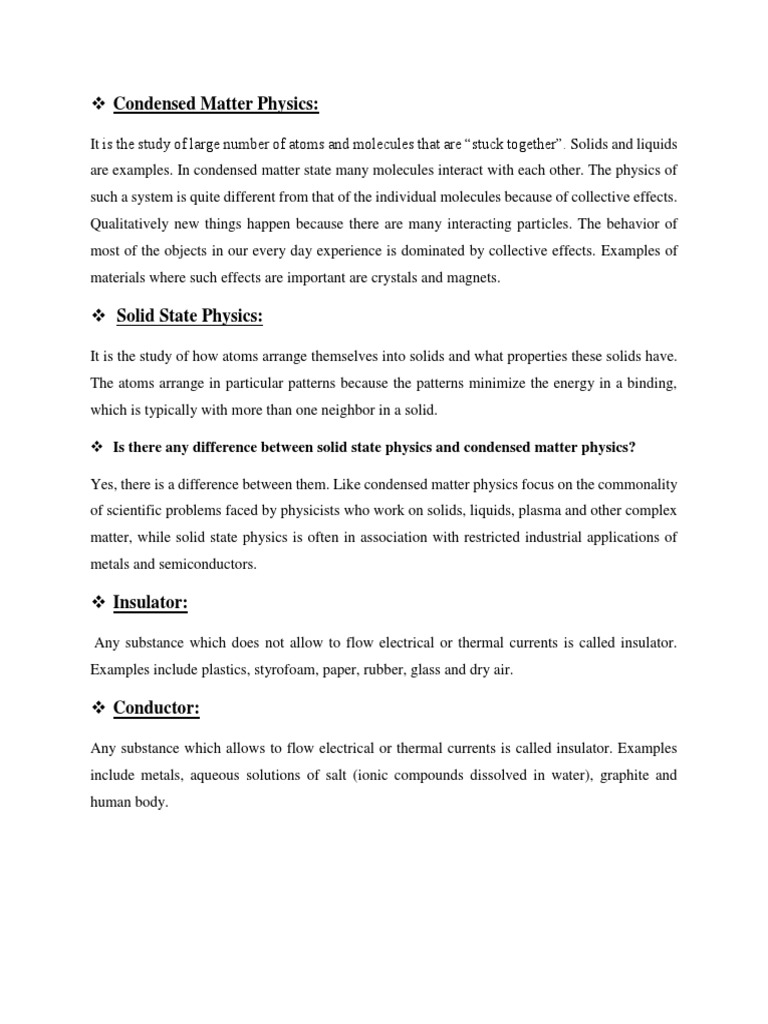
Condensed matter physics stands at the crossroads of theory and tangible phenomena, exploring the intricate behavior of matter at the macroscopic and microscopic levels. This field, intriguing in its fundamental quest to comprehend the properties of matter, serves as a lens through which we can understand the universe itself. From the crystalline structures of solids […]

Read More →

Antimatter Made Easy—On Paper At Least

Antimatter is often described as the elusive counterpart to ordinary matter, a substance that has captivated physicists and philosophers alike. This fascination raises an intriguing question: would it be possible to create a substance that could annihilate everything we know? As we delve into the enigmatic realm of antimatter, we may discover not merely theoretical […]

Read More →