Do radiologists need to study physics?

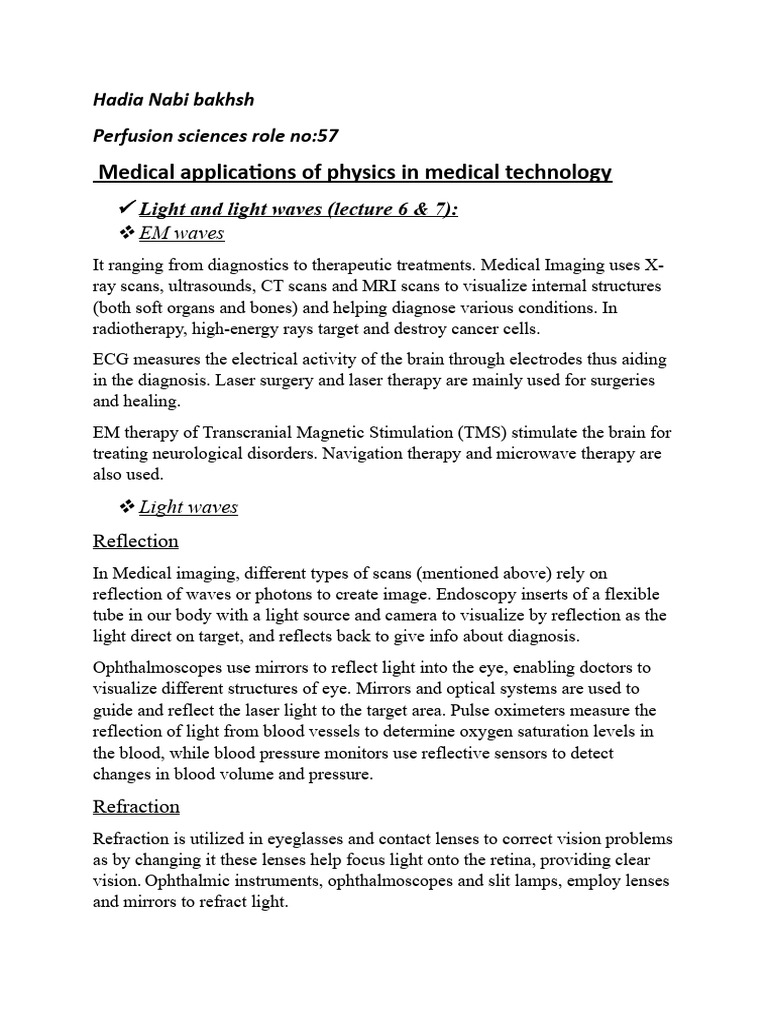
The intersection of radiology and physics constitutes a fundamental aspect of diagnostic medicine. As the field of medical imaging burgeons, an understanding of the underlying physical principles is becoming increasingly paramount for radiologists. The question arises: do radiologists genuinely need to study physics? This discourse elucidates the necessity of physics in radiology by exploring its […]

Read More →

Michael D: The Physics-Medicine Crossover You Didn’t Know About

In recent decades, the intersection of physics and medicine has led to transformative advancements, particularly evident in the innovative contributions of physicist Michael D. This article delves into several pivotal aspects of the physicist’s work that underscore the intricate ties between these two seemingly disparate realms. Readers will discover various dimensions of Michael D’s contributions, […]

Read More →

Is it true that light has no molecules?

Light is a ubiquitous phenomenon, essential to our understanding of the universe, yet it eludes common conceptualization when it comes to its very nature. One prevalent notion is that light consists of particles called photons, leading to an intriguing question: Is it true that light has no molecules? This question embodies a deeper curiosity about […]

Read More →

Body Talk: The Physics of Human Motion and Vibration

The human body, a complex amalgamation of bones, muscles, and connective tissues, serves as a living conduit of motion and vibration. A quintessential question arises: how does the physical interaction between these systems manifest in our day-to-day activities? This inquiry not only encapsulates the essence of human biomechanics but also highlights the intricate laws of […]

Read More →

Hot Topic: The Physics Behind Climate Debates

The discourse surrounding climate change has emerged as a pivotal topic, capturing the attention of not only scientists and policymakers but also the general populace. At the heart of this debate lies a fundamental question: what exactly is considered “hot”? This seemingly straightforward query is a reflection of the complex interplay between temperature, climate systems, […]

Read More →

What Is the Kondo Problem and Why It Still Matters

The Kondo problem, an enigmatic phenomenon in condensed matter physics, emerges as a compelling narrative woven through the fabric of quantum mechanics, statistical physics, and many-body interactions. At its core, the Kondo problem elucidates the peculiar behavior of magnetic impurities within a host material, predominantly metals. The significance of this intricate conundrum reverberates through the […]

Read More →

How do atoms scatter light rays?

Light scattering is a quintessential realm of inquiry within the field of physics, particularly emphasizing the interaction between electromagnetic radiation and matter at the atomic and molecular levels. This phenomenon, where light rays are redirected by atoms and molecules, is integral to numerous disciplines, including optics, spectroscopy, and atmospheric science. The intricacies of how atoms […]

Read More →

Why the World Runs on Condensed Matter—and You Probably Didn’t Notice

The universe is primarily composed of four fundamental states of matter: solid, liquid, gas, and plasma. Each state exhibits unique properties and behavior; however, the most intricate and technologically significant among them is condensed matter. This domain encompasses both solids and liquids, characterized by their particulate interactions and emergent phenomena. Herein lies a comprehensive examination […]

Read More →

From Physics to Code: Should You Jump into Computer Science?

As the frontiers of technology expand, the intersection between physics and computer science becomes increasingly pertinent. Research and advancements in physics have consistently driven the evolution of computational methodologies and vice versa. The digital revolution is not merely an exercise in programming; rather, it is a profound transformation that necessitates an understanding of complex physical […]

Read More →

What is chromodynamic energy?

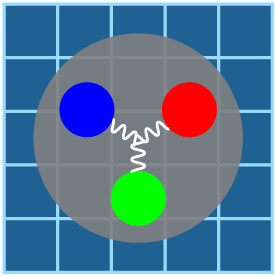
In the realm of fundamental physics, the concept of chromodynamic energy emerges as a pivotal topic, nestled within the broader framework of quantum chromodynamics (QCD). This area of study encapsulates the interactions that govern the behavior of quarks and gluons, the elementary constituents of protons, neutrons, and, ultimately, the matter that forms the observable universe. […]

Read More →