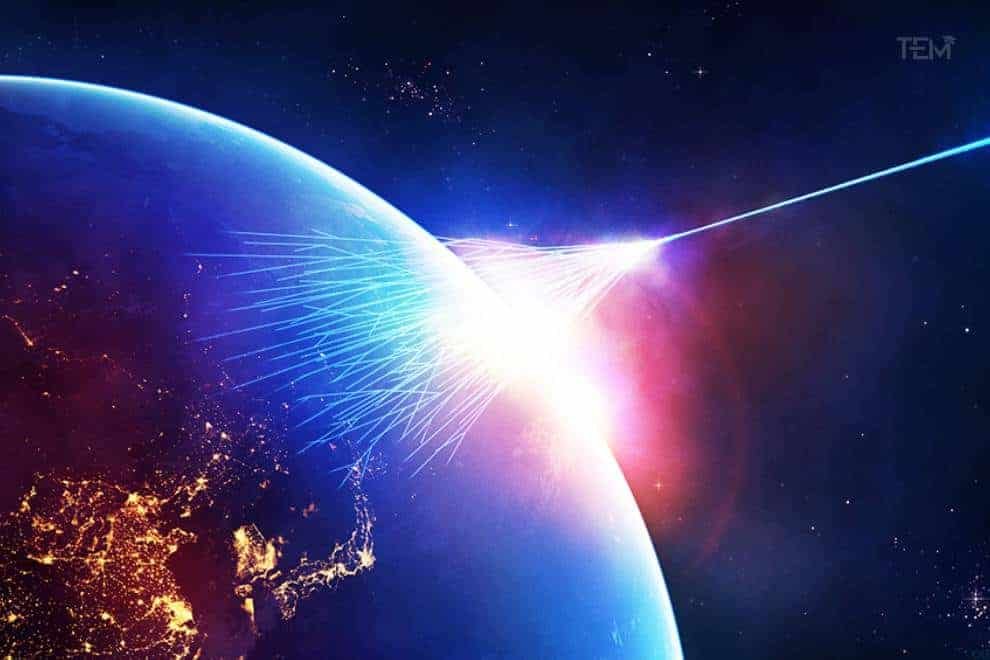
What is the importance of the 3 subatomic particles?

The subatomic world is akin to an intricate tapestry, woven with threads of fundamental particles that together construct the very fabric of matter. Among these threads, three primary subatomic particles—protons, neutrons, and electrons—serve as the keystones of atomic structure and, consequently, the universe itself. Understanding the importance of these particles illuminates our grasp of chemistry, […]

Read More →

What does the particle collider do?

Particle colliders represent a pinnacle of modern scientific endeavor, allowing physicists to probe the fundamental building blocks of matter and the forces that govern their interactions. These sophisticated instruments accelerate subatomic particles to near the speed of light, facilitating high-energy collisions that can illuminate the intricate workings of the universe. In this academic exploration, we […]

Read More →

Why are neutrinos so hard to detect?

Neutrinos, often dubbed as the ‘ghost particles’ of the universe, are subatomic particles that inhabit a unique realm of particle physics. Their elusiveness has captivated the minds of physicists for decades. Although they are plentiful—estimates suggest that trillions pass through our bodies each second—detecting them remains an extraordinary challenge. This article will explore the fundamental […]

Read More →

Is particle physics related to string theory? If so

The intricate relationship between particle physics and string theory is a captivating subject that has permeated contemporary theoretical physics. Understanding how these two domains intersect involves exploring foundational concepts and underlying principles that shape modern physics. This exploration not only reveals profound insights about the universe but also opens pathways to comprehend phenomena beyond the […]

Read More →

What is the composition of quarks?

Quarks, the fundamental constituents of matter, are enigmatic particles that serve as the building blocks for protons and neutrons—the very nuclei of atoms. Their composition, interactions, and behaviors invoke profound curiosity and demand investigation. This article delves into the intricate nature of quarks, exploring their classification, properties, interactions, and significance in the broader context of […]

Read More →

Is the Standard Model broken?

The Standard Model of particle physics has served as a comprehensive framework for understanding the fundamental constituents of matter and the forces governing their interactions. Developed in the latter half of the 20th century, this model encapsulates the electromagnetic, weak, and strong nuclear forces, along with the particles that mediate these forces. Yet, despite its […]

Read More →

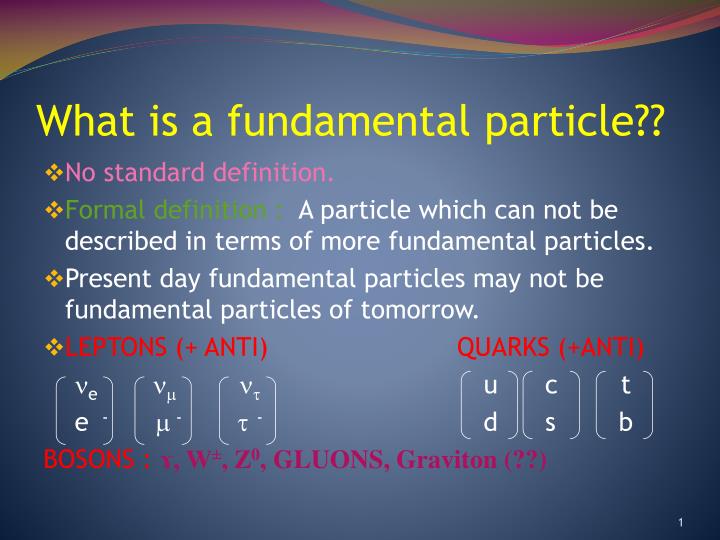
What are elementary particles and why they are called so?

Elementary particles constitute the fundamental building blocks of matter and energy in the universe, often regarded as the “letter of the cosmic alphabet” from which all physical entities are constructed. While various particles exist, the term “elementary” implies that these entities are not composed of smaller constituents; they are, in essence, indivisible. This essay delves […]

Read More →