
Short Answer
Definition of Superconducting Diodes
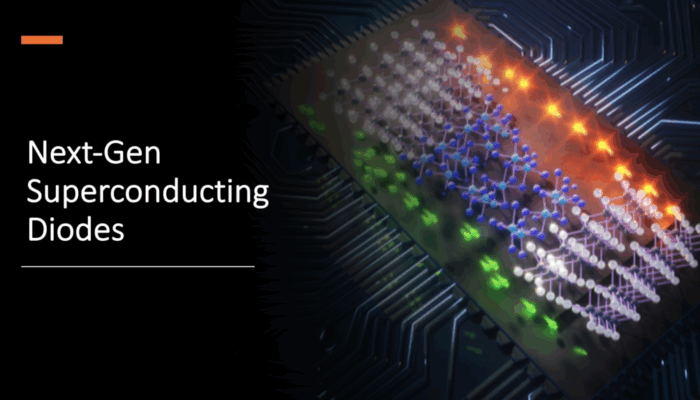
Superconducting diodes are specialized electronic components that permit electrical current to flow predominantly in one direction, effectively blocking reverse current, similar to traditional diodes. What sets them apart is their foundation in superconductivity-a quantum mechanical phenomenon where certain materials exhibit zero electrical resistance below a critical temperature. This unique property enables superconducting diodes to operate with minimal energy loss and exceptional efficiency, distinguishing them from conventional semiconductor diodes.
Fundamental Principles Behind Superconducting Diodes
The functionality of superconducting diodes is deeply rooted in the physics of Josephson junctions, named after physicist Brian Josephson who first described their behavior in the 1960s. These junctions consist of two superconducting materials separated by an ultra-thin insulating barrier. When a current is applied, pairs of electrons known as Cooper pairs tunnel quantum mechanically through the insulator, allowing a supercurrent to flow without resistance. This tunneling effect is highly sensitive to voltage and magnetic fields, enabling the diode to rectify alternating current (AC) into direct current (DC) with negligible energy dissipation.
Material Innovations Enabling Superconducting Diodes
Progress in material science has been pivotal in advancing superconducting diode technology. The discovery and development of high-temperature superconductors, such as yttrium barium copper oxide (YBCO) and iron-based compounds, have allowed these devices to function at temperatures significantly higher than traditional low-temperature superconductors. Although still requiring cooling, these materials reduce the operational costs and complexity associated with maintaining superconductivity, thereby enhancing the feasibility of practical applications.
Advantages Compared to Traditional Diodes
- Zero Electrical Resistance:
Superconducting diodes eliminate resistive losses, leading to highly efficient current flow and reduced energy consumption. - Ultra-Fast Switching:
Their quantum-based operation allows near-instantaneous switching speeds, beneficial for high-speed computing and communication systems. - High Current Capacity:
These diodes can handle larger current densities than silicon-based diodes, making them suitable for power-intensive applications.
Applications Across Various Fields
Superconducting diodes hold transformative potential in multiple technological sectors:
- Digital Computing:
By enabling faster data processing with minimal energy loss, they can significantly enhance computational performance. - Quantum Computing:
Their integration as qubits leverages superconductivity to perform complex quantum calculations efficiently. - Telecommunications:
Improved signal integrity and rapid switching can reduce latency and increase data throughput, supporting the growing demand for high-speed internet.
Technical Challenges and Limitations
Despite their promising attributes, superconducting diodes face several obstacles before widespread adoption:
- Cryogenic Cooling Requirements:
Maintaining superconductivity necessitates extremely low temperatures, often requiring sophisticated refrigeration systems that add cost and complexity. - Manufacturing Complexity:
Fabricating superconducting circuits with precision and scalability remains a significant engineering challenge.
Emerging Research and Future Prospects
Ongoing research is focused on discovering new materials and refining fabrication methods to overcome current limitations. Two-dimensional materials like graphene are being explored for their potential to exhibit superconductivity at higher temperatures and facilitate integration with existing electronic platforms. These advancements could lead to more practical, energy-efficient, and compact superconducting diode devices.
Significance in Modern Technology
The development of superconducting diodes represents a critical step toward revolutionizing electronic systems. Their ability to combine zero resistance with rapid switching and high current capacity addresses key challenges in energy efficiency and performance. As technology demands continue to escalate, these devices offer a pathway to more sustainable and powerful electronics, impacting fields from computing to telecommunications.
Summary: Pioneering the Future of Electronics
Superconducting diodes embody a fusion of quantum physics and advanced material science, promising to reshape the landscape of electronic components. Their unique properties not only enhance existing technologies but also open new avenues for innovation. As research progresses, these diodes are poised to become integral to next-generation electronic systems, marking a significant milestone in the pursuit of faster, more efficient, and compact devices.
FAQ
What is a superconducting diode?
A superconducting diode is an electronic component that allows current to flow predominantly in one direction with zero electrical resistance due to superconductivity.
How do superconducting diodes differ from traditional diodes?
Unlike traditional semiconductor diodes, superconducting diodes operate with zero electrical resistance and ultra-fast switching speeds, enabled by quantum mechanical effects.
What are the main challenges in using superconducting diodes?
Key challenges include the need for cryogenic cooling to maintain superconductivity and the complexity of manufacturing precise superconducting circuits.
What materials are used in superconducting diodes?
High-temperature superconductors such as yttrium barium copper oxide (YBCO) and iron-based compounds are commonly used to reduce cooling requirements.
What are potential applications of superconducting diodes?
They have applications in digital computing, quantum computing, and telecommunications, where they improve efficiency, speed, and signal integrity.






Leave a Reply