
Short Answer
Understanding the Relationship Between Religion and Science
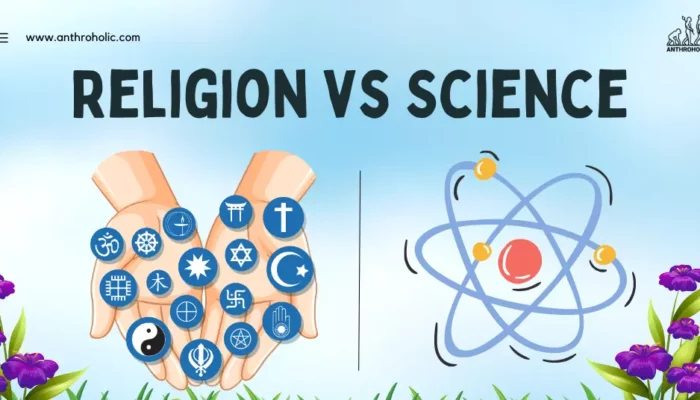
The ongoing dialogue about the relationship between religion and science remains a deeply complex and often contentious subject. At the heart of this discussion lies a fundamental question: what truly separates these two ways of understanding the world? This inquiry extends beyond academic debate, sparking passionate discussions among scholars, philosophers, and the general public. It requires a careful examination of the foundational differences between faith and empirical investigation, dogmatic belief and critical skepticism, as well as spiritual conviction and evidence-based knowledge.
Definition and Historical Context
Religion traditionally serves as a source of moral guidance and existential meaning, with its teachings preserved through generations via sacred texts and oral traditions. In contrast, science is grounded in systematic inquiry, relying on observation, experimentation, and the continuous refinement of knowledge about the natural world. The classic modern conflict, often illustrated by debates over evolution versus creationism, raises the question: are these two approaches inherently incompatible, or can they coexist harmoniously?
Methodological Differences
To appreciate the divide, it is crucial to understand the distinct methodologies employed by religion and science:
- Scientific Method:
A structured process involving hypothesis formulation, experimentation, observation, and validation. This method is dynamic and self-correcting, allowing scientific theories to evolve with new evidence. - Religious Doctrine:
Often based on sacred scriptures or divine revelations considered immutable and eternal by adherents. This approach tends to emphasize fixed truths rather than evolving interpretations.
This contrast poses a significant challenge: can religious faith adapt to the fluid and revisable nature of scientific discoveries, or does it require a static worldview to maintain coherence?
Intersecting Domains: Beyond the Binary
While some perceive science as encroaching upon territories traditionally occupied by religion, others argue that this perceived conflict is oversimplified. Concepts such as the anthropic principle in cosmology and the mysteries of quantum mechanics introduce profound metaphysical questions that blur the lines between scientific and religious thought. This suggests that rather than being mutually exclusive, religion and science might serve as complementary frameworks offering different perspectives on existence.
Cognitive Dissonance and Its Effects
When scientific findings challenge deeply held religious beliefs, individuals often experience cognitive dissonance-a psychological discomfort arising from conflicting information. This tension can manifest as denial or rejection of scientific evidence, observable in debates over climate change, vaccination, and evolutionary biology. The question arises: is this denial a conscious resistance to scientific rigor, or an unconscious defense mechanism protecting one’s worldview from destabilization?
Societal Implications of Science Denial
The consequences of rejecting scientific consensus are far-reaching. In communities where scientific literacy clashes with religious convictions, polarization can emerge, affecting public policy, education, and health initiatives. Controversies surrounding vaccine acceptance and the spread of pseudoscience highlight the dangers of ignorance fueled by denial. Thus, the real division may not be solely between religion and science, but between knowledge and ignorance, with denial acting as a refuge for those unwilling to confront challenging truths.
Paths Toward Reconciliation
Despite apparent conflicts, many theologians and scientists advocate for a reconciliatory approach. They propose that religion addresses questions of meaning, morality, and purpose, while science explains the mechanisms governing the universe. This dual perspective can enrich understanding rather than provoke discord. Prominent thinkers have demonstrated that scientific inquiry and spiritual belief can coexist, forming a continuum where each informs and enhances the other.
Navigating Personal Beliefs Amid Conflicting Views
Individuals facing contradictory ideologies may find resolution through critical thinking and nuanced reflection. Embracing the complexity inherent in both religion and science encourages collaborative exploration instead of adversarial debate. Rather than seeking to determine which holds the ultimate truth, a more productive approach involves fostering dialogue that integrates these perspectives to deepen our comprehension of human experience.
Why the Dialogue Between Religion and Science Matters
The interaction between religion and science is not a fixed divide but a dynamic space ripe for holistic understanding. Engaging thoughtfully with both traditions can illuminate solutions to existential questions and ethical challenges confronting modern society. Cultivating curiosity in place of denial enables constructive conversations that bridge seemingly disparate domains, promoting intellectual growth and societal progress.
Conclusion: Toward an Integrated Perspective
Exploring the tension between religion and science denial transcends academic inquiry, inviting profound reflection on the nature of knowledge itself. As we navigate the complexities defining human existence, the focus shifts from highlighting divisions to seeking pathways for dialogue, appreciation, and cooperation. This integrated approach encourages a richer, more nuanced tapestry of thought that honors the diverse ways humans seek understanding.
FAQ
What is the main topic of the article?
The article explores the divide and potential reconciliation between religion and science.
Why is the dialogue between religion and science important?
It fosters understanding and addresses existential and ethical questions in modern society.



Leave a Reply