
Short Answer
Definition of Cosmic-Ray Positrons and Millisecond Pulsars
Cosmic-ray positrons are the antimatter counterparts of electrons found in cosmic radiation, exhibiting intriguing behaviors at high energies that have puzzled scientists for decades. Millisecond pulsars are a specific class of neutron stars characterized by their extremely rapid rotation periods, typically on the order of a few milliseconds. These compact stellar remnants emit beams of electromagnetic radiation and are considered potential sources of high-energy positrons observed in cosmic rays.
- Cosmic-ray positrons:
Positrons detected in cosmic rays, especially those with energies ranging from 10 to 100 GeV, which show an unexpected surplus compared to traditional cosmic-ray models. - Millisecond pulsars:
Neutron stars spinning hundreds of times per second, generating strong magnetic fields and accelerating charged particles, including electrons and positrons.
Observational Evidence of Positron Excess
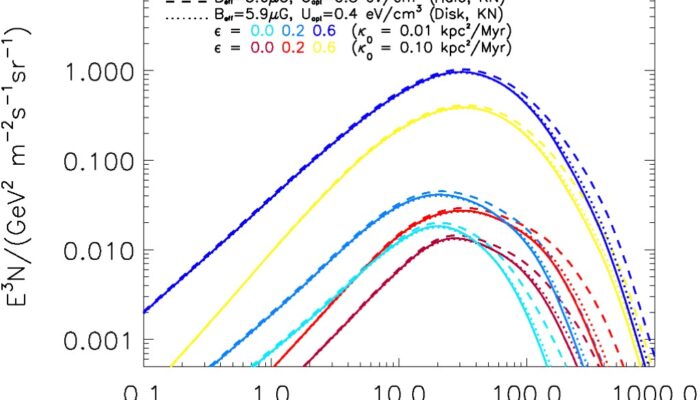
The discovery of an anomalous increase in cosmic-ray positrons was prominently reported by the PAMELA satellite mission. This spacecraft detected a surplus of positrons within the energy window of approximately 10 to 100 GeV, a finding that contradicted earlier expectations where positron intensity was predicted to decline at higher energies. This unexpected rise has sparked significant debate regarding the sources of these particles, challenging conventional models that primarily attributed positrons to dark matter annihilation.
Millisecond Pulsars as Sources of High-Energy Positrons
Millisecond pulsars are hypothesized to be prolific emitters of high-energy particles, including positrons and gamma rays. The mechanism behind this involves the pulsar’s intense magnetic field and rapid rotation, which together act as a natural particle accelerator. Charged particles within the pulsar’s magnetosphere gain kinetic energy from the rotational energy of the star, resulting in the emission of energetic beams observable across the electromagnetic spectrum.
- Particle acceleration:
The pulsar’s magnetic field channels and accelerates electrons and positrons to relativistic speeds. - Electromagnetic emission:
These accelerated particles emit radiation, including gamma rays, which serve as indirect evidence of positron production.
Galactic Distribution and Collective Impact of Pulsars
Millisecond pulsars are predominantly found within the Galactic disk, a region dense with stars and interstellar material. Their spatial distribution enhances the probability of positron production and interaction with the surrounding interstellar medium (ISM). Many millisecond pulsars exist in binary systems, which may further boost their efficiency in ejecting high-energy particles into space. The combined effect of numerous pulsars scattered throughout the Milky Way is believed to contribute substantially to the overall positron flux detected on Earth.
Energetic Constraints and Theoretical Modeling
While millisecond pulsars present a promising explanation for the positron excess, their ability to generate the observed particle energies requires careful evaluation. Theoretical and computational models have been developed to simulate the energy output and particle acceleration processes of these pulsars. Current research suggests that the cumulative emissions from a population of pulsars, rather than isolated sources, are necessary to replicate the positron energy spectrum recorded by instruments such as PAMELA and the Fermi Gamma-ray Space Telescope.
Fundamental Physics and Astrophysical Implications
The study of positron production by millisecond pulsars extends beyond astrophysical observations, touching on fundamental questions in particle physics and cosmic ray dynamics. Understanding how positrons are accelerated and propagate through the Galaxy provides insights into high-energy processes and the interactions of matter and antimatter in extreme environments. Additionally, these investigations inform broader topics such as stellar evolution, star formation, and the lifecycle of massive stars culminating in neutron star formation.
Interdisciplinary Significance and Future Directions
The quest to decode the origins of the cosmic-ray positron excess integrates multiple scientific disciplines, including astrophysics, particle physics, and cosmology. The interstellar environment, enriched by pulsars, acts as a natural laboratory for studying high-energy phenomena and may offer clues about the nature of antimatter and dark matter. Ongoing observations from space-based telescopes and advancements in theoretical frameworks are essential for deepening our understanding of these complex processes.
Common Misconceptions About Cosmic-Ray Positrons and Pulsars
The positron excess is solely caused by dark matter annihilation.
While dark matter remains a candidate, astrophysical sources like millisecond pulsars provide a viable and increasingly supported explanation for the observed positron surplus.
Only a few pulsars contribute significantly to the positron flux.
Research indicates that the combined emissions from many pulsars across the Galaxy are necessary to account for the measured positron spectrum.
Why Understanding Cosmic-Ray Positrons Matters
Deciphering the source of the cosmic-ray positron excess is crucial for advancing knowledge in high-energy astrophysics and particle physics. It enhances our comprehension of particle acceleration mechanisms, the behavior of antimatter in space, and the energetic processes shaping our Galaxy. Moreover, this research has the potential to inform and refine fundamental physical theories, contributing to a more complete picture of the universe’s composition and evolution.
FAQ
What are cosmic-ray positrons?
Cosmic-ray positrons are the antimatter counterparts of electrons found in cosmic radiation, exhibiting intriguing behaviors at high energies.
How do millisecond pulsars contribute to the positron excess?
Millisecond pulsars are believed to be prolific sources of high-energy positrons due to their rapid rotation and strong magnetic fields.




Leave a Reply