
Short Answer
Understanding Planet Mania
Planet Mania refers to the enthusiastic surge within the astronomical community sparked by the rapid discovery of planets beyond our solar system, known as exoplanets. This phenomenon highlights humanity’s expanding curiosity and the relentless pursuit to explore the vastness of the cosmos, revealing new worlds and challenging our previous conceptions of planetary existence.
Definition and Scope of Exoplanet Exploration
Exoplanets are planets that orbit stars outside our solar system. The study of these distant worlds has transformed our view of the universe from a sparsely populated expanse to a dynamic cosmic nursery filled with diverse planetary systems.
- Exoplanet Diversity:
From rocky Earth-like planets to massive gas giants, the variety of exoplanets discovered illustrates the complexity and richness of planetary formation processes. - Discovery Milestones:
Since the first confirmed exoplanet detection in the 1990s, thousands have been cataloged, significantly expanding our knowledge of planetary systems.
Techniques for Detecting Exoplanets
Modern astronomy employs several sophisticated methods to identify exoplanets, with the transit method being among the most effective. This technique involves observing the slight dimming of a star’s light as a planet passes in front of it, allowing astronomers to infer the presence of the planet.
- Transit Method:
Detects periodic dips in stellar brightness caused by a planet crossing the star’s face. - Kepler Space Telescope:
A pivotal instrument that has discovered thousands of exoplanets, ranging from Earth-sized rocky bodies to large gas giants.
Planetary Formation and Diversity
The discovery of various types of exoplanets has challenged traditional models of planetary formation. For example, “hot Jupiters” are gas giants orbiting extremely close to their stars, defying earlier expectations and prompting new theories about planetary migration and system evolution.
- Hot Jupiters:
Gas giants with very short orbital periods, often closer to their stars than Mercury is to the Sun. - Rogue Planets:
Planets that drift through interstellar space without orbiting a star, raising questions about their origins and the forces that eject them from their systems.
Planetary Harvesting: An Analogy
The process of detecting exoplanets can be likened to harvesting crops. Astronomers meticulously scan the cosmic fields for the fleeting moments when a planet transits its star, revealing a “garden” of potential habitats. Some of these planets lie within the “Goldilocks Zone,” where conditions might be just right to support life.
Interdisciplinary Approaches to Exoplanet Study
Understanding exoplanets extends beyond astronomy, involving collaboration with geologists, chemists, and biologists. This interdisciplinary effort aims to model atmospheric conditions, weather patterns, and the potential presence of liquid water, all crucial factors in assessing a planet’s habitability.
Technological Advances in Planetary Research
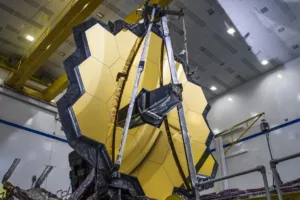
The tools used to study exoplanets have evolved dramatically. Next-generation observatories, such as the James Webb Space Telescope, are equipped with advanced spectrometers and imaging systems that allow detailed analysis of exoplanet atmospheres. These technologies can detect chemical signatures that may indicate the presence of life.
Philosophical and Scientific Significance
The search for exoplanets resonates deeply with human curiosity and the quest to understand our place in the universe. The possibility of extraterrestrial life invites profound philosophical questions and fuels scientific inquiry, bridging the gap between empirical research and existential reflection.
Challenges and Scientific Rigor
While the excitement surrounding new exoplanet discoveries is palpable, it is essential to maintain rigorous scientific scrutiny. The vast amount of data requires careful analysis to validate findings and avoid premature conclusions, ensuring that the field progresses on a solid foundation of evidence.
Summary: The Impact of Planet Mania
Planet Mania symbolizes a pivotal moment in humanity’s intellectual journey, reflecting our innate desire to explore and understand the cosmos. Each new exoplanet discovery enriches the narrative of the universe, encouraging us to rethink life, existence, and our role within the grand cosmic theater.
FAQ
What is 'Planet Mania'?
'Planet Mania' refers to the recent enthusiasm and rapid discoveries of planets outside our solar system, enabled by new astronomical technologies.
How are exoplanets discovered?
Exoplanets are often discovered using the transit method, where a planet passing in front of its star causes a measurable dip in the star's brightness.
Why are 'hot Jupiters' significant?
'Hot Jupiters' are gas giants with very close orbits to their stars, challenging traditional models of planetary formation and migration.
What is the importance of the Goldilocks Zone?
The Goldilocks Zone is where conditions may be suitable for liquid water, making planets in this zone prime candidates in the search for life.
What future technologies will enhance exoplanet research?
Next-generation telescopes like the James Webb Space Telescope will allow detailed atmospheric studies, potentially identifying signs of life.



Leave a Reply