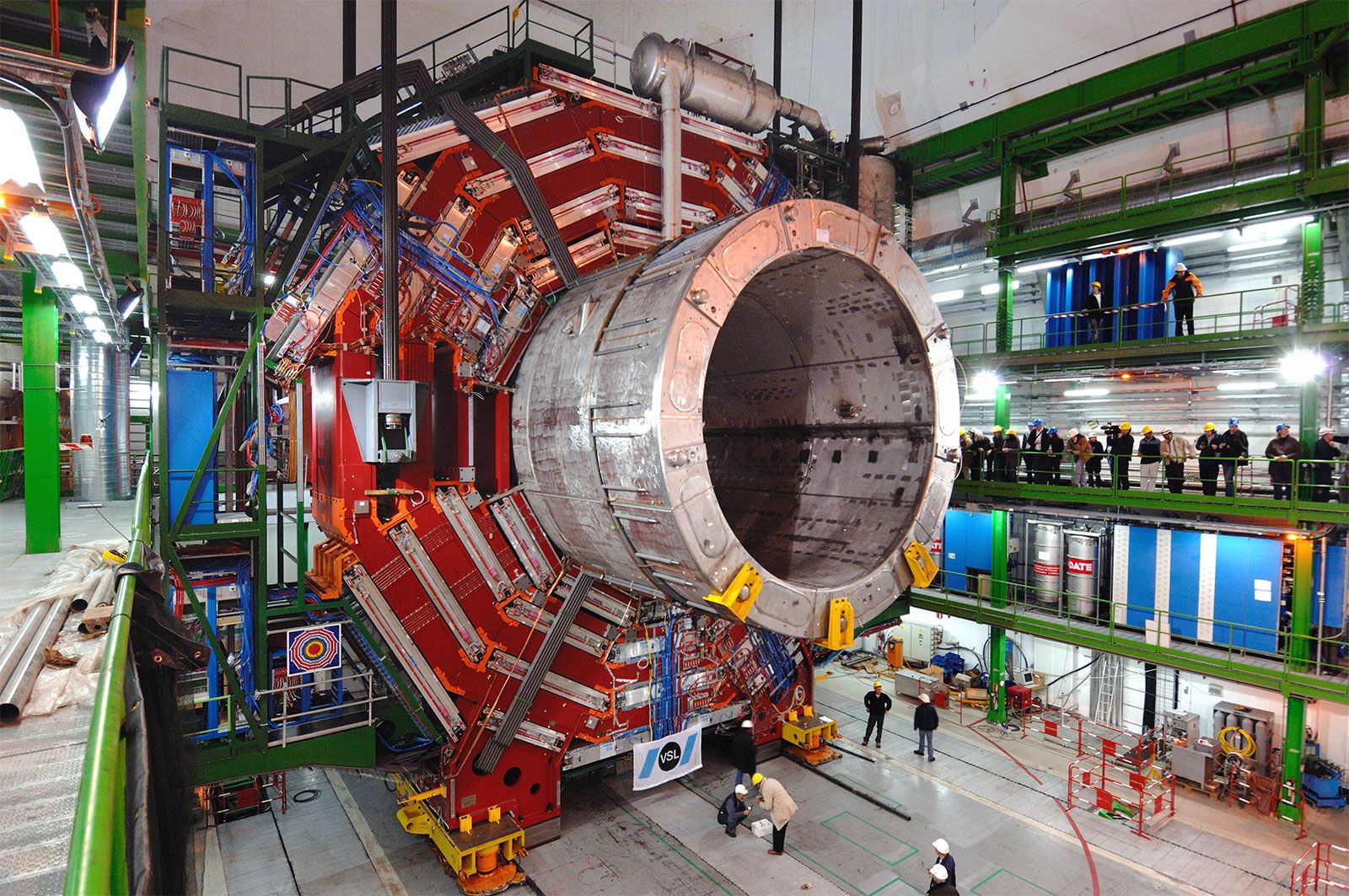
Is the Large Hadron Collider hotter than the sun?

Understanding Temperature: A Fundamental Concept Temperature is a fundamental physical quantity that measures the average kinetic energy of particles within a material. This metric allows scientists to compare thermal energy across diverse environments, from the surfaces of stars to controlled laboratory settings. For instance, the sun’s surface temperature hovers around 5,500 degrees Celsius (9,932 degrees […]

Read More →

What kind of career options do optical engineers have?

Definition of Optical Engineering Optical engineering is a multidisciplinary field that integrates principles from physics, engineering, and advanced technology to study and manipulate light. It focuses on designing, developing, and applying optical systems and devices that control the behavior and properties of light for various practical uses. Core Focus: The manipulation and utilization of light […]

Read More →

Is Biomedical Engineering Harder Than Medicine? A Reality Check

Definition and Overview Biomedical engineering and medicine are two prestigious and highly sought-after fields, each attracting numerous students eager to make significant contributions to healthcare and technological progress. The debate over which discipline is more challenging-biomedical engineering or medicine-remains a topic of considerable discussion among students, educators, and professionals alike. This article aims to dissect […]

Read More →

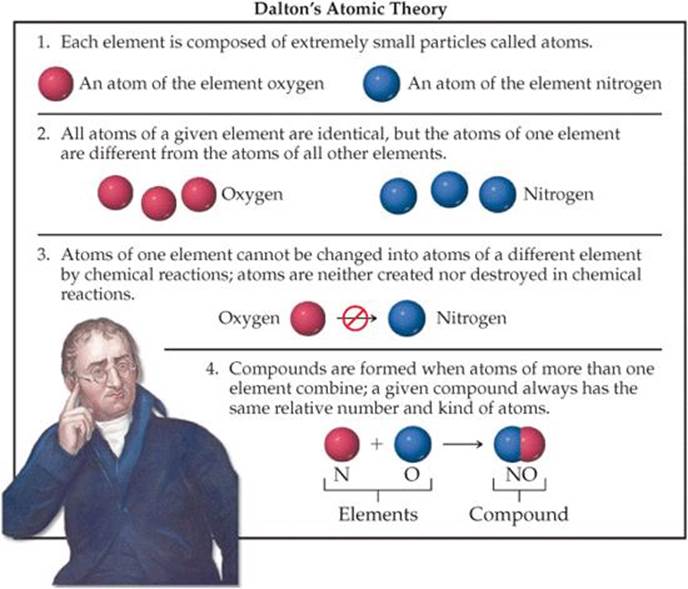
Who was Dalton and what was his atomic theory?

Introduction to John Dalton John Dalton stands as a towering figure in the history of science, renowned primarily for his pioneering atomic theory that revolutionized the comprehension of matter. His work provided a systematic explanation of atoms, which became the foundation for modern atomic physics. Beyond his scientific achievements, Dalton was also an educator, meteorologist, […]

Read More →

Why is math so difficult for so many Americans?

Understanding the Challenges in Mathematics Mathematics is frequently viewed as a perplexing discipline that induces anxiety and apprehension among learners of all ages. This perception is not merely anecdotal; extensive research reveals that a large segment of the American population struggles significantly with mathematical concepts. The difficulties encountered stem from a multifaceted combination of cognitive, […]

Read More →

Nano-Circuits from Nature: Bacterial Wires Rival Metals

Definition of Bacterial Nanowires Bacterial nanowires are microscopic, conductive appendages produced by certain bacteria that enable electron transfer beyond the cell surface. These biological structures serve as natural electrical conduits, offering an alternative to traditional metallic wiring systems commonly used in electronics. Their discovery has opened new avenues in materials science and nanotechnology by demonstrating […]

Read More →

Why Modal Dispersion Is the Enemy of High-Speed Fiber Networks

Understanding Modal Dispersion Modal dispersion is a critical phenomenon encountered in optical fiber communications, particularly within multimode fibers. It refers to the temporal spreading of light pulses as they travel through the fiber, caused by the existence of multiple propagation paths or “modes.” Each mode follows a distinct route and travels at a different velocity […]

Read More →

Do 2D Objects Really Exist? A Physicist’s Dimensional Dilemma

Understanding Dimensions Dimensions are fundamental parameters that define how we perceive and describe spatial relationships. In classical geometry, dimensions represent independent directions necessary to specify the position of a point in space. A one-dimensional (1D) object has only length, such as a line segment, lacking width and height. Two-dimensional (2D) objects possess both length and […]

Read More →

Will quantum computers be able to compute the impossible?

Understanding Quantum Computing Quantum computing represents a groundbreaking advancement in the realm of information processing, poised to redefine the boundaries of what computers can achieve. Unlike classical computers that operate using bits-binary units represented as either 0 or 1-quantum computers employ quantum bits, or qubits. These qubits harness the unique quantum phenomena of superposition and […]

Read More →

Forming a Critical Mass of Experts: The Physics of Thought Leadership

Definition of Critical Mass in Thought Leadership The term “critical mass,” originally rooted in nuclear physics, refers to the minimum quantity of fissile material required to sustain a nuclear chain reaction. When applied metaphorically to thought leadership, it describes the essential concentration of experts within a field whose collective knowledge and interaction spark continuous innovation […]

Read More →