Which is better to learn mathematics or computer science?

Definition and Overview Mathematics and computer science are two distinct yet interconnected academic disciplines, each with its own focus and methodologies. Mathematics is a classical field centered on abstract reasoning, symbolic logic, and the study of quantities, structures, and patterns. It aims to establish universal principles through rigorous proofs and theoretical exploration. In contrast, computer […]


Read More →

Binary Systems Share Stardust: Cosmic Companions Mix Matter

Definition of Binary Star Systems Binary star systems are pairs of stars gravitationally linked, orbiting a mutual center of mass. These stellar duos are not just astronomical phenomena but key players in understanding the universe’s evolution. They provide critical insights into how elements are formed and recycled, influencing the cosmic environment and the very matter […]

Read More →

Why is quantum computing important?

Understanding Quantum Computing Quantum computing signifies a groundbreaking shift in how we approach computation and information processing. Unlike classical computing, which relies on binary bits, quantum computing harnesses the principles of quantum mechanics, offering a fundamentally different framework. This emerging technology holds transformative potential across numerous disciplines, including cryptography, materials science, and artificial intelligence, promising […]

Read More →

Where does the energy in a nuclear reaction come from?

Definition of Nuclear Energy Nuclear energy refers to the power released during nuclear reactions, which involve changes in an atom’s nucleus. This energy originates from the conversion of mass into energy, a concept fundamentally described by Einstein’s mass-energy equivalence formula, E=mc². This principle underpins the understanding of how nuclear processes generate vast amounts of energy […]

Read More →

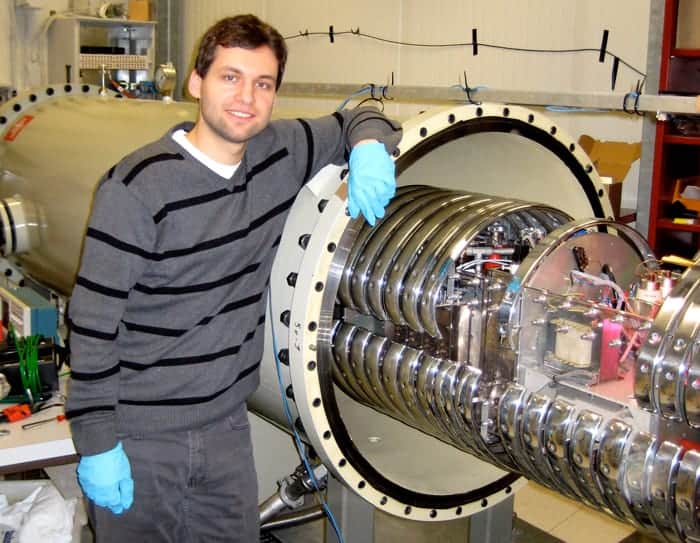
What is the importance of instrumentation to research?

Definition of Instrumentation in Scientific Research Instrumentation refers to the comprehensive array of tools, devices, and techniques employed to observe, measure, and manipulate variables within scientific experiments. It forms the essential link between theoretical concepts and their empirical validation, enabling researchers to translate abstract hypotheses into quantifiable data. Far from being a mere accessory, instrumentation […]

Read More →

Can a quantum computer add or multiply two numbers?

Understanding Quantum Computing and Arithmetic Operations Quantum computing represents a revolutionary approach to processing information, fundamentally different from classical computing. Unlike traditional computers that operate on binary digits (bits) restricted to values of 0 or 1, quantum computers utilize quantum bits, or qubits, which can exist in multiple states simultaneously due to the principle of […]

Read More →

What are the latest research topics in the supercapacitor field?

Definition of Supercapacitors Supercapacitors, also referred to as electrochemical capacitors or ultracapacitors, represent a class of energy storage devices that bridge the gap between conventional capacitors and batteries. They are distinguished by their ability to rapidly charge and discharge, endure extensive charge-discharge cycles, and deliver high power density. These characteristics make them a compelling alternative […]

Read More →

Fraud in the Lab: Confronting the Dark Side of Science

Definition of Scientific Fraud Scientific fraud refers to the deliberate act of fabricating, falsifying, or plagiarizing research data and findings. This unethical behavior distorts the authenticity of scientific work and compromises the integrity of the research process. Common forms of scientific misconduct include: Fabrication: Creating data or results that never actually occurred. Falsification: Manipulating research […]

Read More →