

Short Answer
Definition of Lithium-6 and Its Cosmic Significance
Lithium-6 is a rare isotope of lithium that plays a crucial role in understanding the chemical evolution of the universe. It is one of the light elements whose formation is closely tied to the early moments of cosmic history and subsequent astrophysical processes. Studying lithium-6 provides valuable insights into nucleosynthesis-the creation of new atomic nuclei-and the broader mechanisms that govern the distribution of matter across the cosmos.
- Lithium-6:
An isotope of lithium with three protons and three neutrons, less abundant than lithium-7 but significant in cosmological studies. - Cosmic Importance:
Acts as a tracer for processes occurring during and after the Big Bang, helping scientists understand elemental formation and galactic chemical evolution.
Big Bang Nucleosynthesis: The Traditional Framework
Big Bang nucleosynthesis (BBN) refers to the theoretical model describing the production of light elements in the universe’s first few minutes after the Big Bang. This process primarily generated hydrogen, helium, and small quantities of lithium isotopes. While BBN successfully explains the abundance of many light elements, it falls short in accounting for the observed levels of lithium-6 in the cosmos.
- Timeframe:
Occurred within the first 20 minutes after the Big Bang. - Elements Produced:
Mainly hydrogen, helium-4, deuterium, helium-3, and trace amounts of lithium-7 and lithium-6. - Limitations:
Predicted lithium-6 abundance is significantly lower than what is observed in stars and interstellar space.
Discrepancies in Lithium-6 Abundance
Observations in astrophysics reveal that the quantity of lithium-6 present in the universe exceeds the amounts predicted by Big Bang nucleosynthesis models. This inconsistency suggests that additional processes beyond the primordial nucleosynthesis must contribute to the formation of lithium-6. The mismatch between theory and observation has sparked extensive research into alternative synthesis mechanisms.
Alternative Mechanisms for Lithium-6 Formation
Cosmic Ray Spallation
One prominent hypothesis attributes the production of lithium-6 to cosmic ray spallation. This process involves high-energy cosmic rays colliding with heavier atomic nuclei, causing them to fragment into lighter elements, including lithium isotopes. Early cosmic environments, abundant with supernova remnants and energetic galactic phenomena, likely provided ideal conditions for such spallation events.
- Process:
High-energy particles break apart heavier nuclei like carbon, nitrogen, and oxygen, producing lithium-6 among other light elements. - Astrophysical Context:
Supernova explosions and galactic winds enhance cosmic ray flux, increasing spallation rates.
Asymmetric Supernova Explosions
Another potential source of lithium-6 is the asymmetric explosion of massive stars during supernova events. These explosions can eject nucleosynthetic products unevenly, creating localized regions rich in lithium-6. The complex interplay between nuclear reactions and explosion dynamics in these stellar deaths may contribute significantly to the isotope’s cosmic abundance.
- Mechanism:
Uneven ejection of material during supernovae leads to pockets of lithium-6 production. - Observational Evidence:
Spectroscopic studies of supernova remnants and progenitor stars help identify lithium-6 signatures.
Implications for Cosmology and Astrophysics
The study of lithium-6 extends beyond refining nucleosynthesis theories; it influences our understanding of the universe’s chemical enrichment and the lifecycle of matter. The presence of lithium-6 in galaxies informs models of stellar evolution, cosmic ray physics, and galactic chemical processes, thereby enriching the narrative of cosmic history.
Tracing Cosmic History Through Isotopic Signatures
Isotopic ratios, such as those involving lithium-6, serve as historical records of stellar activity and elemental synthesis. By examining these ratios in stars and interstellar media, scientists reconstruct the sequence of events that shaped the universe’s material composition. This research bridges theoretical predictions with observational data, enhancing our grasp of cosmic evolution.
Observational Cosmology and Lithium-6
Analyzing lithium-6 in stellar atmospheres and the cosmic microwave background radiation provides critical clues about the universe’s formative epochs. These chemical fingerprints allow researchers to test and refine cosmological models, fostering a dynamic relationship between theory and empirical evidence.
Common Misconceptions About Lithium-6 Formation
Lithium-6 is produced exclusively during the Big Bang.
While Big Bang nucleosynthesis contributes to lithium-6, observed abundances indicate significant production through later astrophysical processes such as cosmic ray spallation and supernovae.
Lithium-6 abundance is uniform throughout the universe.
Lithium-6 levels vary depending on local astrophysical conditions, including star formation history and cosmic ray activity.
Why Understanding Lithium-6 Matters
Deciphering the origins and abundance of lithium-6 is vital for constructing accurate models of cosmic chemical evolution. It informs our knowledge of stellar life cycles, the behavior of cosmic rays, and the processes that govern matter distribution in the universe. Ultimately, this understanding enriches our comprehension of the fundamental building blocks that constitute the cosmos and our own existence within it.
Future Directions in Lithium-6 Research
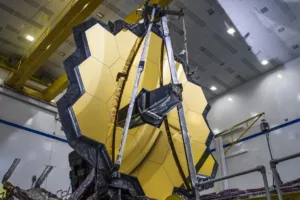
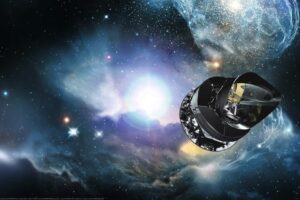
Ongoing investigations aim to clarify the relative contributions of various lithium-6 production mechanisms. Advances in observational technology, such as high-resolution spectroscopy and space-based telescopes, promise to shed light on the isotope’s distribution and origins. These efforts will continue to challenge and refine our cosmological paradigms, driving the quest to unravel the universe’s elemental mysteries.
FAQ
What is Lithium-6?
Lithium-6 is a rare isotope of lithium significant for understanding cosmic chemical evolution and nucleosynthesis.
How is Lithium-6 produced?
Lithium-6 is produced through Big Bang nucleosynthesis and later processes such as cosmic ray spallation and asymmetric supernova explosions.
Why is the abundance of Lithium-6 important?
Understanding Lithium-6 abundance helps refine models of cosmic chemical evolution and stellar processes.


Leave a Reply