
Short Answer
Overview of NASA’s Groundbreaking Cosmic Mission
Could a single space expedition revolutionize our entire understanding of the universe? This compelling question lies at the core of NASA’s newest mission, an ambitious journey designed to broaden the scope of human knowledge and challenge existing cosmic paradigms. As humanity’s aspirations extend beyond Earth, this mission represents more than a technological achievement-it is a fusion of scientific inquiry and visionary imagination. What mysteries lie beyond our planetary horizon, and are we ready to face the transformative insights that may emerge?
Mission Objectives and Scientific Goals
Building on decades of steady progress, this unprecedented mission aims to explore uncharted regions of space using state-of-the-art instruments and innovative technologies. Its carefully crafted design enables the collection of data with unprecedented precision. Key scientific targets include the study of gravitational waves, the enigmatic properties of dark matter and dark energy, and other fundamental cosmic phenomena. The mission seeks to unravel the universe’s hidden stories, even when these may challenge the foundational laws of modern physics.
Technological Innovations and Instrumentation
At the heart of this endeavor is humanity’s relentless curiosity, a driving force behind exploration throughout history. This mission leverages cutting-edge tools such as advanced spectrometers and quantum sensors, allowing scientists to probe deeper into space and detect faint cosmic signals previously obscured by background noise. These technologies enable the identification of spectral signatures and subtle cosmic phenomena, shedding light on the origins and development of planetary systems.
Challenges in Data Collection and Interpretation
The mission faces complex obstacles beyond the engineering feat of building spacecraft capable of surviving the harshness of space. One of the greatest difficulties lies in distinguishing meaningful signals from the overwhelming cosmic background. As vast amounts of data return to Earth, researchers employ sophisticated algorithms and artificial intelligence to analyze patterns that could revolutionize our understanding. Potential discoveries include anomalies that question the Standard Model of particle physics or signs of extraterrestrial life, findings that would profoundly alter humanity’s worldview.
Broader Implications and Ethical Considerations
The impact of this mission extends well beyond scientific circles. Breakthroughs could spark technological advancements in fields such as communications, energy, and materials science, illustrating the symbiotic relationship between space exploration and societal progress. However, these developments also raise ethical questions. Should the mission uncover life forms or environments with intrinsic value, humanity will face the challenge of balancing scientific curiosity with responsible stewardship and preservation.
Risk Management and the Spirit of Exploration
This ambitious project embodies a delicate balance between risk and reward. The mission’s scale and complexity expose it to potential setbacks, including mechanical malfunctions, unexpected cosmic phenomena, or misinterpretation of data. Yet, embracing uncertainty is essential for pushing scientific boundaries. The willingness to confront the unknown is what drives progress, and this mission exemplifies that courageous spirit, reflecting an era marked by technological excellence and deep philosophical reflection.
International Collaboration and Multidisciplinary Approach
Highlighting the global nature of space exploration, the mission brings together experts from diverse fields and countries. This collaborative effort pools knowledge and resources, overcoming the limitations of isolated endeavors. Beyond accelerating problem-solving, this partnership fosters cultural exchange and shared aspirations, reinforcing the idea that the quest to understand the cosmos is a unifying human pursuit transcending national borders.
Philosophical Reflections and Human Significance
As the mission ventures deeper into the cosmos, it prompts profound questions about humanity’s place in the universe. Will we discover life forms resembling those on Earth, or will the vastness of space remain an inscrutable mystery? The answers have the potential to reshape philosophical beliefs, inspire future generations, and influence priorities here on our home planet.
Multifaceted Mission Trajectory
The mission’s path is not simply a linear journey but a complex interplay of scientific, technological, ethical, and existential dimensions. Success depends on flexible decision-making, adaptive strategies, and the ability to navigate complexity. Each piece of data collected contributes to a larger mosaic of cosmic understanding, with every new insight inviting further exploration into the universe’s intricate fabric.
Anticipation and Legacy
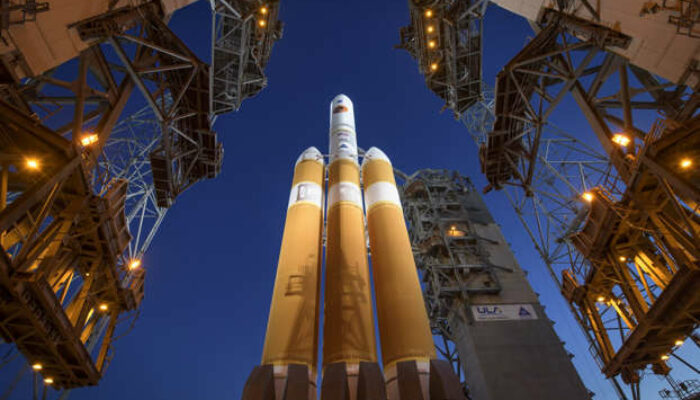
As launch preparations near completion, excitement builds within both the scientific community and the public. This mission stands as a symbol of human creativity, bravery, and determination. It highlights the transformative power of exploration to challenge established beliefs, renew curiosity, and ignite a new era of discovery. Beyond the hardware and scientific instruments, it represents humanity’s enduring desire to push beyond known boundaries and question the very nature of existence.
Conclusion: Embracing the Unknown
NASA’s upcoming mission transcends a mere scientific project; it is a call to embrace uncertainty, balance skepticism with awe, and recognize the cosmos as a dynamic canvas filled with endless mysteries. As the spacecraft embarks on its voyage, it carries the collective hopes of humanity eager to understand its place in the vast expanse. Whether the findings affirm current knowledge or demand a radical rethinking, this journey epitomizes the essence of discovery-an outward exploration of space and an inward journey into human curiosity and imagination. The universe awaits, and with it, the promise that this pioneering mission may transform everything we know.
FAQ
What is the primary objective of NASA's next mission?
The mission aims to explore uncharted regions of space and study phenomena such as gravitational waves, dark matter, and dark energy.
What technologies are being used in this mission?
The mission utilizes advanced spectrometers and quantum sensors to detect faint cosmic signals.
What are the potential ethical considerations of the mission?
The mission raises questions about responsible stewardship if life forms or valuable environments are discovered.




Leave a Reply