
Short Answer
Understanding Matter Wave Amplification
Matter wave amplification is an intriguing area of study that merges the principles of quantum mechanics with practical technological applications. It explores the possibility of enhancing the wave-like properties of atoms, raising profound questions about the fundamental nature of reality. By amplifying atomic wave functions, scientists aim to uncover new quantum phenomena and deepen our grasp of atomic behavior.
Definition and Quantum Foundations
At its core, matter consists of atoms that exhibit dual characteristics: they behave both as particles and waves. This duality is a cornerstone of quantum mechanics, encapsulated in the de Broglie hypothesis, which posits that every moving particle is associated with a wave function that dictates its quantum behavior.
- Wave-Particle Duality:
Atoms and subatomic particles such as electrons display properties of both discrete particles and continuous waves. - De Broglie Hypothesis:
Suggests that the wavelength of a particle is inversely proportional to its momentum, linking particle motion to wave behavior.
Amplifying these matter waves offers a pathway to observe and manipulate quantum effects that are otherwise too subtle to detect.
Mechanisms Behind Matter Wave Amplification
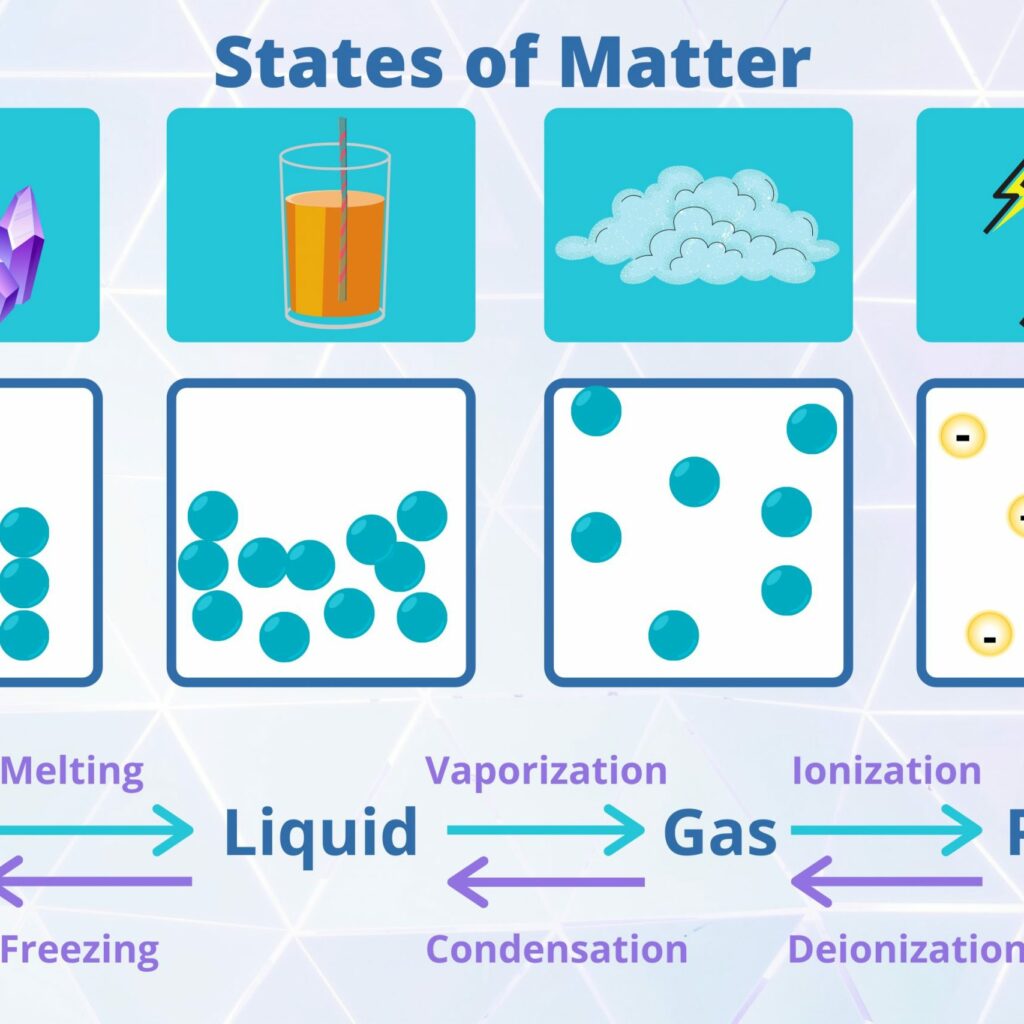
The phenomenon of matter wave amplification is often studied through Bose-Einstein Condensates (BECs), which occur at ultra-low temperatures. In this state, a collection of atoms occupies the same quantum state, resulting in collective quantum behavior that enhances coherence among particles.
- Bose-Einstein Condensates:
A phase of matter where atoms act in unison, amplifying their wave functions. - Coherence Enhancement:
Amplification increases the uniformity and visibility of quantum states, facilitating precise experimental control. - Decoherence Challenges:
Maintaining the amplified state requires preventing interactions that cause loss of quantum information.
Techniques to Sustain Amplified Matter Waves
Preserving the delicate quantum states during amplification involves sophisticated methods to counteract decoherence. External fields such as electromagnetic or optical traps are employed to create controlled environments that stabilize atomic wave functions.
- Electromagnetic and Optical Traps:
These tools confine atoms and reduce disruptive interactions. - Laser Cooling:
Lowers atomic motion to near absolute zero, enhancing coherence. - Coherent Manipulation:
Techniques that maintain and control quantum states for extended periods.
These approaches collectively enable researchers to study amplified matter waves with greater fidelity and open avenues for quantum information processing.
Applications in Precision Measurement and Metrology
Amplified atomic wave functions have significant implications for improving the accuracy and stability of precision instruments. Technologies such as atomic clocks and quantum sensors stand to benefit from enhanced matter waves.
- Atomic Clocks:
Amplification can lead to more precise timekeeping, crucial for GPS, telecommunications, and scientific research. - Quantum Sensors:
Improved sensitivity in detecting physical quantities like magnetic fields and gravitational waves.
These advancements could revolutionize how time and measurements are understood and applied in various scientific and technological fields.
Quantum Measurement and the Observer Effect
One of the fundamental challenges in matter wave amplification is the fragility of quantum states. The act of measurement itself can cause wave function collapse, transitioning a system from a superposition of states to a single observed outcome.
- Wave Function Collapse:
Measurement disrupts the quantum state, potentially negating amplification effects. - Observer’s Role:
Raises philosophical and practical questions about how observation influences quantum systems.
This interplay between observation and quantum coherence remains a critical area of research, especially when attempting to amplify atomic waves without inducing chaos.
Advancing Research Through Quantum Simulations
To navigate the complexities of matter wave amplification, scientists utilize quantum simulations that integrate quantum mechanics with information theory. These simulations provide a virtual testing ground for hypotheses and experimental designs.
- Predictive Modeling:
Simulations forecast atomic behavior under various external manipulations. - Bridging Theory and Experiment:
Offers insights that guide laboratory investigations and technological development.
Such computational tools are essential for pushing the boundaries of knowledge in this cutting-edge field.
Interdisciplinary Collaboration and Future Directions
Progress in matter wave amplification benefits greatly from the combined expertise of physicists, chemists, and engineers. This multidisciplinary approach fosters a holistic understanding of quantum coherence and amplification techniques.
- Physics:
Provides foundational theories and experimental frameworks. - Chemistry:
Explores atomic interactions and material properties. - Engineering:
Develops practical applications and instrumentation.
Such collaborations are vital for overcoming challenges and harnessing the full potential of amplified matter waves.
Significance and Potential Impact
The study of matter wave amplification is not merely an academic pursuit; it holds the promise of transformative technological breakthroughs. By enhancing atomic wave functions, we may unlock new states of matter, improve quantum computing capabilities, and refine measurement standards.
Understanding and controlling amplified matter waves could redefine our interaction with the quantum world, leading to innovations that impact science, technology, and everyday life.
Summary
Matter wave amplification represents a frontier in quantum physics that challenges our understanding of atomic behavior and quantum coherence. Through advanced techniques such as Bose-Einstein Condensation, laser cooling, and quantum simulations, researchers strive to amplify and stabilize atomic wave functions. These efforts have profound implications for precision measurement, quantum information processing, and fundamental physics. As interdisciplinary collaboration continues to drive this field forward, the quest to make atoms ‘louder’ may herald a new era of scientific discovery and technological innovation.
FAQ
What is matter wave amplification?
Matter wave amplification refers to the enhancement of the wave-like properties of atoms, which can lead to new quantum phenomena and improved measurement techniques.
How do Bose-Einstein Condensates relate to matter wave amplification?
Bose-Einstein Condensates are a state of matter where atoms act collectively, allowing for the amplification of their wave functions, which is essential for studying quantum behaviors.






Leave a Reply