

Short Answer
Definition of Mathematical Framework in Condensed Matter Physics
Condensed matter physics is a branch of physics focused on understanding the properties and behaviors of matter in its solid and liquid phases, spanning microscopic to macroscopic scales. The mathematical framework in this field acts as a critical foundation, enabling scientists to decode complex phenomena by applying sophisticated mathematical tools and theories. This framework serves as the intellectual architecture that supports the exploration and explanation of diverse material behaviors.
Fundamental Mathematical Tools
Linear Algebra
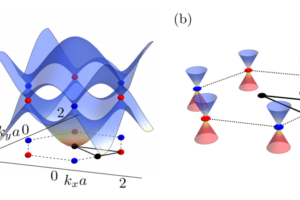
Linear algebra forms the backbone of many analytical methods in condensed matter physics. It provides the language of vectors and matrices, which are essential for representing physical quantities and their interactions. Key concepts such as superposition and linear transformations are pivotal in describing quantum states and particle behaviors within condensed systems. Eigenvalue problems, a central aspect of linear algebra, help identify stable quantum states and are crucial for understanding electronic band structures in solids. Beyond computational utility, linear algebra offers geometric insights that deepen the interpretation of physical phenomena.
Group Theory and Symmetry
Group theory is the mathematical study of symmetry, which plays a vital role in characterizing physical systems. It elucidates the invariance properties of particles and their interactions, revealing the symmetrical patterns that govern material properties. Crystalline structures, for example, are classified by point groups and space groups, which predict optical, electronic, and vibrational characteristics. The representation theory of groups further clarifies how particles transform under symmetry operations, aiding in the classification and interaction analysis of fundamental particles.
Topology in Condensed Matter
Topology introduces a novel perspective by focusing on global properties of matter that remain unchanged under continuous deformations. This branch of mathematics is instrumental in understanding topological phases such as topological insulators and quantum Hall effects. Topological invariants serve as robust identifiers of these phases, which are resistant to local perturbations. This approach extends beyond traditional symmetry-based classifications, offering insights into unconventional orders and enriching the understanding of material states.
Mathematical Descriptions of Physical Phenomena
Differential Equations
Differential equations bridge abstract mathematical concepts with tangible physical realities. The Schrödinger equation, a fundamental partial differential equation, governs the quantum mechanical behavior of particles in condensed matter systems, determining wave functions, energy spectra, and dynamics. Additionally, other differential equations describe processes such as heat transfer, fluid flow, and mechanical elasticity. For instance, diffusion equations provide a mathematical framework for analyzing phase transitions, a key area of study in condensed matter physics.
Statistical Mechanics
Statistical mechanics applies probabilistic and combinatorial methods to study the collective behavior of vast numbers of particles. It connects microscopic interactions with macroscopic observables through ensemble theory and entropy concepts. This mathematical approach transforms the complexity of particle interactions into comprehensible thermodynamic properties, enabling the analysis of phase transitions and critical phenomena. Statistical mechanics thus acts as a bridge between microscopic laws and emergent material behaviors.
Complex Analysis
Complex analysis offers refined mathematical techniques such as contour integration and residue calculus, which are invaluable in solving challenging problems in quantum field theory and scattering phenomena. The method of analytic continuation allows physicists to extend functions into complex domains, facilitating explorations into concepts like imaginary time. These tools enhance theoretical understanding and inspire innovative experimental methodologies in condensed matter research.
Nonlinear Dynamics and Chaos Theory
Nonlinear dynamics and chaos theory provide insights into systems exhibiting unpredictable or emergent behavior. These mathematical frameworks explain how simple microscopic rules can lead to complex macroscopic phenomena, such as phase transitions between ordered and disordered states. Chaos theory, in particular, clarifies the interplay between determinism and unpredictability, deepening the understanding of collective behaviors in materials ranging from atomic lattices to magnetic systems.
How These Mathematical Tools Interconnect
The mathematical disciplines outlined above are not isolated; rather, they form an interconnected network that collectively advances the understanding of condensed matter physics. Linear algebra and group theory often work in tandem to analyze symmetries and quantum states, while topology provides a complementary viewpoint on phase classification. Differential equations and statistical mechanics translate these abstract concepts into dynamic and thermodynamic descriptions. Complex analysis and nonlinear dynamics further refine the theoretical landscape, enabling the study of intricate interactions and emergent phenomena.
Real-World Applications and Examples
- Electronic Band Structure:
Linear algebra and group theory are used to calculate and predict the electronic properties of semiconductors and metals, which are foundational for modern electronics. - Topological Insulators:
Topology explains the robust conductive states on the surfaces of these materials, which have potential applications in quantum computing. - Phase Transitions:
Differential equations and statistical mechanics model transitions such as melting, superconductivity, and magnetism, critical for material design. - Quantum Hall Effect:
Complex analysis and topology describe this quantum phenomenon, which has implications for precision measurement standards.
Common Misconceptions
Mathematics in condensed matter physics is purely abstract and disconnected from experiments.
Mathematical models directly inform experimental design and interpretation, enabling predictions and explanations of observed phenomena.
Symmetry is the only way to classify phases of matter.
Topological classifications reveal phases that do not rely on symmetry, expanding the understanding of material states.
Significance of Mathematics in Condensed Matter Physics
The mathematical apparatus in condensed matter physics is indispensable for advancing both theoretical insights and practical technologies. It enables the precise characterization of materials, guides the discovery of novel phases, and supports the development of devices ranging from transistors to quantum computers. By providing a rigorous language and toolkit, mathematics transforms complex physical phenomena into comprehensible models, fostering innovation and deepening our grasp of the material universe.
FAQ
What role does linear algebra play in condensed matter physics?
Linear algebra is crucial for representing physical quantities and analyzing quantum states and their interactions.
How does topology contribute to the understanding of materials?
Topology helps classify material phases that remain invariant under continuous deformations, such as topological insulators.



Leave a Reply