

Short Answer
Definition
The intersection of physics and philosophy represents a dynamic field of inquiry that explores fundamental questions about existence, the universe, and the nature of reality. This interdisciplinary approach combines scientific investigation with philosophical reflection to deepen our understanding of life and the cosmos.
- Physics:
The branch of science concerned with the properties and interactions of matter and energy, aiming to uncover the laws that govern the universe. - Philosophy:
The study of fundamental questions related to knowledge, existence, ethics, and meaning, often addressing the implications of scientific discoveries. - Interdisciplinary Dialogue:
The collaborative exploration between physics and philosophy that challenges and enriches perspectives on reality and human experience.
Historical Background
The roots of the dialogue between physics and philosophy extend back to ancient Greece, where thinkers like Aristotle laid the foundation by examining the nature of being and causality. These early philosophical inquiries eventually influenced the development of the scientific method, which formalized the pursuit of empirical knowledge. Over time, physics emerged as a distinct discipline focused on understanding the physical universe, while philosophy continued to probe questions of meaning and ethics, often reflecting on the consequences of scientific progress.
Core Concepts in Physics and Their Philosophical Implications
Physics seeks to explain the fundamental components and forces that constitute the universe, ranging from the microscopic scale of quantum mechanics to the vast expanse studied in cosmology. These scientific revelations carry significant philosophical weight, prompting reconsideration of long-held beliefs about reality and human existence.
The Theory of Relativity
Albert Einstein’s theory of relativity revolutionized our understanding of space and time, introducing concepts such as the relativity of simultaneity. This challenges traditional views of causality and the linear progression of time, raising philosophical questions about the subjective nature of temporal experience and the structure of reality itself.
Quantum Mechanics
Quantum theory reveals a universe governed by probabilities rather than certainties, where particles exist in multiple states simultaneously until observed. This indeterminacy disrupts classical deterministic views and influences philosophical debates on free will, causation, and moral responsibility, suggesting a reality that embraces both potentiality and actuality.
Dark Matter and Dark Energy
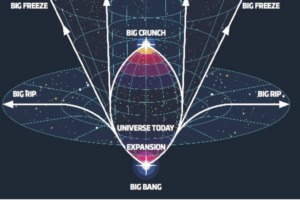
The discovery of dark matter and dark energy, which constitute a large portion of the cosmos yet remain largely mysterious, exemplifies the limits of empirical knowledge. Their elusive nature invites philosophical reflection on the boundaries of human understanding and the existence of phenomena beyond direct observation.
Life and Existence: Scientific and Philosophical Perspectives
The scientific exploration of life, particularly through genetics and evolutionary biology, intersects with philosophical questions about purpose and meaning. This synthesis challenges us to consider whether life is merely the product of random evolutionary processes or if it holds intrinsic significance beyond survival.
Extraterrestrial Life and Consciousness
The search for life beyond Earth raises profound questions about the uniqueness of human consciousness and the universality of intelligence. The potential discovery of extraterrestrial civilizations compels us to rethink ethical frameworks, communication paradigms, and the very definition of intelligence, expanding our conceptual horizons beyond anthropocentric views.
Astrobiology and Extremophiles
Astrobiology, an emerging field combining physics, chemistry, and philosophy, investigates life in extreme environments on Earth to better understand the possibilities of life elsewhere in the universe. Studying extremophiles reshapes criteria for defining life and informs ethical considerations regarding potential encounters with alien organisms.
Philosophical Questions in Artificial Intelligence
The rapid advancement of artificial intelligence introduces new ethical and philosophical challenges. As AI systems increasingly perform tasks once thought exclusive to humans, questions arise about consciousness, agency, and morality. This blurs the line between natural and artificial intelligence, prompting a reevaluation of autonomy and the ethical principles guiding human interaction with technology.
Why the Intersection of Physics and Philosophy Is Important
The fusion of physics and philosophy offers a comprehensive framework for addressing some of the most profound questions about life, the universe, and existence. This collaboration not only enhances scientific understanding but also enriches philosophical inquiry, fostering a holistic approach that transcends the limitations of empirical data alone. By integrating these disciplines, humanity gains deeper insights into reality and its own place within the cosmic narrative.
Conclusion
The ongoing dialogue between physics and philosophy serves as a vital lens through which we explore existential mysteries. This partnership encourages continuous curiosity and a relentless quest for knowledge, revealing that the answers to life’s greatest questions often emerge from the synthesis of scientific rigor and philosophical depth. As we advance in both fields, their convergence promises to illuminate new pathways toward understanding the universe and our role within it.
FAQ
What is the relationship between physics and philosophy?
The relationship between physics and philosophy involves exploring fundamental questions regarding existence and the nature of reality, with each discipline enriching the understanding of the other.
How does quantum mechanics influence philosophical debates?
Quantum mechanics introduces uncertainty and probability, challenging classical notions of determinism and prompting discussions about free will and moral responsibility.
What role does dark matter play in our understanding of the universe?
Dark matter constitutes a significant portion of the universe’s mass and influences cosmic structures, raising questions about the limits of human understanding and observable phenomena.

Leave a Reply