

Short Answer
Definition
The concept of a “second Earth” refers to the search for a planet beyond our solar system that closely resembles Earth in its ability to support life. This idea encompasses finding a world with conditions similar to those on our planet, such as a stable orbit within the habitable zone of its star, presence of liquid water, a protective atmosphere, and a climate conducive to sustaining complex ecosystems. The pursuit of such Earth analogues is a central theme in modern astronomy and astrobiology, driven by the desire to understand the rarity of life and the potential for other habitable environments in the universe.
Criteria for Earth-Like Planets
Identifying planets that could be considered Earth-like involves evaluating several key factors that contribute to Earth’s habitability:
- Habitable Zone Location:
The planet must orbit within a star’s “Goldilocks Zone,” where temperatures allow liquid water to exist on the surface. - Atmospheric Composition:
A balanced atmosphere rich in gases like oxygen and nitrogen is essential for protecting life and regulating climate. - Magnetic Field:
A magnetic field shields the planet from harmful solar and cosmic radiation, preserving its atmosphere and surface conditions. - Stable Climate:
Moderate and stable temperatures support biodiversity and complex life forms. - Presence of Liquid Water:
Water is a fundamental solvent for biochemical processes, making its availability crucial for life.
Techniques for Discovering Exoplanets
Modern astronomy employs sophisticated methods to detect planets orbiting stars beyond our solar system. Two primary techniques dominate this field:
- Transit Photometry:
This method observes periodic dips in a star’s brightness caused by a planet crossing its face, allowing measurement of the planet’s size and orbit. - Radial Velocity:
By detecting subtle shifts in a star’s spectral lines due to gravitational tugs from orbiting planets, astronomers infer the presence and mass of these bodies.
These approaches have led to the discovery of thousands of exoplanets, including many situated within their stars’ habitable zones, expanding the catalog of potential Earth analogues.
Classification of Exoplanets
Exoplanets vary widely in size, composition, and potential habitability. Understanding their classification helps prioritize candidates for further study:
- Gas Giants:
Large planets composed mainly of hydrogen and helium, similar to Jupiter and Saturn, generally inhospitable to life as we know it. - Terrestrial Planets:
Rocky planets with solid surfaces, akin to Earth and Mars, which are prime targets in the search for habitability. - Super-Earths:
Planets with masses larger than Earth’s but smaller than ice giants like Neptune, potentially possessing thick atmospheres and diverse surface conditions.
Atmospheric and Climate Modeling
Advanced simulations play a crucial role in predicting the environmental conditions of exoplanets. By analyzing factors such as stellar radiation, planetary mass, and atmospheric chemistry, scientists model potential climates and weather systems. These models assess the likelihood of greenhouse gases, cloud formation, and temperature stability, which are vital for sustaining life. Visual tools like atmospheric layer diagrams and climate interaction charts help illustrate these complex processes, offering insights into the habitability of distant worlds.
Indicators of Life: Biosignatures and Technosignatures
Detecting signs of life beyond Earth involves searching for specific chemical and physical markers:
- Biosignatures:
Chemical compounds such as oxygen, methane, and ozone that may indicate biological activity, detectable through spectroscopic analysis of exoplanet atmospheres. - Technosignatures:
Evidence of advanced civilizations, including artificial light emissions or radio signals, which are the focus of interdisciplinary efforts like the Search for Extraterrestrial Intelligence (SETI).
Notable Exoplanetary Systems
Several star systems have become focal points in the search for Earth-like planets. For example, the TRAPPIST-1 system contains multiple Earth-sized planets orbiting within the habitable zone of a red dwarf star. These discoveries provide concrete examples of how astronomers identify and prioritize planets for detailed observation, guiding the development of future space telescopes designed to characterize these worlds more thoroughly.
Philosophical and Ethical Considerations
The quest to find another Earth extends beyond scientific inquiry, touching on profound philosophical questions about humanity’s place in the cosmos. Discovering a habitable or inhabited planet would challenge our understanding of life’s uniqueness and origins. It also raises ethical issues regarding the exploration and potential interaction with extraterrestrial ecosystems, prompting reflection on responsible stewardship and the implications of interplanetary contact.
Technological Advances in Space Exploration
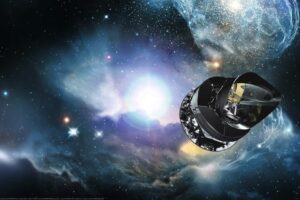
Progress in telescope technology has been instrumental in advancing the search for Earth analogues. Ground-based observatories like the Extremely Large Telescope (ELT) and space-based instruments such as the James Webb Space Telescope (JWST) offer unprecedented resolution and sensitivity. These tools enable detailed analysis of exoplanet atmospheres and surface conditions, enhancing our ability to detect biosignatures and refine criteria for habitability. Expert reviews and interviews often highlight these innovations and their transformative impact on astronomy.
Historical Evolution of the Search for Earth-Like Worlds
Human understanding of Earth’s place in the universe has evolved dramatically over centuries. From early geocentric models to the Copernican revolution and the rise of modern astrophysics, each paradigm shift has expanded our cosmic perspective. This historical context enriches the contemporary search for Earth analogues, illustrating the persistent human drive to explore and comprehend the universe.
Challenges and Limitations in Current Research
Despite remarkable progress, the search for another Earth faces significant obstacles. Variability in stellar activity, measurement uncertainties, and the immense distances involved complicate data interpretation. Scientific rigor demands cautious evaluation of findings, balancing excitement with critical analysis. Acknowledging these limitations fosters a realistic understanding of the ongoing efforts and the tentative nature of current discoveries.
Significance of Finding Another Earth
The endeavor to locate a planet resembling Earth embodies humanity’s fundamental curiosity about the cosmos and our origins. Beyond expanding planetary science, this quest influences philosophical thought, technological development, and our vision of the future. Discovering a true Earth twin would revolutionize our understanding of life’s distribution in the universe and inspire new narratives about our place among the stars. As observational capabilities improve, the prospect of unveiling a new habitable world continues to captivate and motivate scientists and the public alike.
FAQ
What makes a planet potentially habitable?
A planet must orbit within the habitable zone of its star, have a stable atmosphere, a magnetic field to protect from radiation, and the presence of liquid water to be considered potentially habitable.
How do astronomers detect planets outside our solar system?
They primarily use transit photometry, which detects dips in starlight when a planet crosses in front of a star, and radial velocity, which measures star movements caused by gravitational pull from orbiting planets.
What is the significance of biosignatures?
Biosignatures are chemical signs in a planet's atmosphere, such as oxygen or methane, that may indicate the presence of life.
What challenges do scientists face in finding another Earth?
Challenges include stellar variability, measurement limitations, vast distances, and interpreting ambiguous data while maintaining scientific rigor.


Leave a Reply