
Short Answer
Definition of Graphite and Its Dimensionality
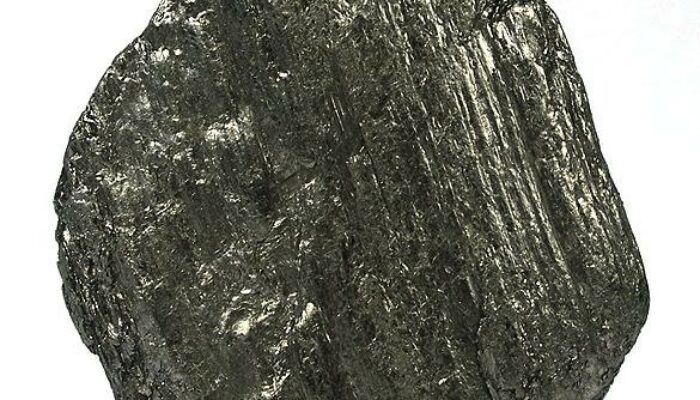
Graphite is a well-known allotrope of carbon characterized by its unique atomic arrangement. It consists of multiple layers of carbon atoms bonded in a hexagonal lattice, which has sparked ongoing debate regarding whether graphite should be classified as a two-dimensional (2D) or three-dimensional (3D) material. This question arises from graphite’s distinctive layered structure and the nature of the forces that hold these layers together, which influence its physical and chemical properties.
Atomic Structure and Layered Composition
At the atomic level, graphite is composed of numerous sheets of carbon atoms arranged in a hexagonal pattern. Within each layer, carbon atoms are connected by strong covalent bonds, forming a planar, two-dimensional network. These individual layers are stacked and held together by much weaker van der Waals forces, which allow the layers to slide over one another easily. This dual bonding nature means that while each layer exhibits 2D characteristics, the entire bulk material behaves as a 3D solid due to the stacking of these layers.
- Covalent Bonds:
Strong in-plane bonds between carbon atoms within each layer. - Van der Waals Forces:
Weak interlayer interactions that hold the layers together.
Electrical and Mechanical Properties Arising from Structure
The planar arrangement of carbon atoms within each graphite layer enables exceptional electrical conductivity. This is because delocalized π electrons can move freely across the layers, facilitating efficient charge transport. This property makes graphite an excellent conductor and is exploited in various applications such as electrodes, batteries, and emerging nanotechnologies. Additionally, the weak interlayer forces allow layers to slide easily, giving graphite its characteristic lubricating properties.
Graphene: The Single-Layer Counterpart
Graphene is essentially a single atomic layer of graphite and represents a true two-dimensional material. It exhibits extraordinary mechanical strength, flexibility, and electrical conductivity, surpassing many conventional materials. The discovery of graphene has intensified interest in 2D materials and highlighted the contrast between the properties of a single layer and the bulk graphite structure. While graphene is purely 2D, it exists as part of the inherently 3D graphite, illustrating the complex relationship between these forms.
Dimensionality and Quantum Effects in Thin Layers
Reducing graphite to fewer layers, especially down to a single atomic layer, leads to significant changes in its electronic and physical properties due to quantum confinement effects. These phenomena are not observed in bulk graphite, emphasizing that dimensionality plays a crucial role in determining material behavior. This transition from 3D to 2D properties is central to the development of nanoscale devices and materials science research.
Applications in Nanotechnology and Electronics
The unique properties of graphene and few-layer graphite have propelled their use in nanoelectronics, where they promise faster, more efficient devices. Beyond graphene, other layered materials such as transition metal dichalcogenides also exhibit similar 2D characteristics, broadening the scope of research and applications. Understanding whether graphite is 2D or 3D is therefore essential in the context of these advanced materials and their technological potential.
Theoretical Perspectives and Advanced Studies
Graphite’s layered structure has also attracted attention from theoretical physicists and mathematicians. Its atomic arrangement can be analyzed using concepts from topology and other advanced mathematical frameworks. Studies of phase transitions, defects, and other phenomena within graphite layers provide insights that extend beyond traditional materials science, enriching our understanding of dimensionality and material behavior at the atomic scale.
Significance in Science and Industry
The debate over graphite’s dimensionality is not purely academic; it has practical implications for sustainable technology development, energy storage, and electronics manufacturing. As the demand for materials engineered at the atomic level grows, comprehending the layered nature of graphite becomes increasingly important. This knowledge underpins innovations in various fields, making graphite a cornerstone material in both fundamental research and applied science.
Summary: The Dual Nature of Graphite’s Dimensionality
In conclusion, graphite embodies a complex interplay between two-dimensional and three-dimensional characteristics. Its individual layers are distinctly 2D, yet the stacking of these layers forms a 3D structure with unique properties. This duality challenges simple classifications and invites multidisciplinary exploration into how atomic-scale arrangements influence macroscopic phenomena. The study of graphite’s dimensionality continues to inspire advancements in material science, nanotechnology, and beyond.
FAQ
Is graphite a 2D or 3D material?
Graphite is a 3D material made up of many 2D layers of carbon atoms stacked via weak van der Waals forces.
What makes graphene different from graphite?
Graphene is a single atom-thick layer of carbon atoms, exhibiting unique properties not found in bulk graphite.
How do the layers in graphite influence its properties?
The strong covalent bonds within layers allow high conductivity, while weak interlayer forces enable easy layer separation and unique mechanical properties.
Why is graphite important in material science?
Graphite's layered structure and electrical properties make it essential for applications in electronics, batteries, and nanotechnology.






Leave a Reply