
Short Answer
Definition of Graphene and Superconductivity
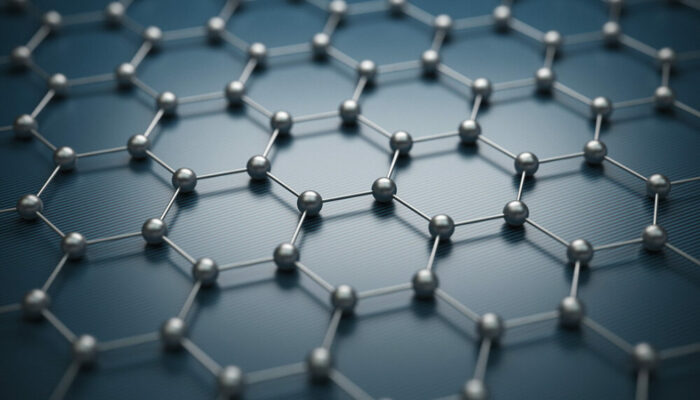
Graphene is a single atomic layer of carbon atoms arranged in a two-dimensional hexagonal lattice. This unique structure endows graphene with exceptional physical properties, including remarkable electrical conductivity, thermal stability, and mechanical strength. Superconductivity, on the other hand, refers to a phenomenon where a material can conduct electric current without any resistance when cooled below a certain critical temperature. This state is characterized by the complete expulsion of magnetic fields (known as the Meissner effect) and the formation of Cooper pairs-pairs of electrons that move through the lattice without energy loss.
Fundamental Criteria for Superconductivity
For a material to be classified as a superconductor, it must exhibit several key features:
- Zero Electrical Resistance:
The material allows electric current to flow without any energy dissipation. - Meissner Effect:
The expulsion of magnetic fields from the interior of the superconductor when it transitions below its critical temperature. - Cooper Pair Formation:
Electrons pair up in a correlated state that enables resistance-free conduction.
Traditional superconductors, such as lead and niobium, require extremely low temperatures (cryogenic conditions) to exhibit these properties. The ongoing quest in condensed matter physics is to discover or engineer materials that can superconduct at higher, more practical temperatures.
Graphene’s Electronic Structure and Potential for Superconductivity
Graphene’s distinctive band structure and its exceptionally high carrier mobility make it a promising candidate for superconductivity. Its electronic properties can be tuned by adjusting the electron density through doping, either by adding electrons (n-type) or holes (p-type). Experimental studies have demonstrated that under specific conditions-such as in bilayer graphene or when graphene interacts with certain substrates-superconducting behavior can emerge. Unlike conventional superconductors where phonon interactions mediate electron pairing, graphene’s superconductivity appears to be driven by electron-electron interactions, marking it as an unconventional superconductor.
Methods to Induce Superconductivity in Graphene
Researchers have explored various approaches to induce and enhance superconductivity in graphene:
- Application of External Pressure:
Applying pressure can modify the electronic interactions within graphene, potentially triggering superconducting phases. - Formation of Heterostructures:
Combining graphene with other two-dimensional materials creates layered structures that enhance electron coupling, facilitating Cooper pair formation. - Twisted Bilayer Graphene:
When two graphene sheets are stacked with a slight rotational misalignment, a moiré pattern forms, drastically altering electronic properties. At certain “magic” twist angles, superconductivity emerges with elevated critical temperatures, revealing complex electron correlations.
Twisted Bilayer Graphene: A Breakthrough in Superconductivity
The discovery of superconductivity in twisted bilayer graphene has opened new avenues in quantum materials research. The moiré superlattice created by the twist modifies the electronic band structure, leading to flat bands where electron interactions become dominant. This results in superconducting phases that defy traditional mechanisms and suggest novel quantum phenomena. The critical temperatures observed in these systems are significantly higher than in untwisted graphene, highlighting the importance of interlayer coupling and geometric configuration.
Challenges in Realizing Graphene Superconductors
Despite its promising attributes, several obstacles hinder the practical realization of graphene-based superconductors:
- Disorder and Electron Localization:
Impurities and defects can disrupt electron mobility and weaken superconducting properties. - Material Synthesis:
Producing high-quality graphene with controlled defect levels remains difficult. Techniques like chemical vapor deposition and mechanical exfoliation must be refined for scalability and consistency. - Theoretical Understanding:
Existing models often fall short in explaining the complex electron interactions in two-dimensional graphene systems, necessitating advanced quantum theories that incorporate spin-orbit coupling and topological effects.
Theoretical Perspectives on Graphene Superconductivity
Current theoretical frameworks are evolving to better capture the unconventional superconductivity observed in graphene. Unlike traditional BCS theory, which relies on phonon-mediated electron pairing, graphene’s superconductivity may involve strong electron-electron repulsion and correlation effects. Integrating quantum field theory and topological considerations is essential to fully understand the mechanisms at play and to predict new superconducting phases.
Practical Implications and Future Prospects
The potential applications of graphene superconductors are vast and transformative. Lightweight and flexible superconducting materials could revolutionize energy transmission by enabling lossless electrical grids. In quantum computing, graphene-based superconductors might facilitate the development of more stable and scalable qubits. Additionally, medical imaging technologies such as magnetic resonance imaging (MRI) could benefit from enhanced superconducting components. Achieving room-temperature superconductivity in graphene would represent a monumental breakthrough, fundamentally altering energy usage and technological capabilities worldwide.
Interdisciplinary Collaboration and Research Directions
Advancing graphene superconductivity requires a concerted effort across multiple scientific disciplines. Physicists, materials scientists, and engineers must work together to refine experimental techniques, improve material synthesis, and develop comprehensive theoretical models. This synergy will accelerate the translation of graphene’s superconducting properties from laboratory curiosity to practical technology, unlocking new frontiers in electronics, energy, and quantum science.
Summary and Outlook
Graphene stands at the forefront of superconductivity research due to its exceptional electronic properties and tunability. While definitive proof of robust superconductivity in graphene remains an active area of investigation, the progress made thus far highlights its immense potential. Continued exploration promises to deepen our understanding of quantum materials and may ultimately lead to groundbreaking applications that reshape modern technology and energy systems.
FAQ
What is graphene?
Graphene is a single layer of carbon atoms arranged in a hexagonal lattice, known for its remarkable electrical, thermal, and mechanical properties.
Can graphene be a superconductor?
Yes, under certain conditions, such as doping or applying pressure, graphene can exhibit superconducting behavior.
What are the challenges in achieving superconductivity in graphene?
Challenges include disorder and electron localization, difficulties in material synthesis, and the need for advanced theoretical models.






Leave a Reply