
Short Answer
Overview of the European Space Agency’s Emergence
For decades, the United States’ National Aeronautics and Space Administration (NASA) has been the dominant force in space exploration, renowned for landmark achievements such as the Apollo moon landings and pioneering robotic missions. However, the European Space Agency (ESA), an intergovernmental organization representing multiple European nations, is undergoing a significant transformation. Its expanding capabilities and ambitious projects suggest a potential reshaping of the global space exploration landscape. This raises an intriguing question: is ESA simply narrowing the gap with NASA, or is it forging a distinct path that could redefine humanity’s cosmic future?
Historical Context and Organizational Differences
Understanding ESA’s rise requires examining the historical and structural contrasts between it and NASA. Traditionally, NASA has benefited from substantial funding, enabling it to undertake high-profile missions like the Apollo program and Mars rover expeditions. In contrast, ESA operates with comparatively modest budgets, relying on collaborative efforts among its member states. Despite these financial and organizational constraints, ESA has strategically invested in innovation, gradually building a competitive and uniquely valuable portfolio of space missions.
Collaborative Model and Multinational Integration
Unlike NASA’s largely unilateral approach, ESA exemplifies a model of multilateral cooperation, pooling the scientific expertise and technological resources of diverse European countries. This consortium-based framework introduces complexity due to varying scientific traditions, regulatory environments, and industrial capabilities. Yet, it also fosters resilience and comprehensive expertise. The integration of these diverse elements has led to groundbreaking achievements that combine scientific rigor with technological boldness.
Key Milestones and Scientific Contributions
- Rosetta Mission:
ESA’s Rosetta spacecraft made history by rendezvousing with and landing on a comet, providing unprecedented insights into the early solar system and cosmic origins. - Gaia Observatory:
The Gaia mission has revolutionized stellar cartography by mapping the positions and motions of over a billion stars with extraordinary precision, advancing astrophysics into a new era.
These flagship missions highlight ESA’s role not just as a follower but as an innovator shaping the scientific frontier.
International Partnerships and Cooperative Endeavors
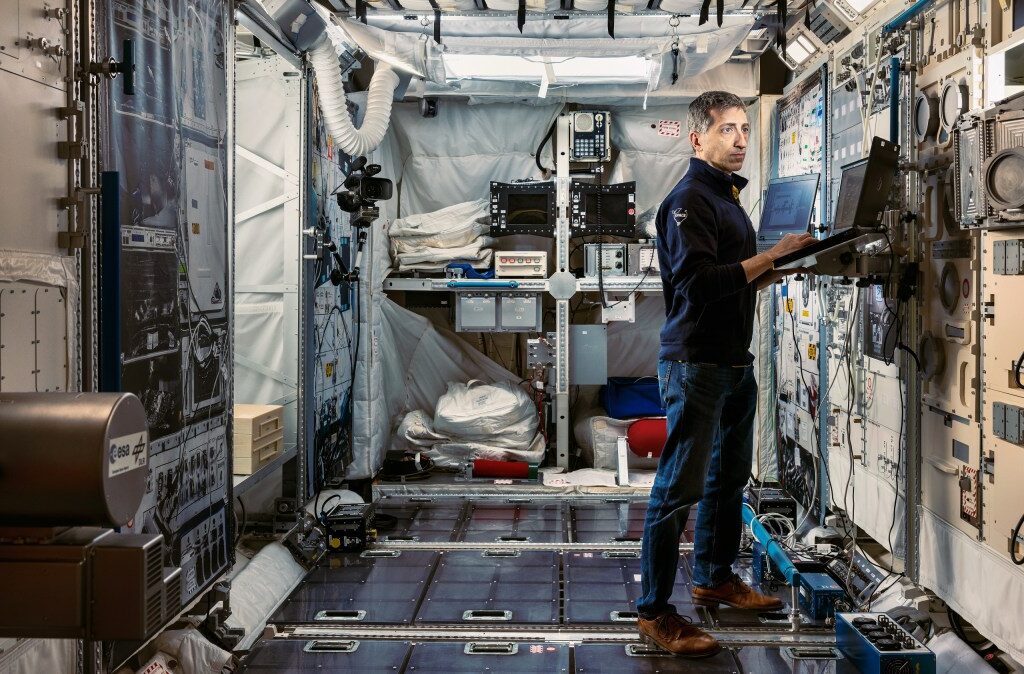
ESA’s growing influence is also reflected in its strategic alliances with NASA, Russia’s Roscosmos, and other space agencies. Collaborative projects such as the International Space Station (ISS) exemplify this spirit of partnership, with ESA contributing critical modules, scientific instruments, and astronaut participation. This cooperative approach marks a shift from competitive rivalry toward a polycentric model of space exploration, emphasizing shared goals and mutual strengths.
Financial Efficiency and Strategic Focus
While ESA’s budget remains smaller than NASA’s, its impact relative to investment is often comparable or superior. This efficiency stems from a concentrated focus on robotic exploration, Earth observation, and space infrastructure, areas where Europe demonstrates technological leadership. ESA’s targeted approach allows it to maximize scientific returns and technological advancements within its financial means.
Emerging Technologies and Future Missions
- Climate Science Initiatives:
ESA’s Sentinel satellite program is transforming environmental monitoring by integrating space technology with terrestrial climate imperatives. - Lunar and Martian Exploration:
Planned missions include lunar exploration and Mars sample return projects, pursued with an emphasis on sustainability, international collaboration, and scientific precision rather than rapid, high-profile achievements.
Human Spaceflight and Astronaut Contributions
ESA’s commitment to human spaceflight is growing steadily, highlighted by the increasing presence of European astronauts aboard the ISS and the development of the European Service Module, which powers NASA’s Orion spacecraft. These efforts position ESA as a vital partner in human space exploration, fostering a complementary dynamic that enhances global capabilities.
Technological Infrastructure and Launch Capabilities
The Ariane family of rockets exemplifies ESA’s sophisticated and forward-looking technological ecosystem. Providing reliable commercial launch services, Ariane plays a crucial role in the expanding satellite economy. In an era marked by the democratization of space access through commercial ventures and emerging national agencies, ESA’s stable launch infrastructure ensures Europe’s autonomous gateway to orbit, offering strategic resilience amid market and geopolitical uncertainties.
Philosophical and Operational Significance
ESA’s ascent represents more than a competition to match NASA’s achievements; it signals a paradigm shift in space exploration. This transformation is measured not only by mission counts or budgets but by the development of a sustainable, inclusive vision for humanity’s cosmic future. ESA’s trajectory emphasizes collaborative innovation, scientific humility, and responsible stewardship of space resources.
Reevaluating the Concept of “Catching Up”
The idea that ESA is merely “catching up” to NASA overlooks the agency’s profound contributions to the global space community. ESA challenges the traditional benchmarks set by NASA, advocating for a vision of space exploration that embraces multiple centers of leadership and diverse approaches. As ESA continues to evolve, it offers fresh perspectives and expands the horizons of what is possible in space science and exploration.
Conclusion: ESA’s Role in the Future of Space Exploration
ESA’s development transforms the narrative from one of competition to one of collaborative progress. Its advances enrich the cosmic journey by fostering innovation and partnership. Whether ESA ultimately matches NASA’s historical milestones or pioneers a new echelon of space exploration, its presence enhances the global endeavor to explore and understand the universe.
FAQ
What is the primary focus of ESA?
ESA focuses on robotic exploration, Earth observation, and advancing technological capabilities in space.
How does ESA contribute to international space efforts?
ESA collaborates with various space agencies and contributes to projects like the International Space Station.



Leave a Reply