
Short Answer
Definition of Chlorine and Its Molecular Form
Chlorine, symbolized as Cl, is a chemical element that naturally exists as a diatomic molecule, Cl2, under standard temperature and pressure conditions. This raises an important question: should Cl2 be regarded solely as an element, a molecule, or does it embody characteristics of both? To address this, it is essential to clarify the concepts of elements and molecules and explore how Cl2 fits within these definitions.
What Is an Element?
An element is a pure substance that cannot be decomposed into simpler substances by chemical means. It consists of atoms characterized by a specific number of protons in their nuclei, known as the atomic number. Chlorine is an element with atomic number 17 and exists naturally in several isotopic forms, primarily Cl-35 and Cl-37.
What Constitutes a Molecule?
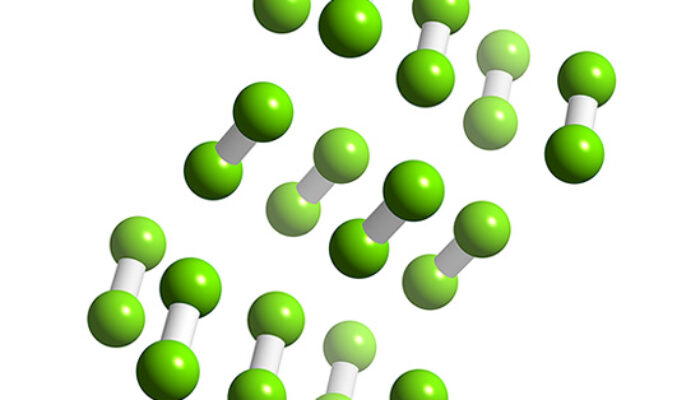
A molecule is formed when two or more atoms are chemically bonded together through covalent bonds. In the case of chlorine gas, two chlorine atoms share electrons to create a diatomic molecule, Cl2. This molecular structure is fundamental to understanding chlorine’s physical and chemical properties.
Structural and Chemical Characteristics of Cl2
The Cl2 molecule consists of two chlorine atoms connected by a covalent bond, sharing a pair of valence electrons. This bonding arrangement stabilizes the molecule, making it energetically favorable. The diatomic nature of chlorine influences its physical state, manifesting as a greenish-yellow gas at room temperature, and governs its chemical reactivity.
- Physical Properties:
Cl2 is a gas with a distinct color and odor, existing naturally as a diatomic molecule rather than isolated atoms. - Chemical Behavior:
The shared electron pair in Cl2 affects how it interacts with other substances, making it highly reactive and capable of forming various compounds.
Dual Identity: Element or Molecule?
Chlorine gas exemplifies a unique duality. On one hand, it is an element because it is composed exclusively of chlorine atoms. On the other hand, it is a molecule due to the covalent bonding between two chlorine atoms. Recognizing this dual nature is crucial for a comprehensive understanding of chlorine’s behavior in chemical reactions and its role in different environments.
Implications of Classifying Cl2
Labeling Cl2 strictly as an element might obscure the importance of its molecular interactions, which are vital in reaction mechanisms. Conversely, considering it only as a molecule could neglect its elemental properties that influence its fundamental reactivity and characteristics. A balanced perspective acknowledges both aspects, enriching our grasp of chlorine’s chemical identity.
Comparison with Other Diatomic Elements
Chlorine is not unique in existing as a diatomic molecule; other elements such as oxygen (O2), nitrogen (N2), hydrogen (H2), and fluorine (F2) also form diatomic molecules. These examples highlight how elemental gases often exist as molecules composed of two identical atoms, which affects their physical states, chemical properties, and interactions.
Reactivity and Applications of Chlorine Gas
Chlorine’s high electronegativity makes Cl2 a potent participant in numerous chemical reactions, ranging from oxidation processes to complex organic syntheses. The molecule’s ability to dissociate into chloride ions (Cl–) is fundamental in biological systems and industrial applications.
- Water Treatment:
Chlorine gas is widely used to disinfect water by forming compounds like hypochlorous acid (HOCl), which effectively eliminate pathogens. - Industrial Chemistry:
Cl2 serves as a precursor in manufacturing various chemicals, including solvents, plastics, and pharmaceuticals.
Scientific Significance of Cl2’s Dual Nature
The coexistence of elemental and molecular characteristics in Cl2 exemplifies the complexity of chemical classification. This duality encourages deeper exploration into how atomic and molecular structures influence matter’s properties and behaviors, enriching the broader field of chemistry.
Common Misconceptions About Cl2
Cl2 is only an element.
While composed of chlorine atoms, Cl2 is also a molecule formed by covalent bonding between two atoms.
Cl2 behaves like a simple molecule without elemental properties.
Cl2 retains elemental characteristics that influence its reactivity and chemical behavior.
Conclusion: The Importance of Understanding Cl2
Recognizing Cl2 as both an element and a molecule provides a nuanced perspective on its chemical nature. This understanding is vital for appreciating chlorine’s role in natural processes, industrial applications, and scientific research. The dual identity of Cl2 serves as a compelling example of the intricate relationships between atomic and molecular chemistry, highlighting the dynamic nature of chemical substances.
FAQ
Is Cl2 an element or a molecule?
Cl2 is both an element, as it is composed solely of chlorine atoms, and a molecule due to the covalent bond formed between the two atoms.
What are the physical properties of Cl2?
Cl2 is a greenish-yellow gas at room temperature and exists naturally as a diatomic molecule.






Leave a Reply