
Short Answer
Overview of CERN and Its Scientific Mission
The European Organization for Nuclear Research, commonly known as CERN, stands as a pivotal institution in the field of particle physics. Renowned worldwide, CERN operates the Large Hadron Collider (LHC), the most powerful particle accelerator ever constructed. This facility draws international scientific collaboration and public interest alike, not only for its groundbreaking discoveries but also for the profound existential questions it provokes. Among these is a frequently debated concern: could CERN’s experiments potentially lead to the destruction of Earth or even the universe? While often exaggerated in popular media, this question deserves a thorough and rational exploration.
Understanding the Large Hadron Collider
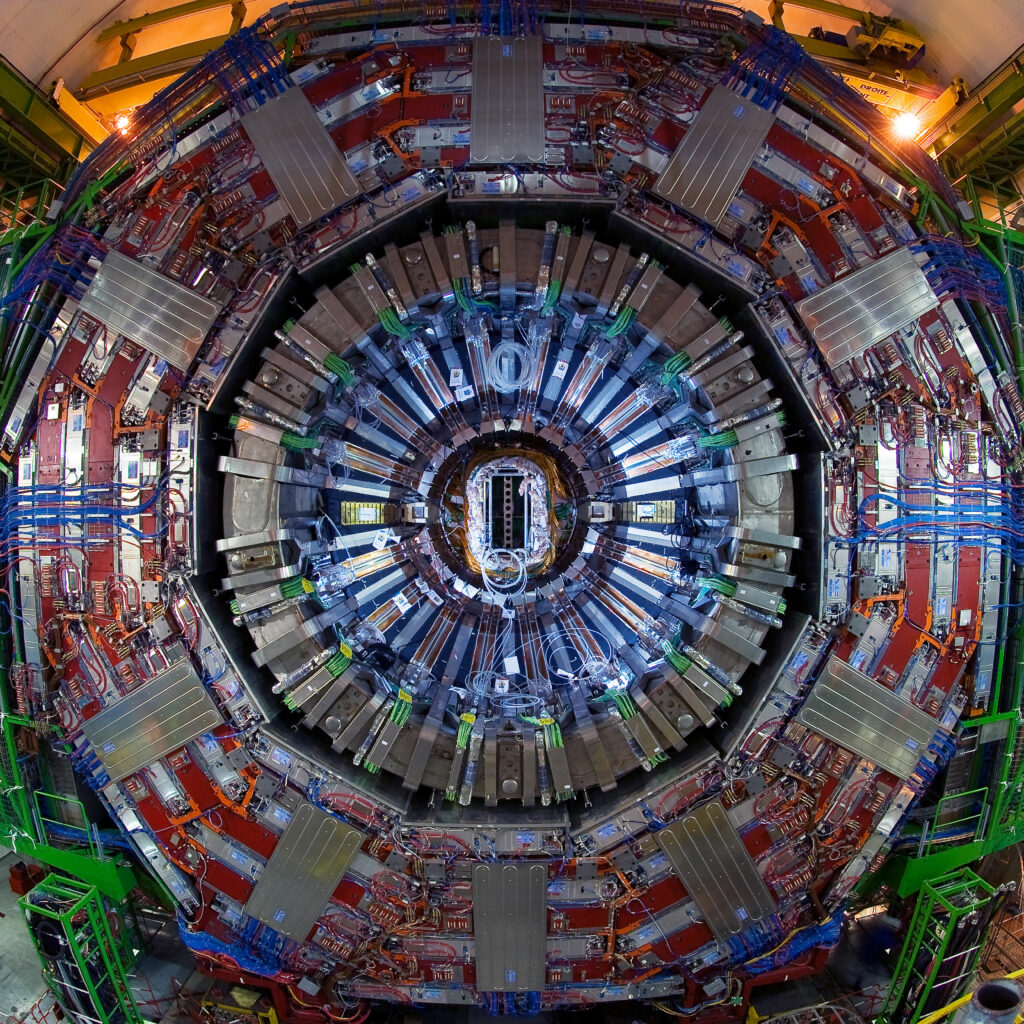
The LHC is a monumental scientific instrument designed to accelerate protons to velocities approaching the speed of light. By orchestrating collisions at unprecedented energy levels, it enables physicists to investigate the fundamental constituents of matter and the forces governing them. The primary objectives include unraveling the mysteries of mass generation, probing the elusive nature of dark matter, and exploring the possibility of extra spatial dimensions beyond human perception.
Scientific Concerns: Black Holes and Their Implications
One of the most sensationalized fears linked to the LHC involves the creation of microscopic black holes. Theoretical physics, particularly the interplay between general relativity and quantum mechanics, suggests that such tiny black holes might form during high-energy particle collisions. However, this remains speculative, and the prevailing scientific consensus holds that if these black holes were produced, they would dissipate almost instantaneously through a process known as Hawking radiation, named after physicist Stephen Hawking. Consequently, the risk of these entities growing uncontrollably and threatening the planet is considered negligible.
Cosmic Rays as a Natural Benchmark
Supporting this safety perspective is the natural phenomenon of cosmic rays-high-energy particles originating from astrophysical events like supernovae and quasars-that have continuously bombarded Earth’s atmosphere for billions of years. These cosmic collisions generate energies comparable to or exceeding those produced by the LHC. Since such natural high-energy interactions have not caused planetary destruction, it logically follows that controlled laboratory experiments are unlikely to trigger catastrophic outcomes.
Exploring the Hypothesis of Strangelets
Another theoretical hazard often discussed is the formation of strangelets-hypothetical particles containing strange quarks in addition to the usual up and down quarks. Some have speculated that strangelets could initiate destructive chain reactions affecting ordinary matter. Nonetheless, empirical evidence does not support the production of strangelets in LHC experiments. The scientific community largely agrees that even if strangelets were created, they would not pose a significant threat. The enduring stability of Earth and the universe over billions of years further reinforces this conclusion.
Separating Fact from Fiction: Addressing Public Fears
The fascination with the unknown, combined with sensationalized portrayals in media and popular culture, often fuels public anxiety about CERN’s work. However, it is crucial to ground discussions in rigorous scientific evaluation rather than speculative fear. CERN’s experiments undergo extensive safety reviews and are subject to peer scrutiny, systematically dispelling myths of apocalyptic consequences.
Ethical Considerations and the Value of Scientific Inquiry
Beyond risk assessment, the ethical dimension of conducting large-scale scientific research must be acknowledged. The excitement surrounding CERN’s experiments stems not from potential dangers but from the profound insights they offer into the universe’s fundamental nature. Each particle collision contributes to our understanding of phenomena such as dark matter and dark energy, which remain some of the most significant unsolved puzzles in physics. Halting such research due to unfounded fears would hinder humanity’s pursuit of knowledge and innovation.
Technological and Societal Benefits of Particle Physics Research
Ceasing investigations into particle physics could foster ignorance and impede technological progress. Discoveries made at CERN have already influenced diverse fields including medical imaging, data processing, and materials science. When viewed through this lens, the advantages of continuing research at CERN far outweigh the minimal and largely theoretical risks.
Summary: Assessing the Risk of Global Catastrophe
The narrative suggesting that CERN might cause planetary or universal destruction is largely a product of myth rather than scientific reality. While the LHC challenges our understanding of the cosmos, it does so within a framework of stringent safety protocols and empirical evidence. The potential hazards, such as microscopic black holes or strangelets, are either speculative or demonstrably harmless based on current knowledge.
Balancing Curiosity and Caution in Scientific Exploration
As humanity advances in its quest to comprehend the universe, maintaining a balance between inquisitiveness and prudence is essential. The pursuit of particle physics should proceed unhindered by irrational fears, guided instead by evidence-based research and meticulous safety standards. Thus, while the question of whether CERN could cause destruction may provoke momentary concern, the reality is one of scientific discovery and enlightenment rather than annihilation.
FAQ
Is there a risk that CERN could destroy the planet?
No, the scientific consensus is that the risks associated with CERN’s experiments, such as creating black holes, are negligible and not supported by empirical evidence.
What are cosmic rays and how do they relate to CERN's experiments?
Cosmic rays are high-energy particles from space that have bombarded Earth’s atmosphere for billions of years without causing destruction, suggesting that CERN’s controlled experiments are safe.
What are strangelets and is there a threat from them?
Strangelets are hypothetical particles that might pose a risk, but the scientific community agrees that they have not been produced in LHC experiments and would not threaten the planet.






Leave a Reply