
Short Answer
Definition of Matter and Electromagnetic Fields
Matter is conventionally described as any substance that possesses mass and occupies space, existing in a form perceptible to the senses. This broad category includes solids, liquids, gases, and plasma, encompassing everything from rocks to atmospheric air. However, this traditional definition encounters challenges when applied to phenomena such as electromagnetic fields, which do not fit neatly into the classical framework of matter.
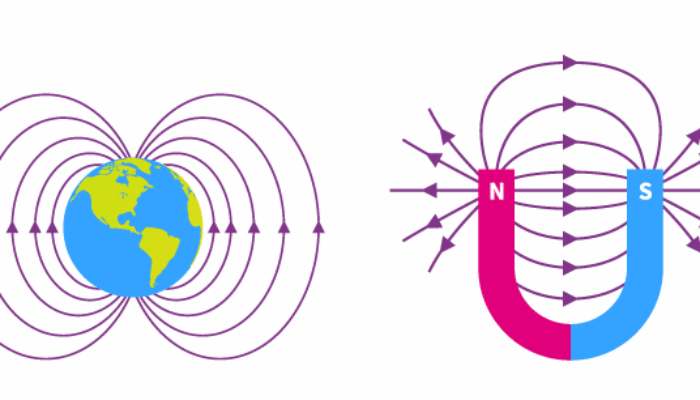
Electromagnetic fields are physical entities generated by electrically charged particles. They represent the electromagnetic force-one of the four fundamental forces of nature-and govern the interactions between charged particles. These fields manifest as dynamic patterns of electric and magnetic influences that permeate space and time, playing a crucial role in countless natural and technological processes.
Fundamental Principles of Electromagnetic Fields
The behavior and properties of electromagnetic fields are rigorously described by Maxwell’s equations, a set of four differential equations formulated in the 19th century. These equations explain how electric charges and currents produce electric and magnetic fields, and how these fields propagate as waves through space. Unlike traditional matter, electromagnetic fields do not have rest mass or occupy volume in the conventional sense. Instead, they exhibit characteristics of both waves and particles, a duality that is central to quantum mechanics.
Maxwell’s Equations Overview
- Gauss’s Law for Electricity:
Describes how electric charges produce electric fields. - Gauss’s Law for Magnetism:
States that there are no magnetic monopoles; magnetic field lines are continuous. - Faraday’s Law of Induction:
Explains how a changing magnetic field induces an electric field. - Ampère’s Law with Maxwell’s Addition:
Relates magnetic fields to electric currents and changing electric fields.
Electromagnetic Fields and the Concept of Matter
The question of whether electromagnetic fields qualify as matter challenges the classical boundaries of physical substance. While fields lack mass and do not occupy space as solids or fluids do, they can exert forces and transfer energy, influencing physical systems across vast distances without a material medium. This capacity to affect matter and carry energy raises philosophical and scientific debates about their ontological status.
Energy and Influence of Electromagnetic Fields
Electromagnetic fields are carriers of energy, capable of transmitting it through space in the form of electromagnetic radiation, such as light, radio waves, and X-rays. This energy transfer is fundamental to technologies like wireless communication, where information is sent via modulated electromagnetic waves. The ability of fields to perform work and induce changes in matter suggests they possess attributes traditionally associated with material entities.
Quantum Field Theory and the Matter-Field Relationship
Modern physics, particularly quantum field theory (QFT), offers a nuanced perspective on the relationship between matter and fields. In QFT, particles are interpreted as quantized excitations of underlying fields that exist throughout spacetime. For example, electrons are excitations of the electron field, while photons are excitations of the electromagnetic field. This framework blurs the distinction between matter and fields, proposing that what we perceive as particles (matter) are manifestations of fundamental fields.
Implications of Quantum Field Theory
- Particles as Field Excitations:
Matter particles arise from quantized vibrations or disturbances in their respective fields. - Unified Description:
Both matter and forces are described within a single theoretical framework, emphasizing their interconnectedness. - Non-Traditional Matter:
Fields themselves, though not matter in the classical sense, form the substrate from which matter emerges.
Energy Dynamics and Electromagnetic Fields
Energy, a fundamental concept in physics, exists in various forms including kinetic, potential, thermal, and electromagnetic. Electromagnetic fields are integral to the storage, transfer, and conservation of energy. Their dynamic nature allows them to mediate interactions and facilitate energy transformations, reinforcing the argument that they possess material-like qualities beyond mere abstraction.
Practical Examples of Electromagnetic Fields in Action
Electromagnetic fields are ubiquitous in both natural phenomena and human technology:
- Wireless Communication:
Radio, television, and cellular signals rely on electromagnetic waves to transmit data without physical connections. - Light and Optics:
Visible light is an electromagnetic wave that enables vision and underpins technologies like lasers and fiber optics. - Medical Imaging:
Techniques such as MRI utilize electromagnetic fields to generate detailed images of the body’s interior. - Atomic and Molecular Interactions:
Electromagnetic forces govern the structure and behavior of atoms and molecules, forming the basis of chemistry and material science.
Common Misconceptions About Electromagnetic Fields and Matter
Electromagnetic fields are purely abstract and have no physical reality.
Electromagnetic fields have measurable effects, can transfer energy, and influence matter, confirming their physical existence.
Only objects with mass can be considered matter.
Quantum field theory reveals that matter arises from fields, suggesting that massless fields like the electromagnetic field play a foundational role in the material world.
Fields require a medium to propagate.
Electromagnetic waves can travel through the vacuum of space without a physical medium, unlike mechanical waves.
Significance of Electromagnetic Fields in Science and Technology
Understanding electromagnetic fields is vital across multiple scientific disciplines and practical applications. They are central to the development of modern electronics, telecommunications, medical diagnostics, and fundamental physics research. The evolving comprehension of fields and matter reshapes our grasp of the universe’s fabric, influencing both theoretical insights and technological innovation.
Conclusion: Reevaluating the Nature of Matter and Fields
The inquiry into whether electromagnetic fields constitute a form of matter invites a profound reconsideration of traditional definitions. Although these fields differ from classical matter by lacking mass and occupying no volume, their ability to carry energy, exert forces, and serve as the foundation for particles challenges rigid categorizations. Contemporary physics suggests a continuum where matter and fields are deeply intertwined aspects of reality, encouraging ongoing exploration into the fundamental nature of existence.
FAQ
What is an electromagnetic field?
An electromagnetic field is a physical field produced by electrically charged particles, governing the interactions of those particles through electric and magnetic forces.
Can electromagnetic fields be considered matter?
Electromagnetic fields are not classified as matter because they lack mass and do not occupy space, but they can exert forces and carry energy.
How do electromagnetic fields relate to quantum field theory?
In quantum field theory, particles are seen as excitations of underlying fields, including electromagnetic fields, blurring the distinction between matter and fields.





Leave a Reply