
Short Answer
Definition of the Hyakutake Comet and Ulysses Spacecraft
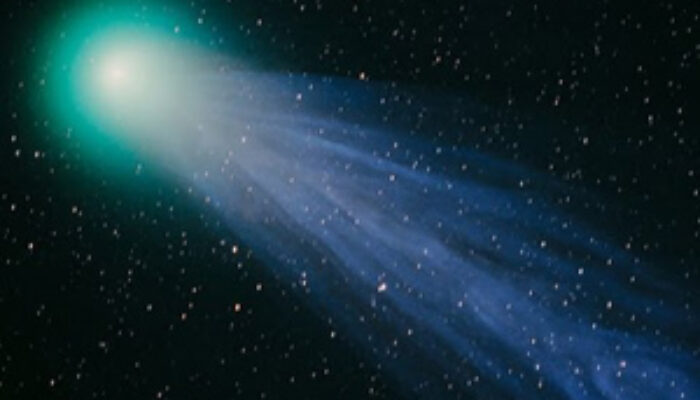
The Hyakutake comet is a remarkable celestial object known for its spectacular appearance during its close approach to Earth in 1996. Discovered by Japanese astronomer Yuji Hyakutake, this comet captivated observers worldwide with its brilliant tail composed of ice and dust particles illuminated by the Sun. The Ulysses spacecraft, launched in 1990 through a joint mission by NASA and the European Space Agency (ESA), was designed to study the Sun’s solar wind and magnetic environment by traveling on a unique orbit that took it over the Sun’s poles, far beyond typical Earth-orbiting satellites.
Historical Context and Discovery
Hyakutake’s discovery marked a significant moment in modern astronomy. Its unexpected close passage to Earth in March 1996 provided a rare opportunity to observe a comet’s structure and behavior in detail. The comet’s glowing tail, a transient plume of sublimated gases and dust driven by solar radiation, became a symbol of fleeting cosmic beauty. Meanwhile, Ulysses represented a milestone in space exploration, venturing into the heliosphere on a trajectory that allowed unprecedented observations of solar phenomena from high solar latitudes.
Orbital Dynamics and Interaction
Hyakutake’s path through the inner solar system coincided with Ulysses’ journey through the outer heliosphere, creating a unique scenario where the comet’s trajectory intersected the spacecraft’s observational domain. Although no physical collision occurred, this near encounter highlighted the complex gravitational and orbital mechanics governing celestial bodies. The interaction between a comet’s erratic orbit and a spacecraft’s carefully planned trajectory illustrates the dynamic and sometimes unpredictable nature of space navigation and celestial mechanics.
Trajectory Characteristics
- Hyakutake:
Exhibited a highly elliptical orbit, bringing it close to the Sun and Earth, causing sublimation of its icy nucleus and formation of a luminous tail. - Ulysses:
Followed a heliocentric orbit with a unique inclination, enabling it to pass over the Sun’s poles and study solar wind properties from diverse vantage points.
Scientific Significance of the Encounter
The close approach of Hyakutake to Ulysses provided a valuable opportunity to study the interaction between cometary material and the solar wind environment. Comets like Hyakutake carry primordial substances from the early solar system, acting as natural archives of cosmic history. Ulysses’ instruments were capable of detecting particles and magnetic field variations influenced by the comet’s passage, thereby enriching our understanding of the heliosphere’s composition and dynamics.
Implications for Space Exploration and Planetary Defense
Encounters between spacecraft and cometary bodies underscore the importance of monitoring near-Earth objects for both scientific inquiry and planetary protection. Understanding comet trajectories aids in predicting potential hazards and developing strategies to mitigate impacts on Earth or space assets. The Hyakutake-Ulysses event exemplifies how studying such interactions can improve our preparedness for future celestial encounters and enhance the safety of space missions.
Metaphorical and Philosophical Reflections
The relationship between Hyakutake and Ulysses can be viewed as a poetic metaphor for the interplay between chaos and order in the universe. The comet’s unpredictable path contrasts with the deliberate, calculated journey of the spacecraft, symbolizing the balance between natural phenomena and human curiosity. This cosmic dance inspires reflection on the transient nature of existence and humanity’s quest to comprehend the vast, ever-changing cosmos.
Common Misconceptions
Comets like Hyakutake frequently collide with spacecraft.
Actual collisions are extremely rare due to the vastness of space and precise navigation of spacecraft.
Ulysses was a typical Earth-orbiting satellite.
Ulysses followed a unique heliocentric orbit that took it over the Sun’s poles, unlike conventional satellites confined to Earth’s orbit.
Why the Hyakutake and Ulysses Encounter Matters
This event highlights the synergy between natural cosmic phenomena and human technological achievement. By studying the interaction between a comet and a spacecraft, scientists gain insights into solar wind behavior, comet composition, and the broader workings of our solar system. Such knowledge not only advances astrophysics but also informs future space missions and planetary defense initiatives, emphasizing the importance of continuous observation and exploration.
Real-World Examples of Comet-Spacecraft Interactions
Beyond Hyakutake and Ulysses, other missions have encountered comets, providing valuable data:
- Giotto and Halley’s Comet:
The European Space Agency’s Giotto spacecraft flew close to Halley’s Comet in 1986, capturing detailed images and measurements of its nucleus and coma. - Rosetta and Comet 67P/Churyumov-Gerasimenko:
ESA’s Rosetta mission orbited and landed a probe on this comet, offering unprecedented insights into cometary structure and activity.
FAQ
What is Hyakutake?
Hyakutake is a comet that had a close approach to Earth in 1996, notable for its bright tail.
What was the purpose of the Ulysses spacecraft?
Ulysses was designed to study the Sun's solar wind and magnetic environment.
What happened during the encounter between Hyakutake and Ulysses?
The comet's trajectory intersected with Ulysses' observational domain, allowing for unique scientific observations.


Leave a Reply